What happened
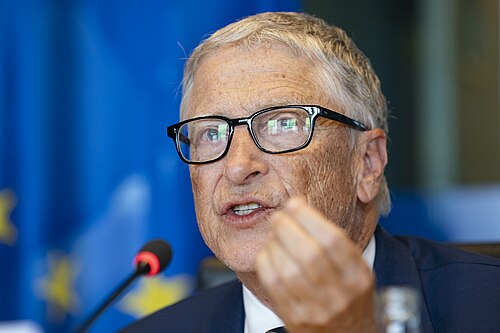
Microsoft co-founder Bill Gates published an almost-6,000-word essay Tuesday warning that the transition to the AI era will be one of the "most turbulent times in human history" and that millions of jobs are at risk.
Why it matters
Gates says there is "no plan" to ease the entry into the AI era and that leaders, experts, and communities are not confronting the challenges adequately. He believes the AI revolution is unlike past innovations because AI can be adopted quickly and can "think and move like a human."
What to watch
Gates recommends considering taxes on AI tokens and robots to address incentives to replace human workers and to raise money for retraining and a stronger safety net for the communities hit hardest by automation.
Summaries like this, in your inbox every morning.
Bill Gates' essay marks a significant escalation in his public commentary on AI, moving beyond technological promise to focus on societal unpreparedness. He explicitly states that past innovations are misleading analogies because AI uniquely combines rapid adoption with the ability to think and move like a human, making it a "structural challenge to the way our economy is organized."
Gates grounds his warning in recent evidence, citing a Stanford University study on entry-level job losses in the U.S. and a Guardian report on U.K. graduate job vacancies plunging to a decade low. His concern extends beyond employment to broader dangers, including advanced AI enabling cyberattacks, biological weapons, fraud, disinformation, deepfakes, and surveillance.
His proposal for taxes on AI tokens and robots is a concrete policy idea meant to slow the incentive to replace workers and fund retraining programs. Gates also acknowledges his own financial interests in companies that stand to benefit from AI, while noting that powerful geopolitical and economic incentives are pushing development forward regardless of the disruption it may cause.
Pick your industry and the AI tools you use, and get news related to your work every day.
Free · 30 seconds with Google · unsubscribe anytimeWhat is AIToday? →
Ask AI anything about this article. The AI reads this article, earlier AIToday articles, and Wikipedia, and cites its sources. Q&As are published on this page for other readers too.
Taiwan is considering much stricter export controls on AI chip sales to China, part of a greater alignment wit…

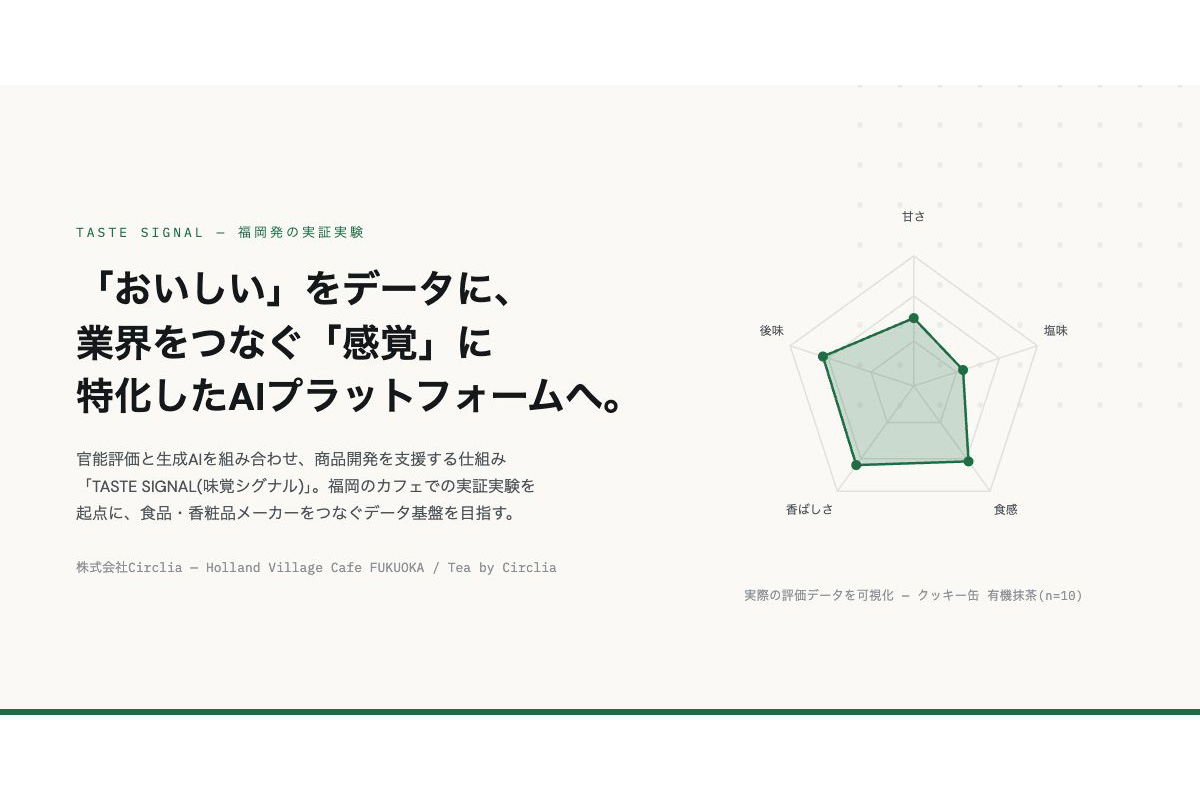
Circlia started a proof-of-concept for TASTE SIGNAL: visitors to Holland Village Cafe FUKUOKA taste cookies an…
In a webinar hosted by French Mathematical Society president Isabelle Gallagher, Fields Medal winner Hugo Dumi…

NVIDIA released Nemotron 3.5 Super VL, an open-weight model with 120 billion parameters that handles text, ima…

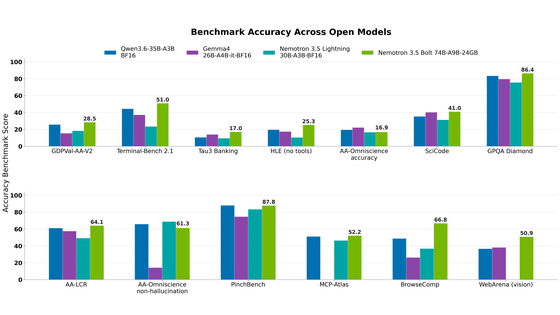
NVIDIA released Nemotron 3.5 Bolt 74B-A9B 24GB, an AI model for local agents that hits over 80 tokens per seco…
Anthropic said on October 15 it has started giving METR's six staff company devices, office space and access t…