What happened
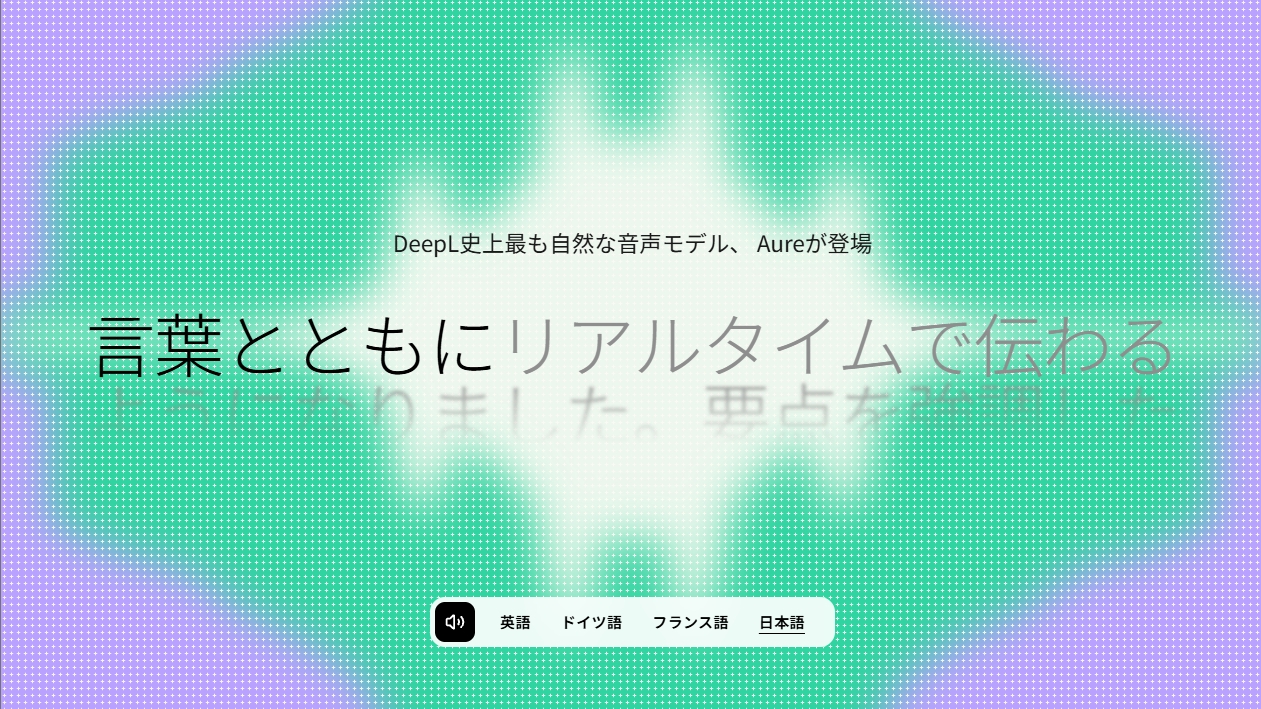
DeepL unveiled Aure v2 at Unmute Tokyo 26, now rolling out to DeepL Voice users. It introduces an end-to-end architecture that merges transcription, translation and speech generation into one process, halving median latency versus Aure.
Why it matters
A single end-to-end process replaces three sequential models, so interpreted conversation should feel closer to real time. The model also uses reinforcement learning to judge when enough context exists to start translating.
WHO IT HITSEnterprise teams running multilingual meetings and live conversations — especially those using DeepL Voice for online or in-person sessions — get lower-latency interpretation without extra configuration in supported languages.
Summaries like this, every morning.
Aure v2 builds on DeepL's earlier Aure model, which kept a speaker's voice characteristics while reflecting changes in tone, emotion, emphasis and pace in the translated audio. The earlier approach generated translated speech from the speaker's voice captured at the start of a conversation, whereas Aure continuously analyzed both the translated words and the original audio to track what was being said and how.
The new version changes the underlying pipeline: instead of separate models handling transcription, translation and speech generation in sequence, Aure v2 combines them into one end-to-end process. DeepL also trained the model with reinforcement learning to decide when enough context has arrived to begin translating, addressing the trade-off between starting too early, which can hurt accuracy, and starting too late, which disrupts conversational tempo.
DeepL reports that, in internal benchmarks, Aure v2 reduced translation errors by 32% for English-to-Japanese compared with Google Gemini 3.5 Live Translate, and outperformed competing systems across all ten language pairs tested. These are company-reported results. Aure v2 is available now in six languages through DeepL Voice for Online Meetings, DeepL Voice for In-Person Conversations and the DeepL API for Voice, and the app displays an "Aure v2" logo once the model is applied.
Pick your industry and the AI tools you use, and get news related to your work every day.
Free · 30 seconds with Google · unsubscribe anytimeWhat is AIToday? →
Ask AI anything about this article. The AI reads this article, earlier AIToday articles, and Wikipedia, and cites its sources. Q&As are published on this page for other readers too.
iFLYTEK JAPAN AI SOLUTIONS is holding a Black Friday sale from November 27 to December 9 at 23:59, discounting…

DeepL began offering Aure v2 on Nov 26 across DeepL Voice for Meetings, DeepL Voice for Conversations, and Dee…
The Notta Memo Pro, launched in October 2026, drops from 29,700円 to 22,275円 in Amazon's Black Friday sale runn…
EA Sports will add an optional AI-recreated John Motson commentary to EA Sports FC 27, who voiced FIFA 96 thro…
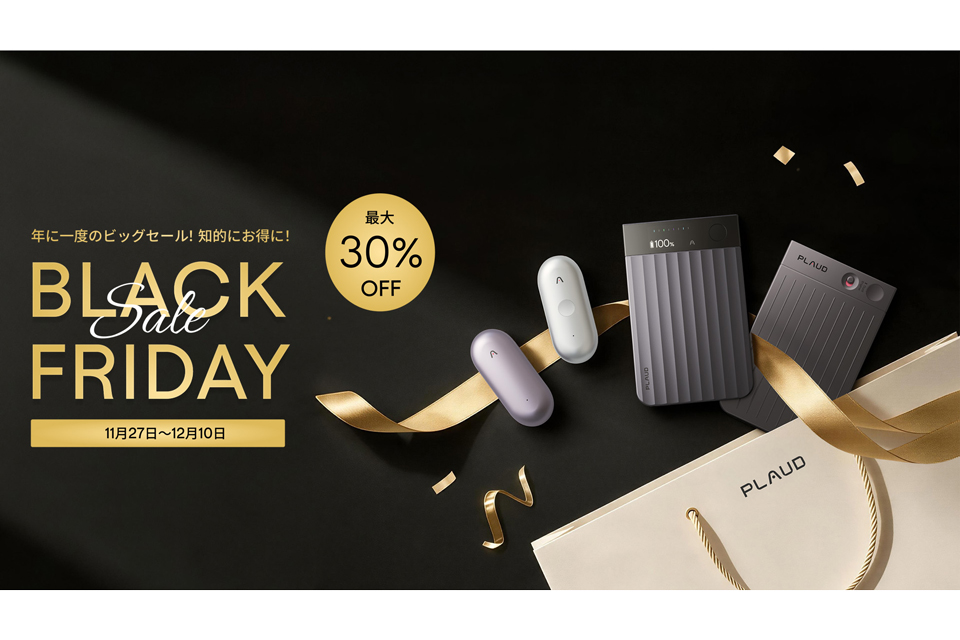
PLAUD's Black Friday sale runs November 27 to December 10 on its Japan online store, Amazon, Rakuten Ichiba an…
Advanced Media started a Japan-market partnership with AISPEECH and will sell the AISPEECH AINOTE A2, an AI ta…