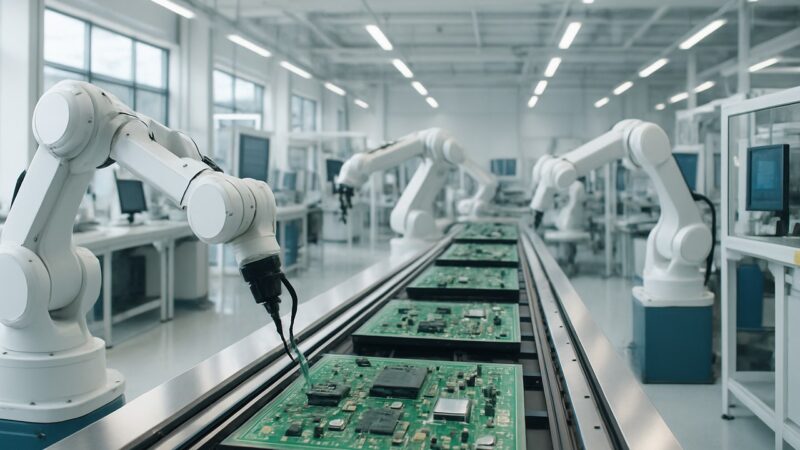
What happened
At the Dell Technologies New York Symposium, Dell CTO John Roese said the moat in AI systems is not the tools or models but a company's special knowledge, captured in machine-readable skill files.
Why it matters
That framing suggests enterprises may get less lasting advantage from picking a particular model than from how well they encode their own institutional knowledge, though the body offers no measured evidence.
Summaries like this, every morning.
The Dell Technologies New York Symposium, covered by theCUBE, brought together Dell executives and cloud infrastructure providers to discuss the economics and operational challenges of enterprise AI. Dell's John Roese described nearly two years of running fully autonomous agents internally, capturing institutional knowledge in machine-readable skill files, and argued that this captured knowledge rather than frontier or open models is what differentiates a company. On the financial side, Dell CFO David Kennedy pointed to finance teams setting up dedicated budget lines for token consumption and to open-weight models as a way to make repetitive processes more predictable in cost.
The operational picture extended beyond compute. Kyle Dufresne, senior vice president of sales at Dell, said business owners are asking how to reduce inferencing costs without curbing innovation, and that this is increasingly happening at the far edge. David Schmoock, senior vice president of global revenue operations, said demand for AI servers has strained supplies of memory, processors, rack-level cooling, networking and power equipment, and that late collaboration can delay projects by 60, 90 or 120 days.
The security dimension came from Dell CSO John Scimone, who said the cost and barriers to entry for attackers have crumbled, so that the least sophisticated attack tomorrow will be more sophisticated than anything seen a year ago. Smaller providers also featured: Comet Cloud's Thomas Kato described giving entire companies their own clusters to serve SMBs that large cloud providers do not prioritize, while Alpha Compute's Tom Richer described a sovereign-by-design approach using Dell and Intel technology to create enclaves down to the chip level.
Pick your industry and the AI tools you use, and get news related to your work every day.
Free · 30 seconds with Google · unsubscribe anytimeWhat is AIToday? →
Ask AI anything about this article. The AI reads this article, earlier AIToday articles, and Wikipedia, and cites its sources. Q&As are published on this page for other readers too.
IDC's Worldwide Future of Work Survey (May 2026) found the majority of "leaders" — organizations reporting 50%…

ABB and SynerLeap named Wasome winner of the ABB Startup Challenge China 2026, awarding a 200,000 CNY (about $…
Anthropic debuted on the Nasdaq Thursday, initially raising $81.3 billion at a price of $83 per share, then bo…

In its 2026 sustainability report, Meta said it is re-evaluating the 2030 timeframe for its net-zero goal, aft…

Meta is rethinking its climate goal after emissions rose 45%, a jump tied to the energy demands of AI, Axios r…

Berkshire's $363 billion stock portfolio now holds nearly $112 billion in AI-linked companies, about 31%, unde…