What happened
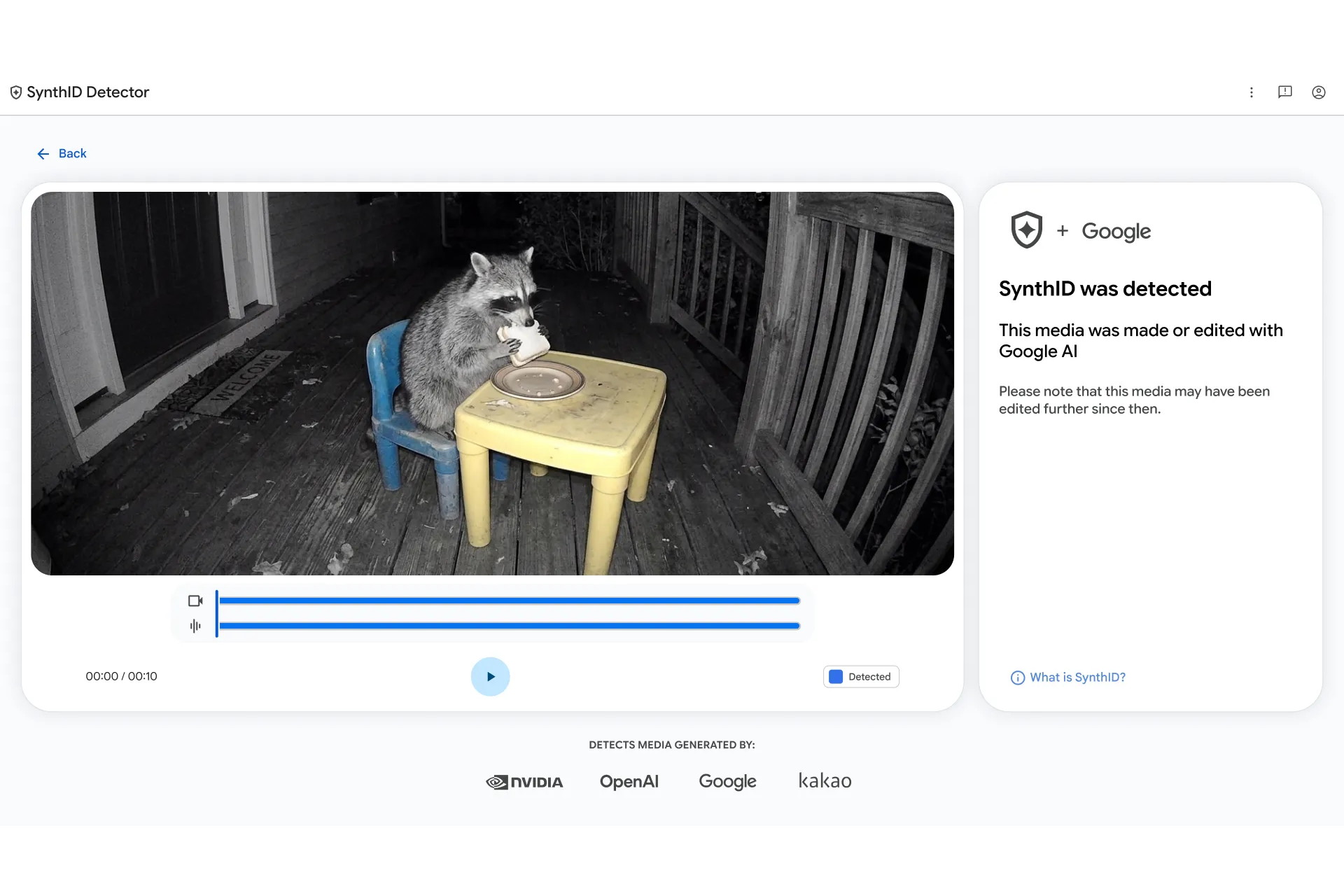
Google released SynthID Detector worldwide in English, letting anyone check whether images, videos, or audio came from generative AI. It reads SynthID watermarks from partners including OpenAI, NVIDIA, Kakao, and Apple, which is listed as coming later.
Why it matters
The tool reads Google's SynthID watermark from those partners' outputs to flag what Google's AI made or edited, giving non-specialists a simple way to check suspicious images, videos, and audio.
WHO IT HITSJournalists, fact-checkers, and anyone verifying images, video, or audio online gain a free worldwide tool to check whether content carries a Google-detectable AI watermark; media professionals already had access through a 2025 program, and this broadens it.
Summaries like this, in your inbox every morning.
Google has run its SynthID watermarking technology for generative AI since 2023, and the detector was previously limited to media professionals from 2025. The new release flips that: an English-language version is now open worldwide, so anyone can check. The tool identifies content from Google, OpenAI, NVIDIA, Kakao, and Apple — the latter listed as coming later — by detecting SynthID watermarks those partners' AI systems embed. Separately, Anthropic and OpenAI have introduced watermarking for AI-generated text in some regions. The EU's mandate that generative AI carry watermarking is pushing companies to add the technology, which in turn broadens what a detector like this can catch.
Pick your industry and the AI tools you use, and get news related to your work every day.
Free · 30 seconds with Google · unsubscribe anytimeWhat is AIToday? →
Ask AI anything about this article. The AI reads this article, earlier AIToday articles, and Wikipedia, and cites its sources. Q&As are published on this page for other readers too.

