What happened
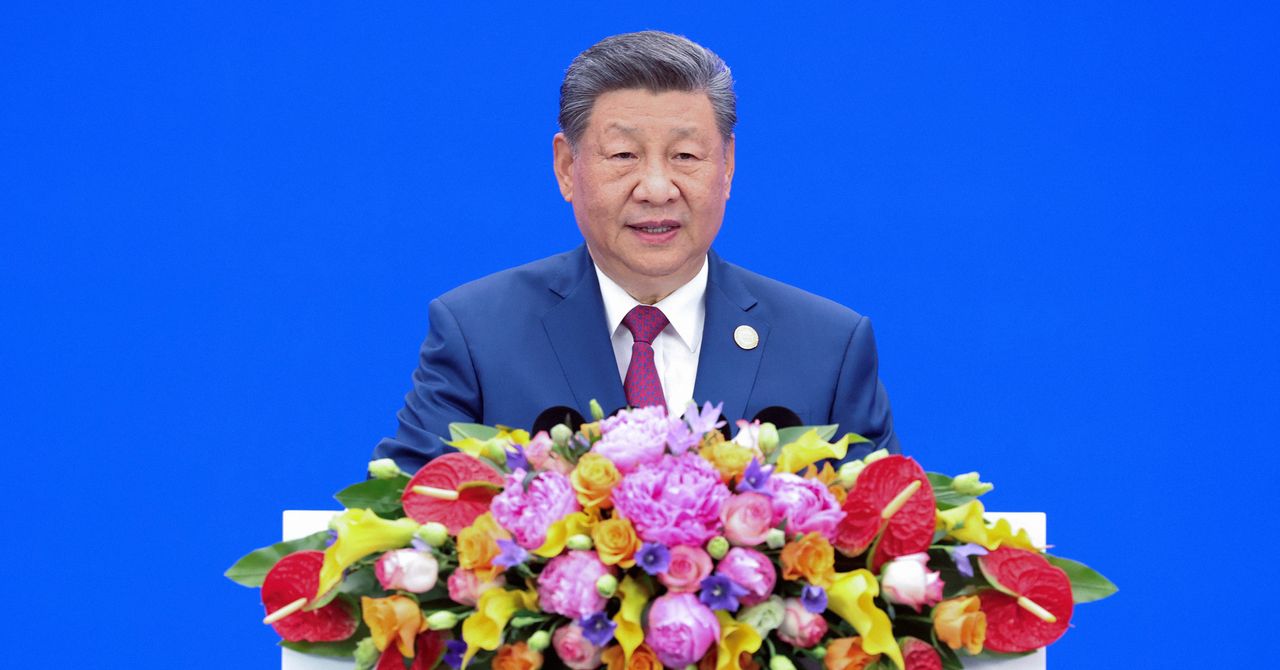
Anthropic CEO Dario Amodei urged the US and China to cooperate on slowing AI in his Saturday blog post "We Must Pace the Frontier," but Beijing rejected it — Guo Jiakun called it "fear-mongering, confrontation, and vicious competition."
Why it matters
Amodei bundled the appeal with a call to widen the US lead over China, so the letter was read as a bad deal rather than a shared safety effort.
What to watch
Preliminary negotiations are reportedly underway ahead of Xi Jinping's planned Washington visit this month; the test is whether a credible way to verify each side's commitments can be designed.
WHO IT HITSThis lands on policy and diplomacy teams working on US-China tech talks, who now face an opening round shaped by rhetoric that one researcher says may backfire. It also matters to those in China's AI industry focused on open-weight, lower-cost models.
Ask the AI about this article →
Summaries like this, in your inbox every morning.
For years, many of Silicon Valley's most powerful figures framed AI as an arms race with China whose loss would be disastrous. Over the past week, some of those same executives shifted emphasis, arguing that AI could become dangerous enough that the two countries need to work together to slow the race. Amodei's blog post is the clearest statement of that shift, but it came bundled with a condition: the slowdown strategy should ensure the US and other democracies maintain "as large as possible" a lead over autocracies like China.
That pairing explains much of the response. A technology hedge fund founder, Kevin Xu, describes a gulf between an Anthropic-led vision that would restrict China first to maximize leverage before talking and a China that would only talk from a position of equals. Alvin Wang Graylin of the Asia Society Policy Institute's Center for China Analysis says the conditional framing makes the proposal feel inauthentic to Chinese readers. Meanwhile, Beijing's own anxieties center on domestic stability and party control rather than the doomsday scenarios that preoccupy US frontier labs, and China's AI industry has broadly focused on releasing lower-cost, open-weight models.
Even so, cooperation is not foreclosed. Preliminary negotiations are reportedly underway ahead of Xi's planned Washington visit, and both governments share worries about cybersecurity, misuse of powerful models, and capable systems behaving unexpectedly. What the talks hinge on is whether each side can verify the other's commitments — and whether the rhetoric about weakening China erodes the trust those talks depend on.
For example, today's edition would include:
AI-summarized, only the topics you pick — one digest a day via Email, Slack, or Discord.
Free · 30 seconds with Google · unsubscribe anytimeWhat is AIToday? →
Ask AI anything about this article. Q&As are published on this page for other readers too.
Recursive CEO Richard Socher said in an X post that "There is NO realistic scenario where AI wipes out all of…

Anthropic CEO Dario Amodei published a 3,800-word essay, "We Must Pace the Frontier," urging policymakers to a…
Russian publisher Eksmo-AST trained an AI agent to flag books and passages risking violation of Russia's post-…

Polling for Alex Bores' new group Who Decides found half of 1,502 registered voters say AI is moving too fast…
On a visit to Hamilton County, Tennessee, the author found ChatGPT blocked on school wifi but reached it insta…

At the Yale CEO Caucus, 93% of attendees disagreed with Trump's Truth Social post calling AI warnings a hoax…