Billionaire Stanley Druckenmiller sold his entire Broadcom stake and bought Alphabet during the second quarter, mirroring Berkshire Hathaway's $17 billion investment in the search giant.
The trade reflects a strategic bet that companies owning the complete AI stack—from custom chip design to software to distribution platforms—will outperform pure chip suppliers in the long run, even as near-term free cash flow faces pressure from heavy capital spending.
What happened
Billionaire investor Stanley Druckenmiller's Duquesne Family Office fully exited its Broadcom position while opening a new stake in Alphabet during the second quarter, according to 13F filings. Berkshire Hathaway invested $17 billion into Alphabet during the same period.
Why it matters
Druckenmiller's move signals a shift from betting on chip suppliers to betting on the companies that design and deploy those chips at scale. Alphabet controls its own custom Tensor Processing Units (TPUs), the specialized chips powering Google's AI infrastructure, plus the software and distribution platforms that monetize them—a vertically integrated stack that Broadcom, as a supplier, does not own. This suggests billionaire investors see greater long-term returns in owning the full AI value chain rather than riding near-term chip demand alone.
What to watch
Alphabet's free cash flow has faced near-term pressure from accelerated capital spending, yet Druckenmiller and Berkshire are investing heavily anyway, betting that proprietary AI services will generate superior returns once the infrastructure is fully deployed. The move reflects confidence that Alphabet's vertical integration—controlling design, software, and global distribution—creates a self-reinforcing system difficult for competitors to replicate.
Ask the AI about this article →
Druckenmiller's portfolio rotation reflects a maturing view of the AI infrastructure cycle. Rather than chase valuations in pure-play chip suppliers, he is pivoting to companies that control multiple layers of the AI stack—design, software, and end-user distribution. Broadcom, despite its central role, remains a supplier dependent on customer spending decisions; its elevated valuation already prices in much near-term upside. By contrast, Alphabet's vertical integration—from TPU design through Google Search and YouTube monetization—creates what Druckenmiller and Berkshire appear to view as a self-reinforcing, difficult-to-replicate competitive moat.
The fact that Berkshire plowed $17 billion into Alphabet despite near-term free cash flow pressure (driven by capital spending) underscores confidence in long-term returns. Billionaire investors are willing to tolerate short-term cash flow compression because they believe the alternative—ceding technological leadership—carries far higher long-term cost. This suggests the market's next phase rewards companies that own the entire value chain, not just segments of it.
For example, today's edition would include:
AI-summarized, only the topics you pick — one digest a day via Email, Slack, or Discord.
Free · takes 30 seconds · unsubscribe anytimeWhat is AIToday? →
Ask AI anything about this article. Q&As are published on this page for other readers too.
Israeli startup DataAgent Ltd
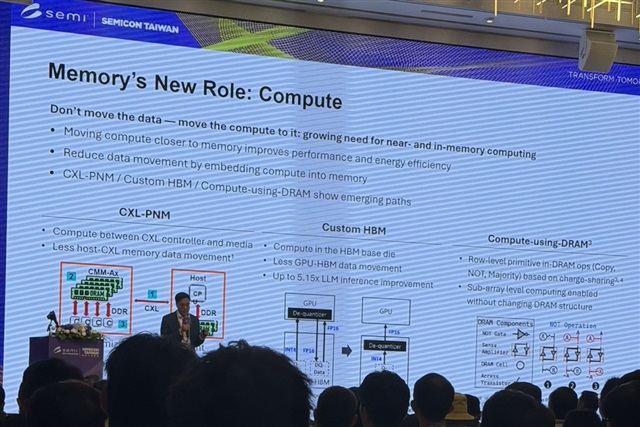
SK Hynix presented a custom HBM concept at SEMICON Taiwan 2026, where compute functions are placed in the base…
Taoyuan is positioning itself as a northern hub for AI data centers (AIDC), citing the Tatan area and an LNG c…
The U.S. Department of Defense announced on August 31 that it has deployed ChatGPT Mil, a customized version o…

Nvidia reported earnings that were both remarkable and boring, reflecting its focus on avoiding a consolidated…

Anthropic has agreed to a $35bn cloud-computing contract with Lambda, a Nvidia-backed cloud provider