What happened
Dominic Davies, CEO of patent firm Lightbringer, said the physical AI race will be won by whoever owns the technology that determines a robot's behavior, not by the best robot builder — citing Boston Dynamics' 2022 suit against Ghost Robotics.
Why it matters
Davies said the technology deciding how a robot behaves may be worth more than the robot itself, and startups that delay can be locked out of their own core mechanisms or bought only for parts.
What to watch
The test is whether startups protect one or two core mechanisms before the Series A, since Davies says litigating ambiguous claims is costly for young firms; watch the €13,000–€18,000 cost of a single European patent application.
WHO IT HITSRobotics and physical AI startup founders and their early-stage investors are the ones who must act on this, since Davies argues protection has to be in place before the Series A rather than after.
Summaries like this, in your inbox every morning.
Davies writes from 20 years as a patent attorney who has filed more than 300 patents across industrial automation, and he frames the problem as one of timing rather than volume. The examples he reaches for are old disputes: Boston Dynamics' 2022 suit against Ghost Robotics over "core technology" that dictated how a robot recovered from a fall, and the smartphone patent battles of the 2010s, which RoboSense's IP head warned last year robotics disputes may come to resemble.
The piece also points at an unresolved legal question. In swarm robotics, where the innovation is the interaction between dozens of machines, patent offices including the European Patent Office have indicated that claims may need to define the individual entities, the overall system, or the combination, depending on how the entities interact. Davies notes that Boston Dynamics and Ghost Robotics resolved their dispute in 2025, but argues startups rarely have the upper hand in ambiguous cases because of litigation budgets.
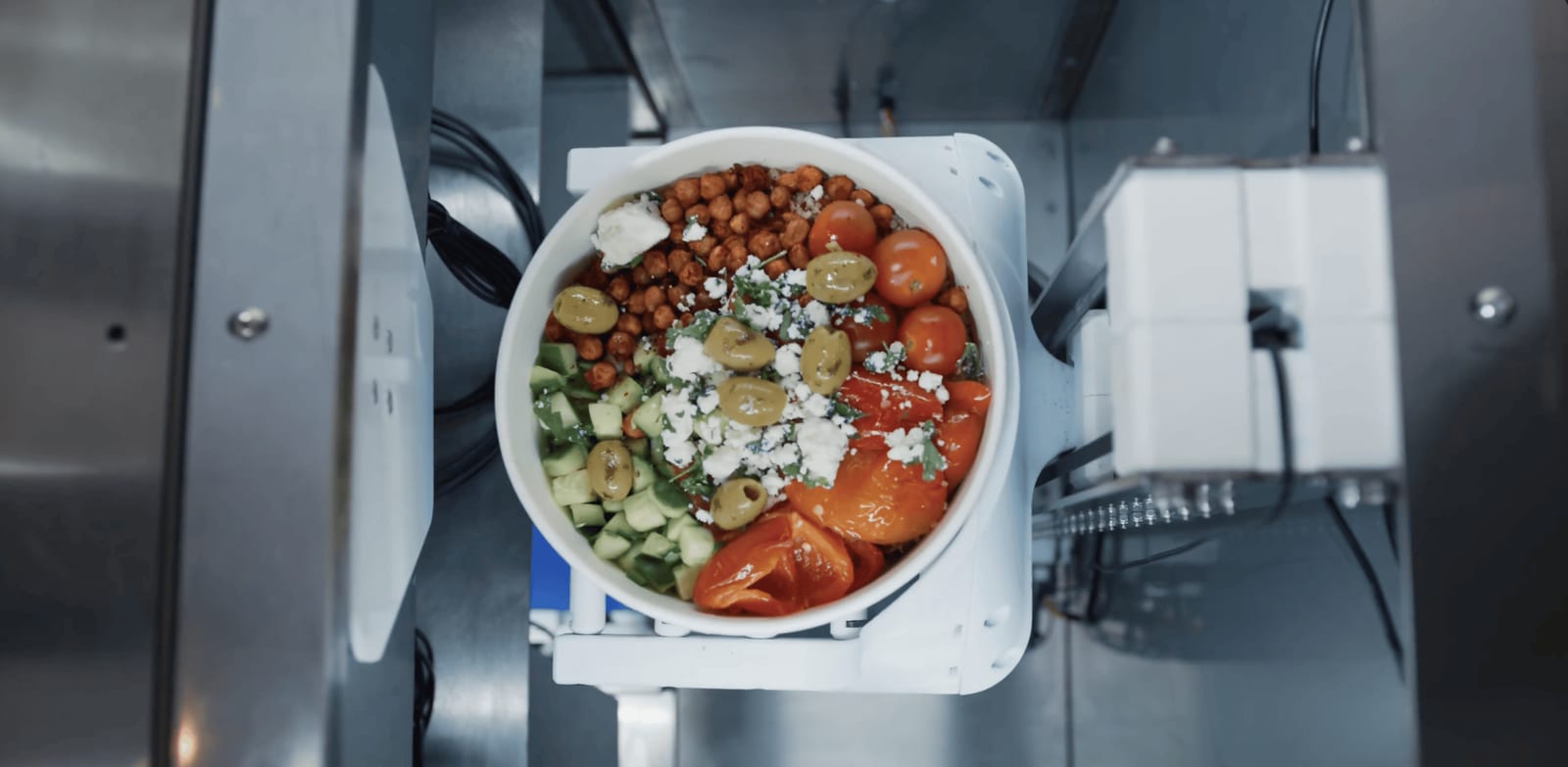
His prescription is selective rather than maximal: patent the one or two mechanisms the robot cannot work without, keep hard-to-reverse-engineer processes such as calibration techniques confidential, and build a wider ring of patents that makes designing around the core expensive. He cites KAIKAKU, a London food-assembly robotics startup, whose value lay in moving a bowl at speed without making a mess. Whether that layered approach holds up likely depends on how cheaply AI-assisted filing can be paired with attorney judgment, and whether courts and patent offices settle how behavior itself can be claimed.
Pick your industry and the AI tools you use, and get news related to your work every day.
Free · 30 seconds with Google · unsubscribe anytimeWhat is AIToday? →
Ask AI anything about this article. The AI reads this article, earlier AIToday articles, and Wikipedia, and cites its sources. Q&As are published on this page for other readers too.
Manulife Financial Corporation launched a first-of-its-kind CoverMe travel insurance plugin in ChatGPT in late…

Google said free Gemini app users will be restricted to the "Flash-Lite" model starting October 9; "Flash" nee…
Nvidia expects AI spending to grow to $3 trillion to $4 trillion annually by 2030, while it reported $96 billi…

David Robinson, who led safety reporting on OpenAI's main products, resigned, saying the company's culture is…
On September 25, Bank of America reiterated a Buy rating on Advanced Micro Devices and raised its price target…
Amazon set up an $8b special purpose vehicle to buy Nvidia Grace Blackwell chips and lease them back to AWS cl…