What happened
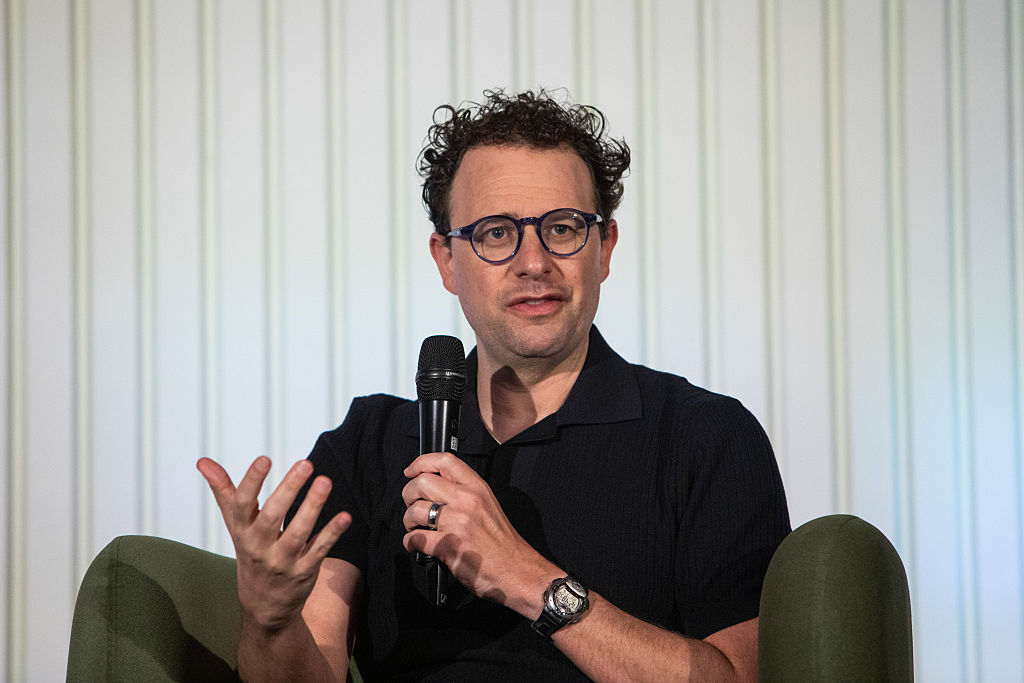
Anthropic CEO Dario Amodei pushed back against investor Gavin Baker's claim that his warnings about AI dangers have fueled backlash against data centers in the United States. Amodei said his messaging has been "about equally balanced between risks and benefits" and disputed the idea that AI leaders' risk warnings are the primary cause of public negativity toward AI.
Why it matters
Amodei identified the core problem as a "fundamentally a crisis of trust"—ordinary people distrust companies, governments, and the tech industry broadly. He acknowledged that "the public has a negative view of AI" and that this is "a big problem," but attributed it to decades of accumulated skepticism rather than recent messaging by AI executives. He also criticized AI companies, including Anthropic, for not yet delivering on promises to benefit the world, calling this "totally on us."
What to watch
Amodei defended Anthropic's approach to regulation, arguing that "the right 'rules of the road'" can simultaneously address AI's cyber, bio, and alignment risks, constrain frontier AI company power, and leave room for open-weights models. He rejected the framing that regulation inevitably leads to concentration of power, saying Anthropic designs proposals to "disadvantage (slow down) frontier AI companies while *advantaging* smaller competitors."
Summaries like this, in your inbox every morning.
Amodei's response reframes a core dispute in AI governance: whether public skepticism of AI is driven by executives' candid warnings about risks, or by deeper institutional trust deficits. Baker's original criticism, published on the All-In podcast and X, carried an implicit assumption that pessimistic messaging from AI leaders bears responsibility for data-center opposition and regulatory friction. Amodei's counterargument—that trust in institutions has eroded over decades, making AI just the latest battleground—situates the problem beyond the control of any single executive's tone. This positions Anthropic's regulatory advocacy not as the cause of backlash, but as a potential remedy, provided the company first proves it can deliver tangible benefits. The CEO's acknowledgment that Anthropic itself has not yet proven its impact—and that this failure is "totally on us"—suggests a shift in how at least one AI leader frames accountability: not as a messaging problem, but as an execution deficit.
Pick your industry and the AI tools you use, and get news related to your work every day.
Free · 30 seconds with Google · unsubscribe anytimeWhat is AIToday? →
Ask AI anything about this article. The AI reads this article, earlier AIToday articles, and Wikipedia, and cites its sources. Q&As are published on this page for other readers too.
Anthropic gave six METR staffers hardware, office space and internal tools, putting them roughly on par with i…

Cammarata reinterprets InceptionV1's cat-car neuron as a V-shape detector, not two unrelated concepts
Meta's new commercial terms, effective October 30th, appear to let it crawl and train AI on content from websi…
A Zenn contributor sorted AI use into three modes — AI as an assistant, AI running alongside people, and AI th…

A developer released agent-guardrails, a one-script Python standard-library plugin that guards Bash, Write, Ed…
A Qiita article compared automated red-teaming methods for LLM apps — GCG, PAIR, and TAP — using mock implemen…


