What happened
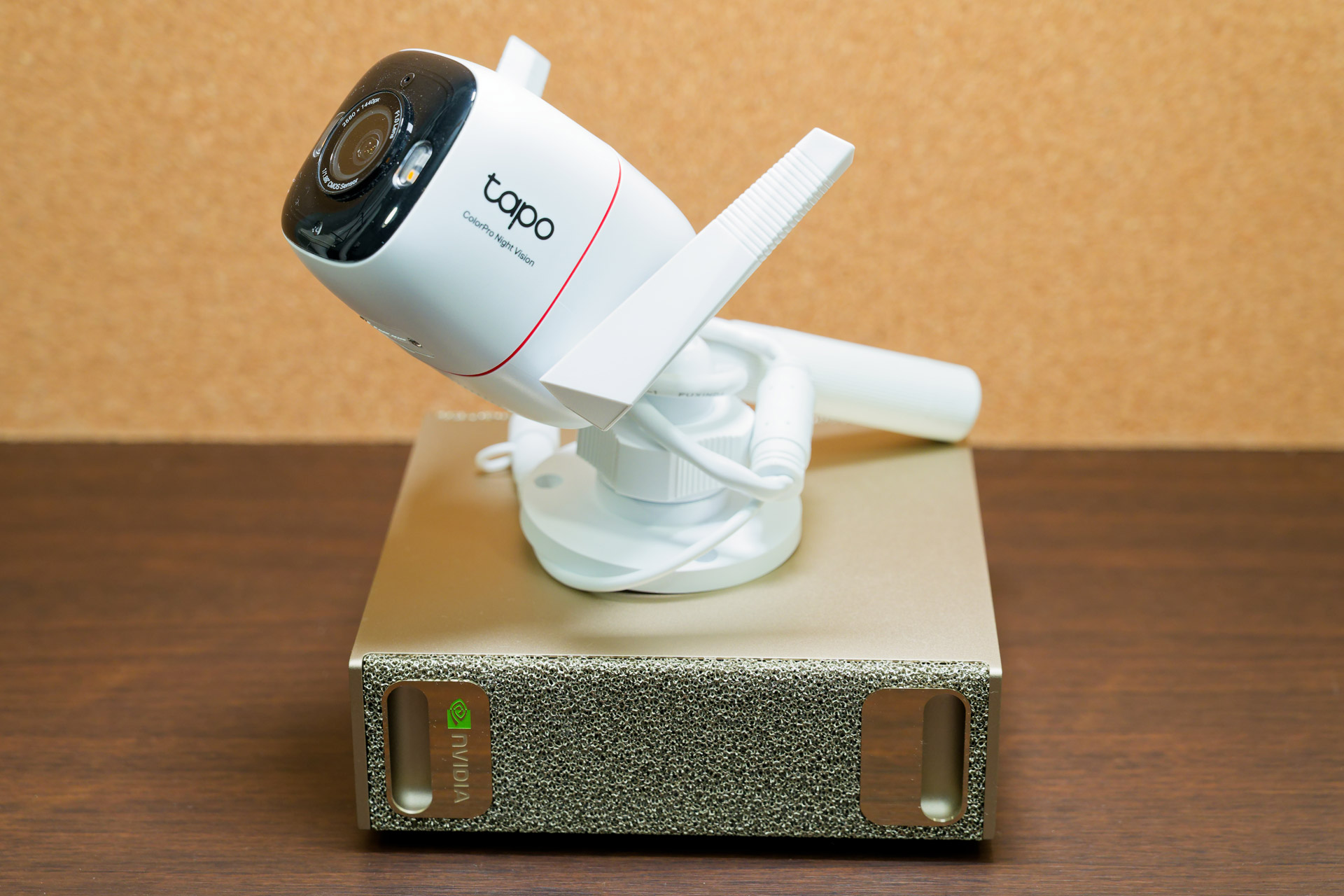
The author moved his local-AI surveillance camera system onto a 128GB DGX Spark, adding the larger Qwen 3-VL 30B A3B model and a real-time commentary feature, and measured detection-to-notification at 3~4 seconds versus the mini-PC plus eGPU setup.
Why it matters
The result suggests the Spark can handle always-on video analysis with no perceptible delay, though the author calls its compute overkill for a home surveillance brain and notes only a larger model avoids the smaller model's looping-text problem.
What to watch
The test is a single author's measurement, not a product benchmark, so the real trade-off hinges on how much the 45~50W idle draw matters for 24/7 use. The author's own conclusion is that a NAS may be the more cost-effective host.
WHO IT HITSThis lands on home-lab builders and small-business operators weighing whether to run always-on local AI video analysis on a workstation-class box, who must factor in its higher idle power against the faster, richer features it enables.
Summaries like this, in your inbox every morning.
The author had previously built a local-AI surveillance system on a mini-PC with a 32GB memory limit, using the lightweight Qwen 3-VL 4B Instruct model and relying on its internal GPU after finding an external GPU too bulky and power-hungry to run continuously. He then ported the same setup to the 128GB DGX Spark to see whether the extra headroom changed anything, switching to the larger Qwen 3-VL 30B A3B model and adding features such as real-time video commentary, half-day detection summaries, and a face-recognition filter that suppresses alerts for familiar people.
Comparing the two models on the Spark, he found almost no difference in the short push-notification text, which was capped at 160 tokens, but the 4B model could loop the same sentence when asked for longer descriptions. The 30B model's value, in his view, is mainly this greater stability. On speed, the Spark finished notification processing in 3~4 seconds, while the mini-PC took roughly 10 seconds with its internal GPU and about 5 seconds with the external GPU for the explanatory notification. The flip side is standby power: the Spark idles at 45~50W, two to three times the mini-PC's internal-GPU figure, with peaks around 100W.
The author's own verdict is that the Spark is more machine than a home camera system needs. The real trade-off hinges on whether a buyer values the faster, more capable analysis and additional features enough to accept the higher always-on power draw and the need for external storage for continuous recording. His suggested middle path is to run the surveillance workload on a NAS and use the DGX Spark instead as a development base for a wider smart-home control system built on Home Assistant.
Pick your industry and the AI tools you use, and get news related to your work every day.
Free · 30 seconds with Google · unsubscribe anytimeWhat is AIToday? →
Ask AI anything about this article. The AI reads this article, earlier AIToday articles, and Wikipedia, and cites its sources. Q&As are published on this page for other readers too.
Google is paying about 100 digital publishers for content used in AI Overviews, AI Mode, and Gemini, with paym…

A Qiita walkthrough trained a five-label car-damage classifier on Gemini Enterprise Agent Platform AutoML usin…

Lauren Tan says she shipped about 2,000 pull requests a month to production on the SpaceX AI Grok Bot team

At its September 29, 2026 DevDay, OpenAI announced more than 20 items, including dots, an agent running on GPT…

A student made granite-code:8b and granite3.2:8b write a TORCS racing AI in 13 parts, checked by Python test s…

Alibaba's Qwen team open-sourced Qwen-Image-2.1 on September 20, 2026 — a 7B model generating 2048×2048 images…

