What happened
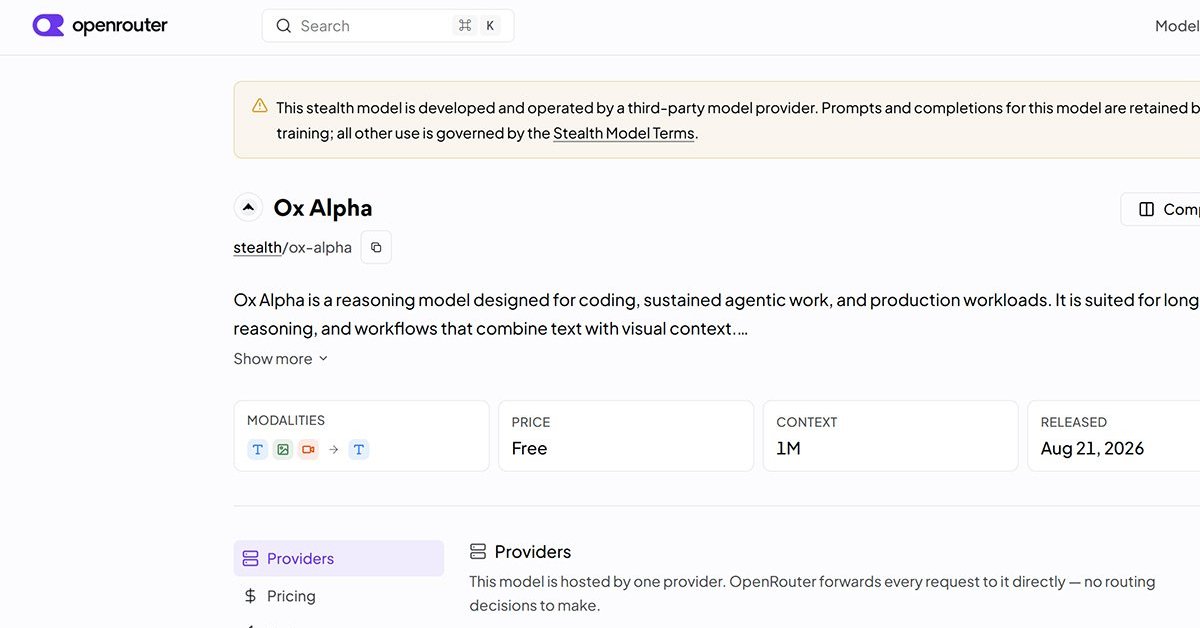
An unknown AI model called Ox Alpha appeared on OpenRouter on August 20 and reached #1 in weekly token consumption within days. It's free, API-only, handles text/image/video input, and outputs text with a 1,048,576-token context length.
Why it matters
The anonymous model is being used heavily for coding and agent tasks. OpenCode shows 38万 (380,000) users and 31T tokens consumed with 7.9% share, while Cline reports Ox Alpha hit 8% of its inference within 48 hours — the fastest-growing model in its history.
What to watch
The leading theory is that Ox Alpha is an unreleased multimodal model from China's Z.ai, possibly in the GLM-5.3 family, based on matching token patterns and API errors. Cohere's Henry Chan tested it on all 113 DeepSWE tasks and scored 58.4%, below top models like Claude Opus 5 at 74%.
Summaries like this, in your inbox every morning.
The rapid rise of Ox Alpha highlights how anonymous model releases can generate traction in the AI developer community. OpenRouter has previously hosted mystery models for blind testing, and this appears to be another such case — likely as a load test before an official announcement. Its appeal seems to be zero cost and strong coding abilities, driving massive token consumption across tools like OpenCode and Cline.
The evidence pointing to Z.ai is circumstantial but notable: matching tokenization quirks and similar API error patterns suggest shared infrastructure, and GLM-5.3 shares the same context length and max output specifications. However, the model may be multimodal while GLM-5.3 is text-only, hinting at an unreleased variant. LobeHub's Max For AI claims to know the creator and says it will surprise people, adding uncertainty to the Z.ai theory.
Performance-wise, Ox Alpha appears competent but not elite — 58.4% on DeepSWE places it among the better models but behind the current frontier. For now, the mystery around its identity and its impressive early adoption suggest continued interest, but the model's long-term relevance will depend on whether its quality and free access sustain user engagement once the novelty fades.
Pick your industry and the AI tools you use, and get news related to your work every day.
Free · 30 seconds with Google · unsubscribe anytimeWhat is AIToday? →
Ask AI anything about this article. The AI reads this article, earlier AIToday articles, and Wikipedia, and cites its sources. Q&As are published on this page for other readers too.
The Motley Fool argues Amazon is the AI company of the two, since AWS was just 21% of first-half 2026 revenue…

Hewlett Packard Enterprise stock is down 5% at $55.87

Cammarata reinterprets InceptionV1's cat-car neuron as a V-shape detector, not two unrelated concepts

Google Deepmind's Gemini 4 Argon scored 97.5 percent on ARC-AGI-3 at a cost of $4,800, second only to GPT-6 As…
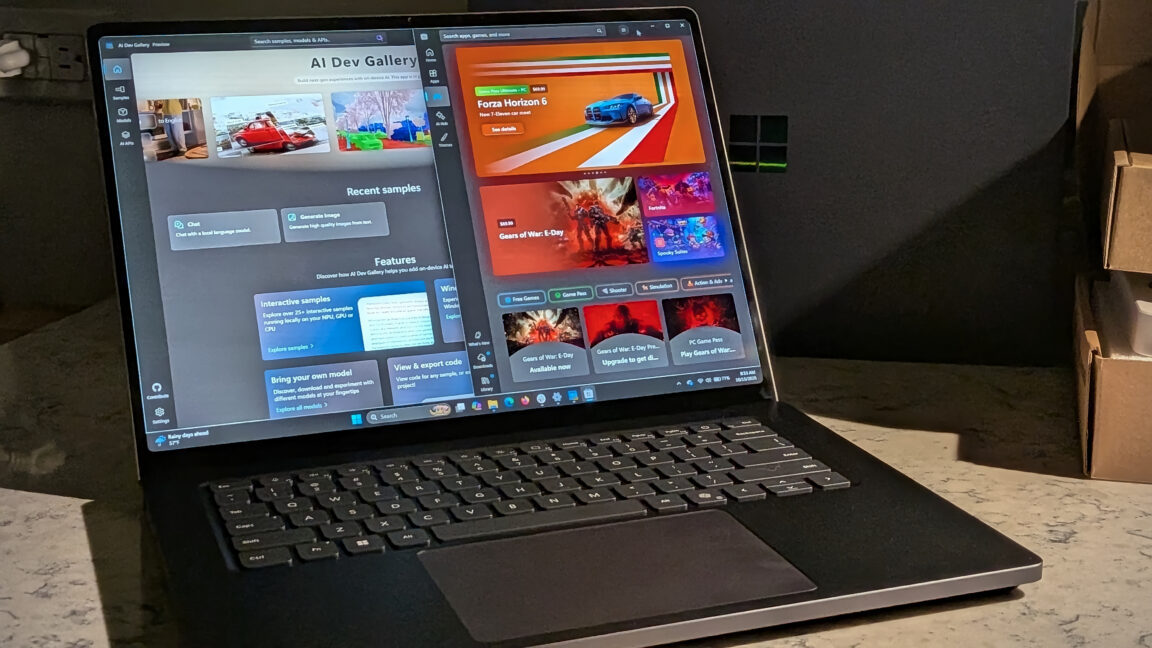
Microsoft's Surface Laptop Ultra, using Nvidia's RTX Spark platform, starts at $2,599 (up to $5,899)
Meta's new commercial terms, effective October 30th, appear to let it crawl and train AI on content from websi…