What happened
OpenAI is hiring a dedicated product manager in San Francisco to build experiences for families, caregivers, and older adults. The move comes as ChatGPT's user base is shifting: users aged 35 and older rose to 31% globally in Q2 from 26% a year earlier, while users aged 18 to 24 fell to 29% from 34%.
Why it matters
OpenAI is rethinking its product from a tool for individual productivity into technology designed for households — a shift similar to how Google, Apple, and Meta evolved as their platforms became embedded in daily life. The move also reflects growing recognition that AI products used by children and teenagers require different safeguards than those for adults, and comes as new research shows parents underestimate how often their children use generative AI (27% of U.S. parents said their child used it in the past week, while 38% of children reported doing so).
What to watch
OpenAI has already introduced parental controls for teen accounts, routing sensitive conversations to reasoning models designed to handle signs of distress, and a "Trusted Contact" feature that can alert a family member or caregiver in cases of potential self-harm. Among U.S. smartphone users who are parents, Gemini had the widest reach at 32% in Q2, followed by ChatGPT at 24%, Claude at 4%, and Copilot at 2%.
Summaries like this, in your inbox every morning.
OpenAI's decision to hire a dedicated product manager for families marks a recognition that generative AI has moved beyond early adopters and individual professionals into mainstream household use. The demographic data underscores this shift: ChatGPT's oldest user cohorts are growing faster than younger ones, and in the U.S., nearly one in four smartphone users who are parents used ChatGPT in Q2, up from 16% a year earlier. This mirrors the path taken by consumer tech giants like Google, Apple, and Meta as their platforms became woven into daily life, though as technology consultant Ben Bajarin noted, AI raises distinct stakes because the assistant does more than mediate content or devices.
The hiring also signals a maturation in how OpenAI approaches trust and safety. Parents are currently underestimating their children's engagement with generative AI — a gap the company is working to address through parental controls, reasoning-focused models for sensitive conversations, and features that alert caregivers. Stephen Balkam, chief executive of the Family Online Safety Institute, framed this as "safety by redesign" — a necessary recalibration of a product initially built for adults, now widely used by younger users. AI companies have the opportunity to avoid the mistakes of social media platforms, which for years treated children much like adults before adding protections under public and regulatory pressure.
Pick your industry and the AI tools you use, and get news related to your work every day.
Free · 30 seconds with Google · unsubscribe anytimeWhat is AIToday? →
Ask AI anything about this article. The AI reads this article, earlier AIToday articles, and Wikipedia, and cites its sources. Q&As are published on this page for other readers too.
Danaher announced a collaboration with NVIDIA combining its instruments, automation and workflow software with…
OpenAI presented a 166-page potential Navier-Stokes proof in early September, saying it followed the approach…

Researchers gave models 1,600 synthetic work logs, each with a hidden flaw

A simulation of Crescendo, the multi-turn jailbreak by Russinovich, Salem and Eldan published at USENIX Securi…

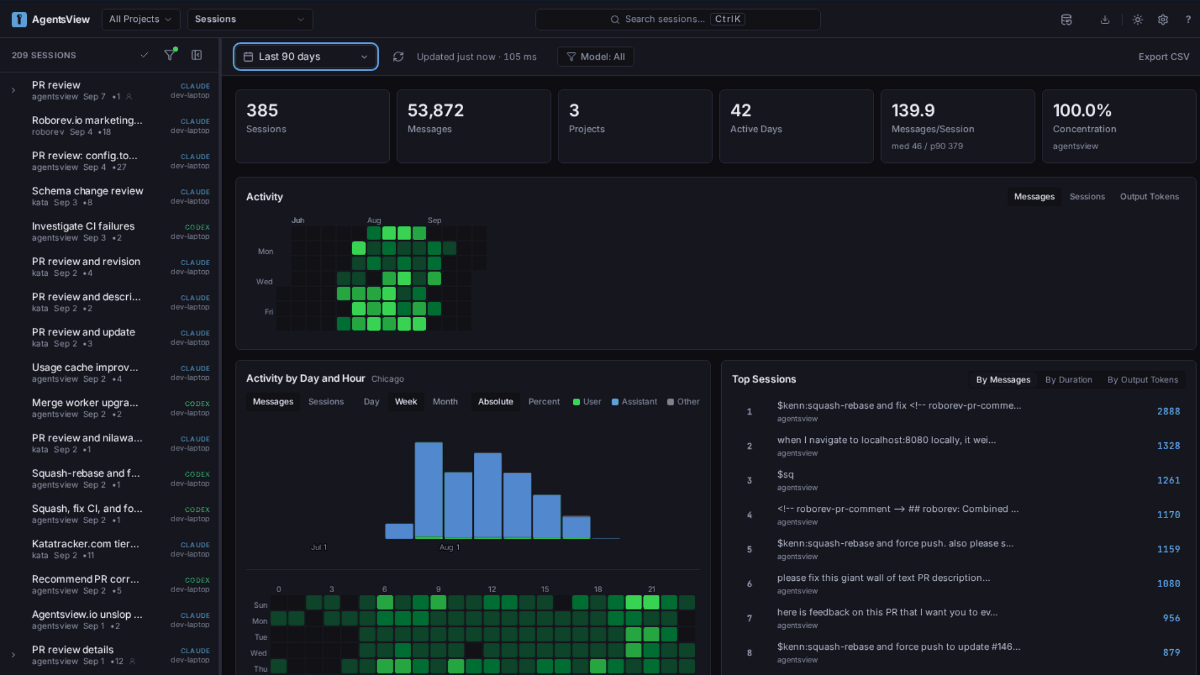
AgentsView automatically detects the local logs of Claude Code, Codex, Cursor, Copilot, Gemini and 60-plus oth…
Genomic foundation models like Evo 2, Genos and Google DeepMind's AlphaGenome learn correlations from DNA sequ…