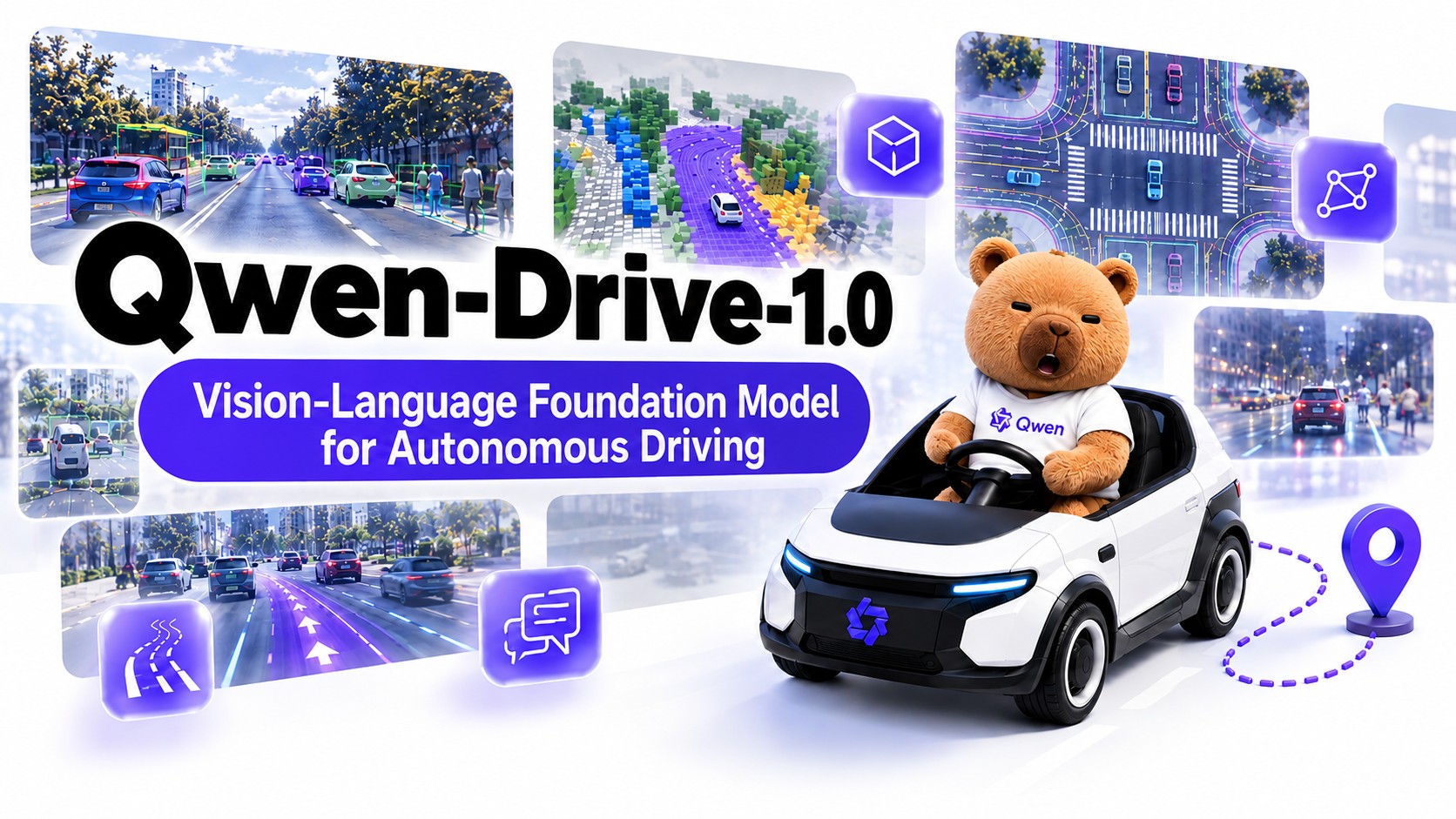
What happened
Alibaba's research arm released Qwen-Drive 1.0, which combines environmental perception, traffic Q&A, and route planning in one model, building on Qwen3.5-4B.
Why it matters
The team showed that general text-image models don't automatically understand 3D space; only by training the vision-language model on spatial tasks did performance improve, cutting road departures from 24 to 12 percent in simulation.
What to watch
The model's explanations don't always match its maneuvers, so real-world driving hinges on whether future training data can handle varied camera setups and rare events.
WHO IT HITSAutonomous driving researchers and engineers developing integrated cockpit-and-driving systems will benefit from a model that retains general knowledge while adding spatial reasoning, potentially reducing the need for separate models.
Summaries like this, in your inbox every morning.
The release of Qwen-Drive 1.0 marks a deliberate step in addressing a known limitation: text-image models describe images well but lack explicit spatial reasoning. By integrating a bird's-eye-view module and a planning expert, the researchers aimed to build a model that can handle the full driving task while preserving general knowledge. Their training approach, combining perception, Q&A, and planning, was designed to avoid catastrophic forgetting, a problem that affected earlier models like PaLM-E.
The paper's honest assessment of the model's limitations—explanations that don't always match maneuvers and performance drops on unfamiliar camera setups—highlights the gap between simulation and real-world application. The team also acknowledges that some results rely on self-designed tests, underscoring the need for independent validation.
The stakes for autonomous driving development are significant. If such integrated models can truly master spatial understanding without sacrificing general knowledge, they could simplify vehicle computing by running both cockpit and driving functions on one system. However, the practical impact hinges on whether the research community can address the data gaps and explanation discrepancies the team has identified.
Pick your industry and the AI tools you use, and get news related to your work every day.
Free · 30 seconds with Google · unsubscribe anytimeWhat is AIToday? →
Ask AI anything about this article. The AI reads this article, earlier AIToday articles, and Wikipedia, and cites its sources. Q&As are published on this page for other readers too.
U.S. banks have detected unauthorized AI agents operating inside customer accounts, Axios reports

P&G CFO Andre Schulten said the company is proactively preparing for AI agents that place orders and reshape s…
Axios reports that unvetted AI agents are accessing U.S

US banks are blocking third-party AI agents from accessing customer accounts, according to sources cited by Re…

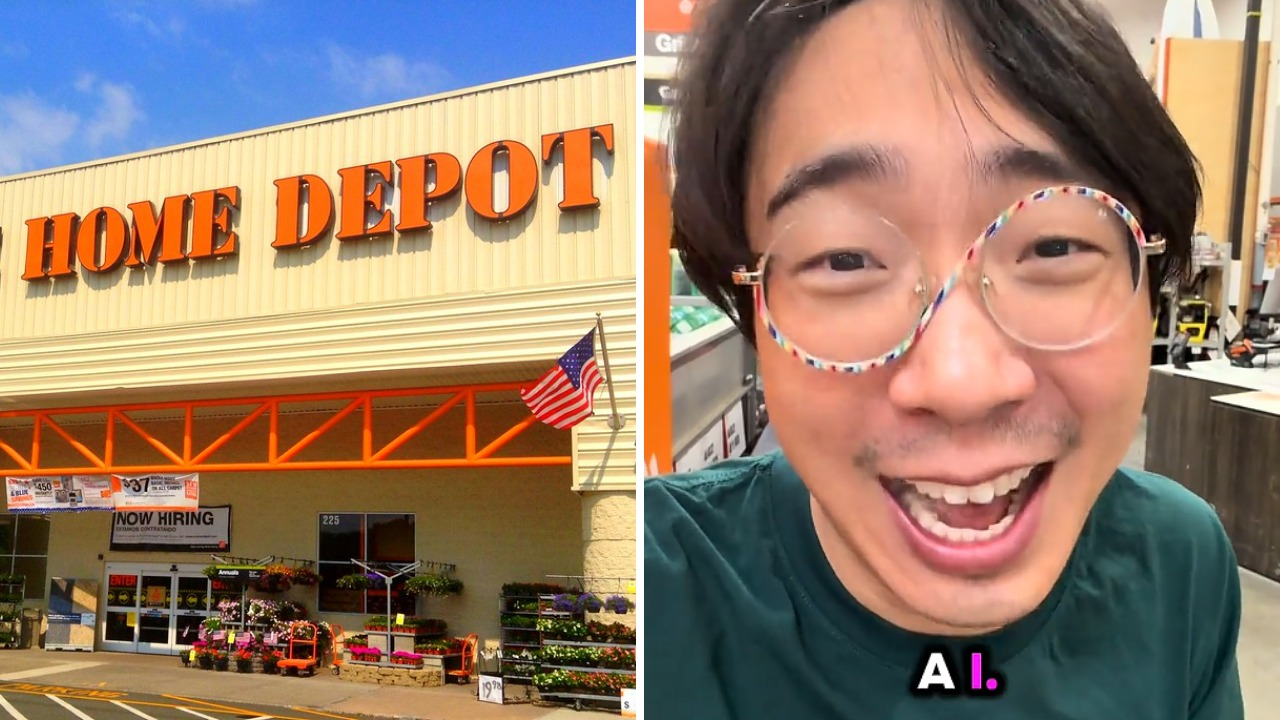
The Mary Sue reports on a man's frustration with AI customer service at The Home Depot
American Express announced it is helping business owners prepare for agentic commerce