What happened
Flux 3, an AI visual intelligence tool, is now available on the Textideo platform, enabling users to generate realistic images and videos from text prompts. The tool supports text-to-image and image-to-video workflows, with generation available to both free and premium users—premium users can leave and check results later, while free users must keep the page open or the task cancels.
Why it matters
Flux 3 lowers the barrier to professional visual content creation for creators, marketers, and designers without coding or design experience. The platform handles composition, detail, and style automatically, allowing users to focus on creative direction rather than technical execution. Textideo integrates the entire workflow—from prompt to generation, preview, and export—into one ecosystem.
What to watch
The platform reports it is trusted by 10,000+ creators worldwide. Users can explore the tool across different workflows including ecommerce visuals, marketing materials, social media assets, advertising content, and digital artwork, with results available immediately or on-demand depending on user tier.
Summaries like this, in your inbox every morning.
Flux 3 represents a shift in AI-powered visual creation from tool-centric to workflow-centric design. Rather than offering isolated image generation, Textideo integrates the entire pipeline—prompt input, generation, preview, and export—into a single platform. This design choice addresses a real friction point: users who must switch between tools or manage results across multiple applications lose creative momentum.
The platform's emphasis on "advanced prompt understanding" and "better creative control" signals a response to a known limitation of earlier generative tools: low consistency between user intent and output. By letting users refine prompts and explore different creative directions within one interface, Flux 3 positions itself as a tool for iteration, not just one-shot generation. The inclusion of both text-to-image and image-to-video workflows suggests the platform is betting that creators often want to extend a static concept into motion—a practical step beyond single-format generation.
The freemium model—where free users must stay on the page but premium users can queue tasks—creates a natural incentive for creators who use the tool frequently, particularly professionals and small teams working on tight timelines. Being "trusted by 10,000+ creators worldwide" grounds the offering in actual use rather than theoretical capability, though the body does not detail retention, output quality metrics, or user demographics.
Pick your industry and the AI tools you use, and get news related to your work every day.
Free · 30 seconds with Google · unsubscribe anytimeWhat is AIToday? →
Ask AI anything about this article. The AI reads this article, earlier AIToday articles, and Wikipedia, and cites its sources. Q&As are published on this page for other readers too.
TOPPAN Holdings and Keio University ran a quantum-computer and generative-AI proof-of-concept from February 1…
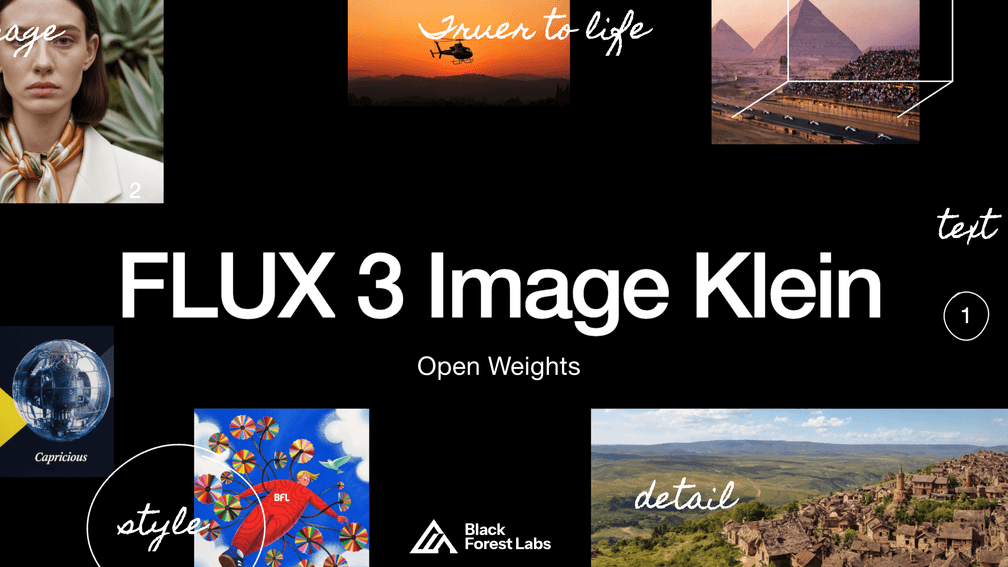
Black Forest Labs released FLUX 3 Image Klein as open weights on October 15, 2026 — a 5.6B-parameter model for…
Krea opened the beta for Krea 3, which does end-to-end 2K edits in under 8 seconds, accepts up to 8 reference…

President Donald Trump posted photos on Truth Social showing White House renovations, but one comparing an old…

Universidad de Córdoba (UCO) has published a guide titled "AI NSFW 2026: reference tools, reusable workflows a…

Black Forest Labs released FLUX 3 Image Klein, a 5.6-billion-parameter open-weights model for text-to-image ge…