
What happened
A 76-author team led by Hui Shen released OS-Omni, a NeurIPS 2026 benchmark covering Windows, Ubuntu, macOS, iOS, Android and Web, with 300 tasks averaging 67.54 interaction steps—about 4.5 times harder than OSWorld on that measure. Claude Opus 5.5 leads at 68.5% average success versus a 77.3% human reference.
Why it matters
Because most agent evaluations run on a single platform, relative weaknesses across OS environments can go undetected until deployment; OS-Omni surfaces that comparison across all six major platforms at once, and the cross-platform workflows—which require coordinating state between a desktop and a mobile device—add a dimension no prior benchmark has covered at this task length.
WHO IT HITSAI agent developers and enterprise teams deploying computer-using agents now have a multi-OS yardstick to compare models before rollout, and the gap to the 77.3% human reference baseline suggests room to improve, particularly on mobile and desktop environments.
Summaries like this, every morning.
OS-Omni arrives as agent evaluations have largely been confined to single platforms, which the authors say lets relative weaknesses across operating-system environments go undetected until deployment. The benchmark's 300 tasks—48 per platform and 12 cross-platform workflows pairing a desktop environment with an Android phone—are built to expose those differences at once across Windows, Ubuntu, macOS, iOS, Android and Web. By the authors' measure of 67.54 average interaction steps per completion, the tasks are roughly 4.5 times harder than OSWorld's 15.0 steps.
The early results split along platform lines. Frontier models already exceed the human reference on Linux, yet on iOS and macOS the same models trail humans by more than 25 percentage points—a concrete signal, the authors argue, that current agents are not platform-robust even where they perform well. Claude Opus 5.5's 68.5% average success sits below the 77.3% human reference baseline.
The benchmark is being released in versioned waves, so the comparison across all six platforms is likely to be revisited as new model generations appear.
Pick your industry and the AI tools you use, and get news related to your work every day.
Free · 30 seconds with Google · unsubscribe anytimeWhat is AIToday? →
Ask AI anything about this article. The AI reads this article, earlier AIToday articles, and Wikipedia, and cites its sources. Q&As are published on this page for other readers too.
The Digital Agency said a public call for Japanese-made large language models for ガバメントAI 源内 in 令和9年度(2027年度)…

NVIDIA said on November 27 that its RTX Spark compact desktop is on sale from ASUS, Dell and MSI, with a 20-co…
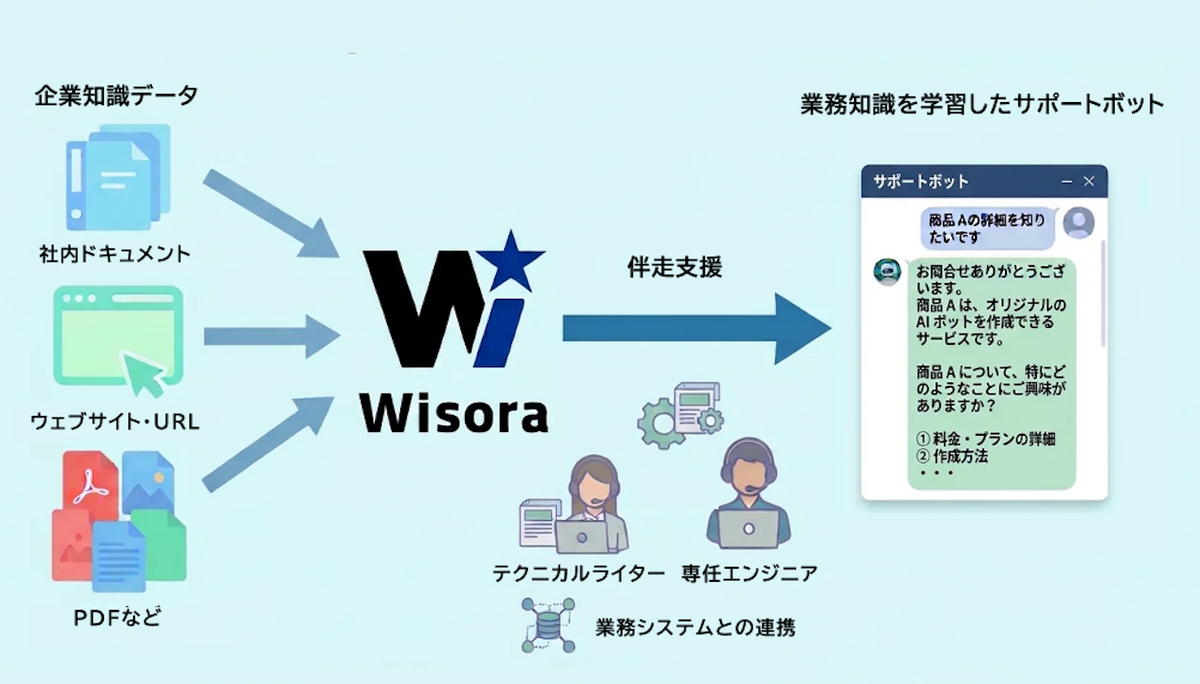
Soracom said on November 27 that Wisora Enterprise now standardly includes technical writers who organize manu…
RayNeo will run a Black Friday sale from November 27 to December 7, 2026, on Amazon.co.jp and its Japan site…

MetAI launched MetAI Creator Studio, which uses AI to propose new titles, descriptions, chapters, thumbnails a…

The Digital Agency published the source code for 源内's web interface and build steps, plus AI app templates and…

