What happened
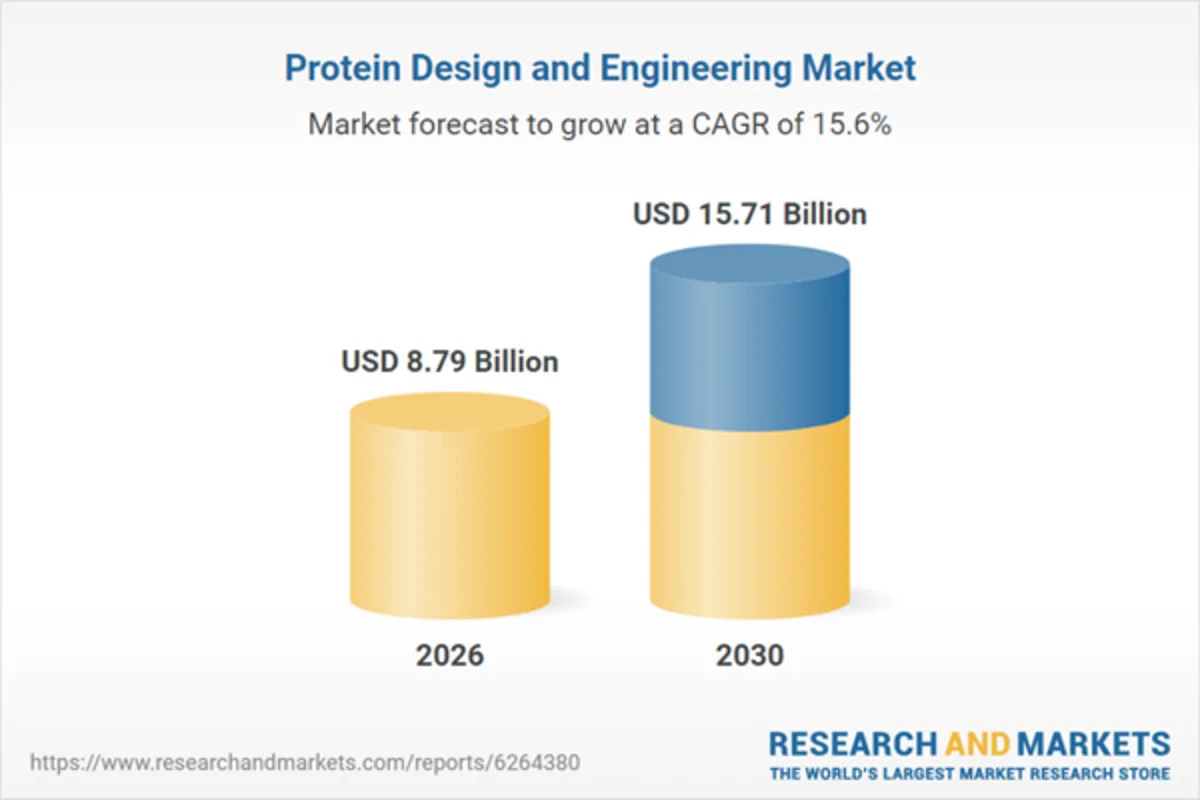
The global protein design and engineering market is projected to grow from $7.62 billion in 2025 to $8.79 billion in 2026, a compound annual growth rate of 15.4%, and reach $15.71 billion by 2030 at a CAGR of 15.6% between 2026 and 2030.
Why it matters
AI-powered drug discovery, synthetic biology adoption, and rising investment in precision medicine are reshaping how pharmaceutical companies develop biologics and vaccines. Protein engineering improves the stability, efficacy, manufacturability and target specificity of therapeutic proteins, making it central to the next wave of drug development.
What to watch
Key growth drivers include AI-driven protein structure prediction, computational modeling for novel enzyme design, de novo protein engineering for therapeutics, and integration of high-throughput screening into protein optimization workflows. Asia-Pacific is flagged as offering expansion potential.
Summaries like this, in your inbox every morning.
The protein design and engineering market is at an inflection point driven by convergence of AI advances and therapeutic demand. The market's projected growth from $7.62 billion in 2025 to $15.71 billion by 2030—a sustained CAGR of roughly 15.5%—reflects a sector-wide shift toward computational and AI-enabled drug discovery. This acceleration is not solely a result of new technology; it reflects maturation of supporting disciplines: recombinant DNA technologies, structural biology research tools, and molecular biology methodologies have created the infrastructure upon which AI-driven protein design platforms now operate.
The market's expansion is anchored in three interconnected trends. First, AI-powered drug discovery platforms are reducing cycle time and cost in protein optimization. Second, pharmaceutical companies are investing heavily in precision therapeutics and personalized medicine, both of which depend on tailored protein engineering. Third, synthetic biology adoption across the life sciences enables broader access to engineered biologics and custom biomaterials. These factors reinforce each other: better computational tools attract more R&D investment; more investment accelerates tool adoption; broader adoption drives down costs and lowers barriers to entry for smaller organizations.
Pick your industry and the AI tools you use, and get news related to your work every day.
Free · 30 seconds with Google · unsubscribe anytimeWhat is AIToday? →
Ask AI anything about this article. The AI reads this article, earlier AIToday articles, and Wikipedia, and cites its sources. Q&As are published on this page for other readers too.
Chunghwa Telecom president Rong-shy Lin said the shift from conversational AI to autonomous AI agents is resha…

CoreWeave fell 5% in premarket trading Friday and was on track to finish the week down 15%, after rebounding f…
Apple and Meta said they would jointly release a new open-weight AI model designed to run on high-end Macs, ai…

Investors put $38.5 billion into Asian startups in Q3, per Crunchbase data

A longtime Anthropic investor told Fortune he expects shares priced around $1.8 trillion, below the company's…
In Q2, billionaires or their funds sold six 'Magnificent Seven' AI stocks