What happened
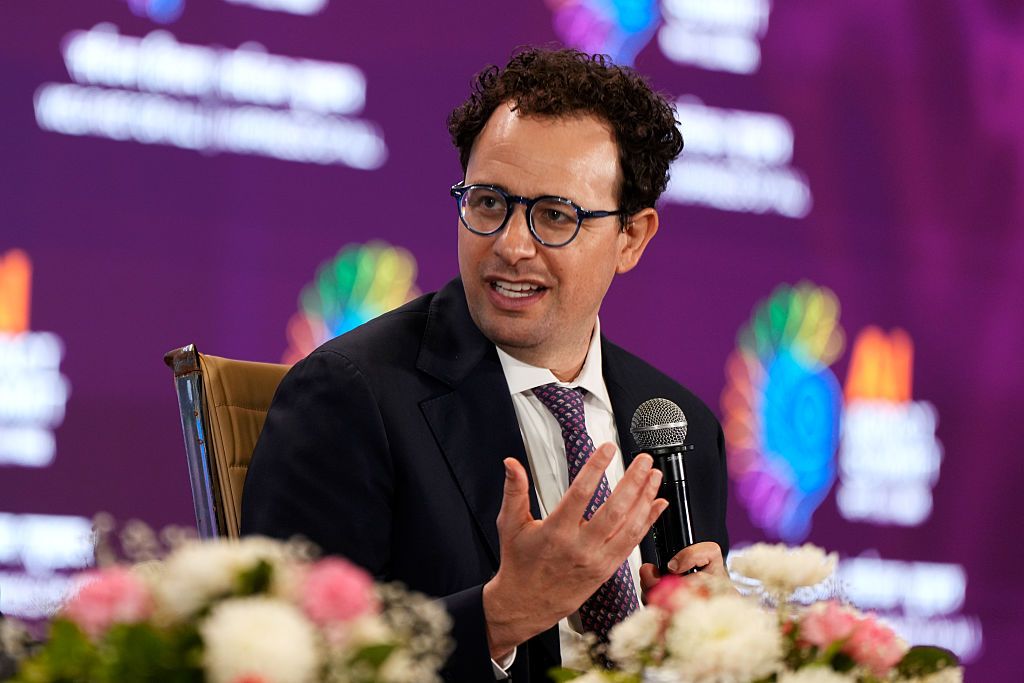
In a new blog post, Anthropic CEO Dario Amodei outlined three strategies for pacing AI development and said Anthropic is 'unilaterally committing' to embedding third-party evaluators like METR inside the company.
Why it matters
He cited the OpenAI-HuggingFace hack and AI's 'growing ability to build the next generation of AI' as reasons to slow capability improvements, and called on governments to require other frontier companies to match the evaluator access.
What to watch
Antitrust concerns may complicate coordination — Amodei said the US government should issue a 'narrow waiver' for safety conversations. He also suggested chip restrictions and distillation crackdowns could widen America's lead over China in 3–5 years.
WHO IT HITSThis lands on AI safety and compliance teams at frontier labs, who would need to host outside evaluators with internal-level access, and on policymakers weighing antitrust waivers for safety coordination.
Ask the AI about this article →
Summaries like this, in your inbox every morning.
Amodei's post arrives amid an intensifying debate over AI safety and alignment. This week, researcher Jacob Coxon resigned from Anthropic, writing that leading AI companies are 'gambling with our lives,' though Amodei's post did not explicitly mention the resignation. Amodei instead pointed to the OpenAI-HuggingFace hack and what he described as AI advancing drastically faster, particularly its growing ability to build the next generation of AI.
His three proposals move from unilateral action to international coordination. The first involves embedded evaluators from third-party organizations like METR, which Amodei compared to regulators embedded with bank employees. The second calls for leading AI companies in democratic countries to coordinate common safety standards and limits on unchecked progress, with Amodei acknowledging antitrust concerns and suggesting the US government issue a narrow waiver for safety conversations. The third envisions global coordination, including with China, though he admitted stark limits on what can be achieved.
Critics remain skeptical. Journalist Brian Merchant wrote that he has yet to see credible step-by-step documentation of how AI might move from self-recursively improving AI to killing every human, and suggested proposals like Amodei's would likely only serve Anthropic and OpenAI — 'what regulatory capture looks like in action.' Amodei responded that the backlash is fundamentally a crisis of trust and that he continues to believe AI can enormously improve human life. The outcome likely hinges on whether governments grant the antitrust waiver Amodei seeks and whether other frontier companies match Anthropic's evaluator commitment.
For example, today's edition would include:
AI-summarized, only the topics you pick — one digest a day via Email, Slack, or Discord.
Free · 30 seconds with Google · unsubscribe anytimeWhat is AIToday? →
Ask AI anything about this article. Q&As are published on this page for other readers too.
Anthropic CEO Dario Amodei proposed a three-step plan to 'pace the frontier' — slowing training and developmen…
On Nvidia's latest earnings call, CEO Jensen Huang said AI crossed an inflection point last month, with most A…
Nvidia is reportedly discussing anchoring Anthropic's planned $100 billion IPO at a valuation near $2 trillion

A KAIST and Naver AI Lab study found that reasoning operations like extraction, decomposition, formula recall…
Reuters reports Nvidia is in talks to invest up to $10 billion in Anthropic's planned IPO as an anchor investo…
OpenAI's Eric Provencher recommends reviewing skills, AGENTS.md, and task prompts when switching to GPT-6 Astr…