
What happened
Companies that aggressively pushed AI adoption earlier this year—a trend called "tokenmaxxing"—are now facing the bill. Uber reportedly exhausted its annual AI budget in a few months, some organizations cut Claude licenses, and Meta shut down its internal leaderboard. NEA partner Tiffany Luck is now focused on how startups are helping enterprises track return on AI spend.
Why it matters
The gap between AI hype and measurable business results is real. Companies rushed to deploy AI tools without a clear plan for measuring whether the investment actually paid off. This tension between enthusiasm and accountability is reshaping how businesses think about AI budgets and ROI.
What to watch
Luck's work centers on personal agents and what she calls "magic moments" in consumer business—the specific, high-value uses where AI can deliver clear wins. The conversation also touches on this year's AI IPOs, suggesting the investment community is actively watching which companies can prove their AI spending drives real returns.
Ask the AI about this article →
For example, today's edition would include:
AI-summarized, only the topics you pick — one digest a day via Email, Slack, or Discord.
Free · takes 30 seconds · unsubscribe anytimeWhat is AIToday? →
Ask AI anything about this article. Q&As are published on this page for other readers too.
CBTS Technology Solutions LLC launched Forge Agents, a platform that turns a plain-language job description in…

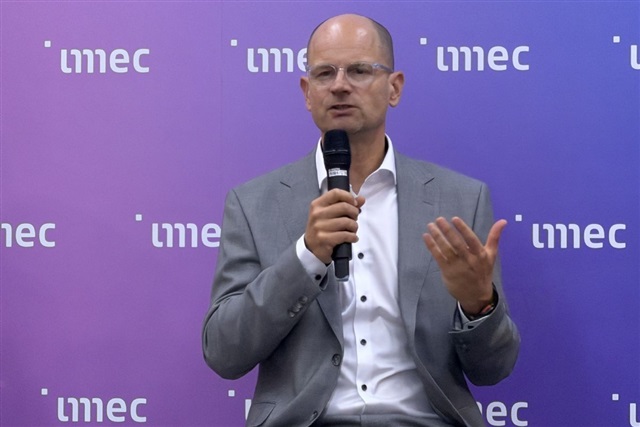
Imec CEO Patrick Vandenameele said at SEMICON Taiwan 2026 that the Belgian research center is broadening its c…
Alphabet's AI Overviews now reach over 2.5 billion monthly users through Google Search, and its ad business ge…
Visual Studio Code 1.135 now includes an experimental 'Rubber Duck' feature that lets developers request a sec…
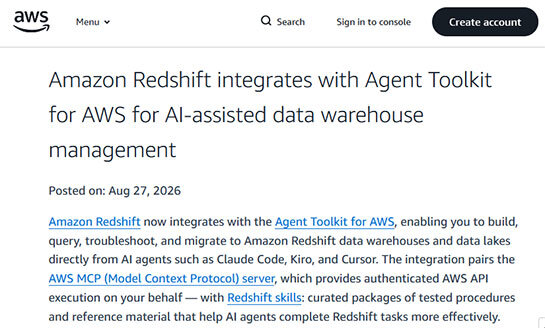
Amazon Web Services (AWS) has integrated its fully managed data warehouse service, Amazon Redshift, with Agent…
Sonos announced a new app update with generative AI features, a new soundbar called the Beam Ultra, and its se…