What happened
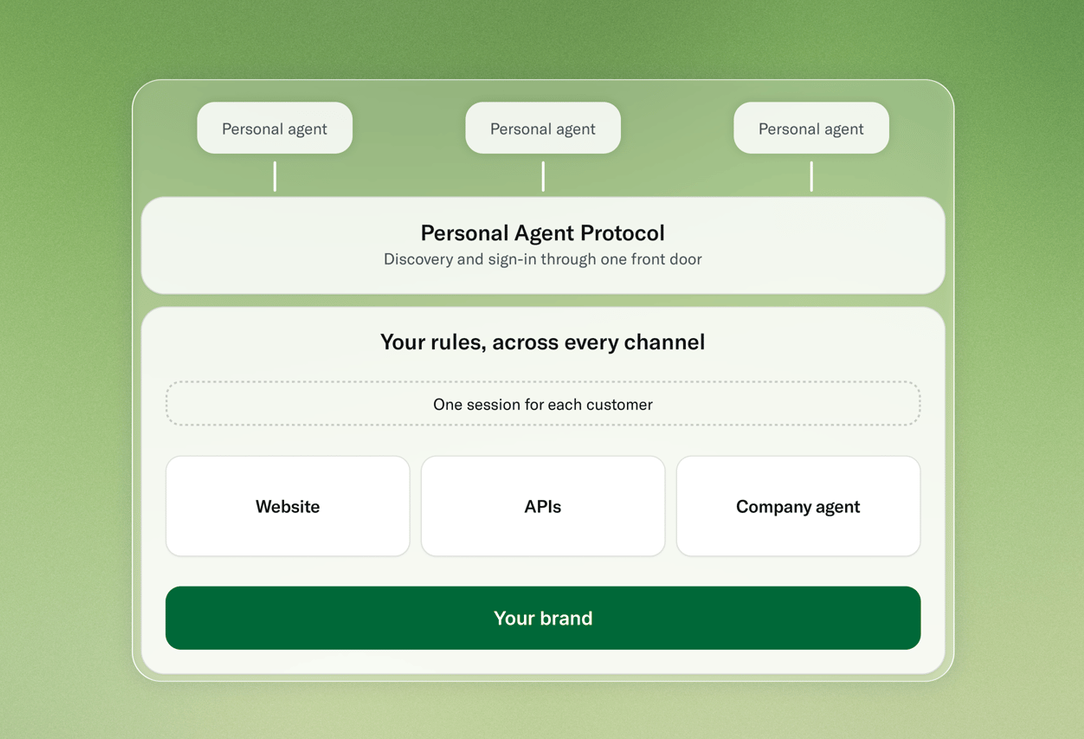
Meta, Walmart, Stripe and Sierra Technologies are creating the Personal Agent Protocol, introduced by Sierra co-founder Bret Taylor. It aims to handle authentication and give companies visibility into what personal agents do.
Why it matters
The standard is meant to let businesses tell authorized AI purchases apart from unauthorized ones, so consumers can trust agents enough to adopt them for shopping.
What to watch
Taylor says there "will be chaos until such a standard exists" ensuring visibility into what agents do on retailer websites, and he expects OpenAI to back it later. Watch whether banks' call for AI agent standards is answered.
WHO IT HITSRetailers and payment processors that would have to recognize and authorize AI-agent purchases on their sites; Meta is pushing the standard as its Muse agent already faces security and privacy complaints from researchers.
Summaries like this, in your inbox every morning.
The Personal Agent Protocol arrives as AI companies including Meta, with its personal agent Muse, are betting on agentic commerce — the idea that people will simply use agents to buy things for them online. Muse launched only last month but has already become one of the most downloaded applications in Apple's App Store, and it has drawn privacy and security concerns, including a report that Meta engineers raced to fix vulnerabilities before launch and a ban from Amazon's retail platform after the agents failed to identify themselves.
Meta, Sierra and their partners appear to be responding to a call from six major banks, including Bank of America and Capital One, which published a paper last month urging the AI industry to establish standards, policies and consumer protections around transparency, safety, privacy and data, choice and interoperability. Taylor told CNBC there "will be chaos until such a standard exists" that ensures visibility into what personal agents do on retailer websites, and he expects OpenAI to back the standard in the future.
Meta has good reason to want the standard to take hold: according to a Citigroup report earlier this week, Muse could generate upwards of $27 billion in revenue for the company by the end of the decade. Whether the protocol becomes widely adopted would hinge on buy-in from retailers and payment providers beyond the founding partners, and on whether it eases the privacy and security worries that have already limited Muse's reach on at least one major retail platform.
Pick your industry and the AI tools you use, and get news related to your work every day.
Free · 30 seconds with Google · unsubscribe anytimeWhat is AIToday? →
Ask AI anything about this article. The AI reads this article, earlier AIToday articles, and Wikipedia, and cites its sources. Q&As are published on this page for other readers too.
Mistral AI opened a public preview of Mistral Large 4, its 1.05 trillion-parameter MoE model nicknamed "Le Cho…

Google began rolling out "Simple Guide" in Gemini Live on Android, letting users share camera or screen views…

Anthropic released "Claude for Google Workspace" as a public beta, reachable from each tool's "Extensions(拡張機能…
OpenAI released its Jev-style Decisions API, previously announced at last week's DevDay, and Simon Willison us…

The engineer wired Claude Code headless into a pipeline that turns backlog items into merged code, logging 243…

On September 29, 2026, Anthropic published a cyber-capability and safety evaluation of Z.ai's GLM-5.3, reporti…

