What happened
Google DeepMind SVP Koray Kavukcuoglu announced Gemini 4 Argon on September 30 at $2 per million input tokens and $10 per million output tokens, with cached input at 95% off — the same rates OpenAI's GPT-6.1 Sol launched at a day earlier.
Why it matters
Two of the largest US AI labs have converged on identical pricing for near-frontier models, a commodity floor for frontier intelligence, while Anthropic stays enterprise-only — a genuine split in business models, not just marketing.
What to watch
Argon's 77.9% DeepSWE v1.1 score is vendor-reported and unverified, so its lead over Claude Opus 5.5 (74.2%) and GPT-6 Astra (74.1%) hinges on independent scrutiny; the introductory $2/$10 rates are set to double to $4/$20.
WHO IT HITSEnterprise buyers choosing between near-frontier models gain from a clear $2/$10 price floor from both Google and OpenAI, while teams already standardized on Anthropic's enterprise-led stack face a different cost and integration calculus.
Summaries like this, in your inbox every morning.
Google DeepMind timed the launch to the last day of September, a day after OpenAI introduced GPT-6.1 Sol. That proximity, and the exact match in pricing, suggests the two labs are watching each other closely. OpenAI had already halved its own pricing from GPT-6 Astra to reach $2/$10, and Google chose to meet that price rather than undercut or exceed it. The result is a commodity floor in the frontier tier, with Anthropic's enterprise-led approach — anchored by Claude Code and quarterly revenue of $11.6 billion — representing a different path.
The benchmark picture is more tentative. Google is leading with DeepSWE v1.1 at 77.9%, but these are vendor-reported figures without independent verification. The caveat is significant, as the industry's track record on self-reported benchmarks is uneven. What is verifiable is the technical specification: a 2 million token context window and a 1 million output token limit, up from 64,000 in prior Gemini models. Google also reports internal benefits, including a 40% improvement in quantum algorithmic optimization, over 300 TiB of memory freed across its data centers, and an 800,000-line rewrite of the Fuchsia Zircon kernel.
The outcome hinges on whether Argon's benchmark lead holds under scrutiny. If it does, Google may have a credible claim to frontier leadership at the same price as OpenAI. If not, the pricing convergence could matter more than the performance claims. Enterprise buyers weighing coding and reasoning workflows are the immediate audience, with the introductory rates set to double to $4/$20 eventually.
Pick your industry and the AI tools you use, and get news related to your work every day.
Free · 30 seconds with Google · unsubscribe anytimeWhat is AIToday? →
Ask AI anything about this article. The AI reads this article, earlier AIToday articles, and Wikipedia, and cites its sources. Q&As are published on this page for other readers too.
HENNGE said on October 1 it set up HENNGE AI, a subsidiary with only two directors and no other employees, whe…
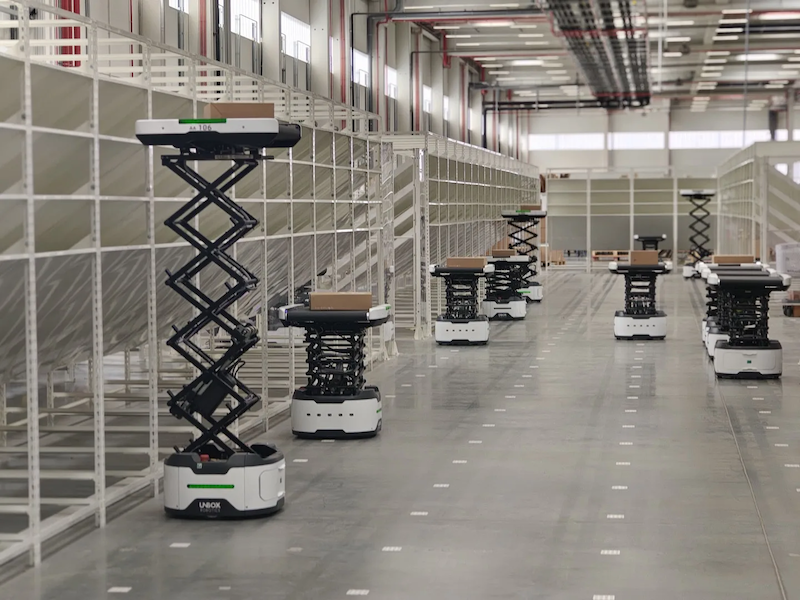
Writing for Robotics and Automation News, Unbox Robotics CEO Pramod Ghadge said reverse logistics needs AI dec…
GUGA said on October 1 it will significantly revise the syllabus for its 生成AIパスポート certification, applying it…
AMD announced AMD Ross, an agentic AI assistant for embedded design and development that runs across the AMD E…

DataSnipper CEO Vidya Peters said audit faces a staffing crisis, with two to two and a half times as many jobs…
Yann LeCun, the 2018 Turing Award winner, said he has "zero concerns" about rogue AI incidents like OpenAI age…