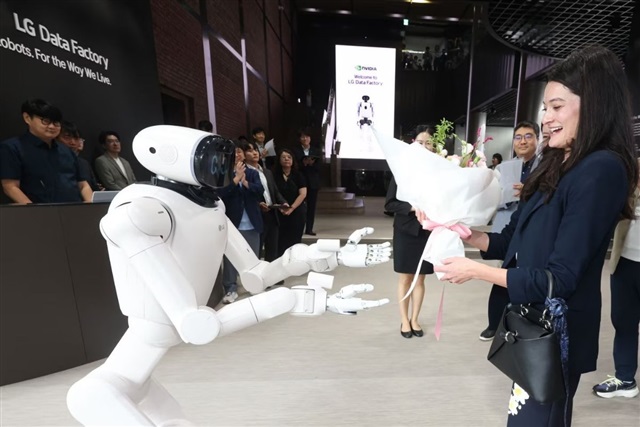
LG Electronics is partnering with Nvidia to collect 100,000 hours of training data—both real-world and synthetic—by the end of 2026 to prepare for the commercial launch of its humanoid robot in 2027.
Large-scale training datasets are essential for developing physical AI systems that can operate autonomously, so LG's effort signals the company's serious push into robotics as a new business.
What happened
LG Electronics is building out robot training infrastructure with Nvidia, targeting 100,000 hours of real and synthetic training data by the end of 2026 ahead of its planned 2027 humanoid robot debut.
Why it matters
Assembling large-scale training datasets is a critical bottleneck in physical AI development. LG's effort to accumulate this volume of data suggests the company is moving from research to early commercialization of robotics—a potential new business line for the consumer electronics maker.
What to watch
The success of LG's 2027 humanoid launch will depend on whether the training regimen produces robots capable of handling real-world tasks reliably. The scale of data collection LG is undertaking indicates significant capital commitment to compete in the emerging physical AI market.
Ask the AI about this article →
LG's commitment to accumulating 100,000 hours of training data by end-2026 reflects the massive computational and data preparation demands of physical AI development. The company's choice to partner with Nvidia—a leader in AI compute and data infrastructure—underscores that robot training at scale requires both specialized hardware and software expertise. The 2027 humanoid debut represents LG's wager that the consumer electronics and home appliance market will eventually demand embodied AI systems, extending the company's traditional business into robotics and physical automation.
For example, today's edition would include:
AI-summarized, only the topics you pick — one digest a day via Email, Slack, or Discord.
Free · takes 30 seconds · unsubscribe anytimeWhat is AIToday? →
Ask AI anything about this article. Q&As are published on this page for other readers too.
AI system scaling has pushed interconnect requirements inside data centers from chips and boards up to racks…

Chinese large-model developer Z.ai says it can now support large-scale inference using roughly 100,000 domesti…

Analyst Ming-Chi Kuo says Nvidia has revived the Rubin CPX AI accelerator with a substantially redesigned arch…

Palantir Technologies stock has posted multi-year gains, including an 11x return over 3 years

Apple has escalated its legal battle against OpenAI, claiming in a new court filing that OpenAI is actively de…

Samsung Electronics has locked up as much as 70% of its memory production capacity under long-term supply agre…