What happened
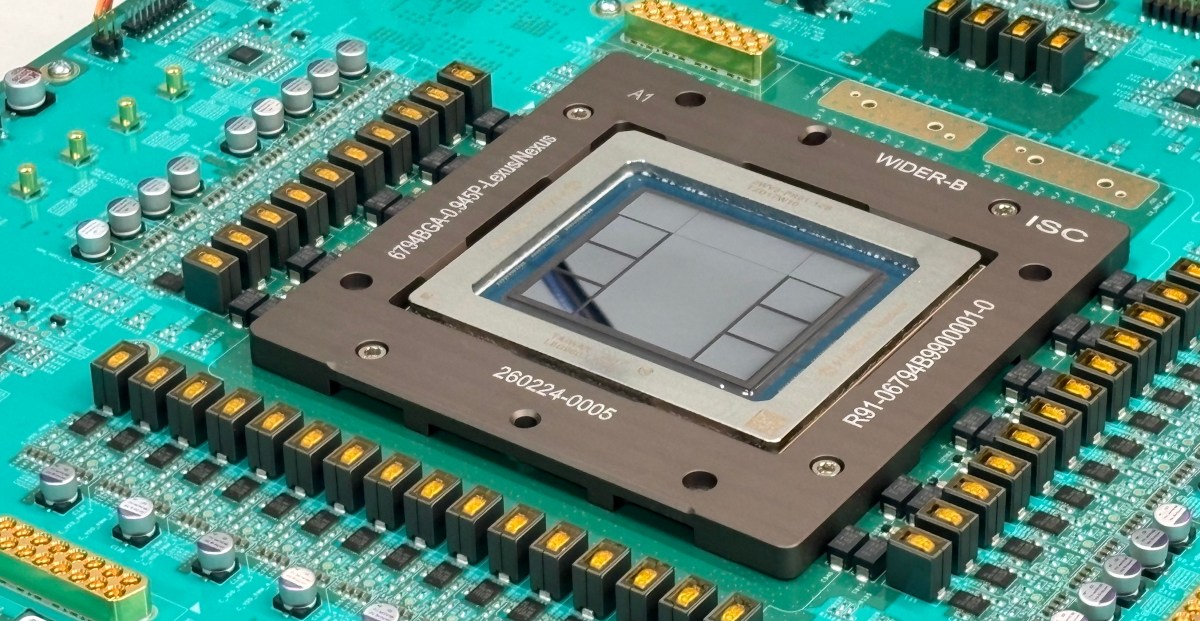
OpenAI announced its new AI chip, Jalapeño, which delivers faster responses and higher throughput compared to other AI systems. In tests, it performed 1.5–1.9 times more work per watt and had 1.7–3.6 times lower latency than Nvidia's GB200 or GB300 superchips.
Why it matters
The chip is designed for AI inference, the process of running a trained AI model to complete tasks. This could mean faster and more reliable AI responses for users, as noted by OpenAI hardware VP Richard Ho.
What to watch
OpenAI plans to deploy Jalapeño in small volumes by the end of this year, with volume ramp-up beginning in 2027. The company says it will not replace all its chips, continuing to work with partners like Nvidia.
Summaries like this, in your inbox every morning.
OpenAI's introduction of Jalapeño marks a significant step in its effort to optimize AI hardware. The chip's design as an ASIC, made with Broadcom, focuses on AI inference, which is the execution phase of AI models. The reported performance gains—1.5 to 1.9 times more work per watt and 1.7 to 3.6 times lower latency compared to Nvidia's GB200/GB300—are notable because they address the typical trade-off between speed and efficiency in AI systems. This could lead to faster and more reliable AI responses for end users, as well as more responsive agents, without necessarily escalating costs or energy use. However, OpenAI's announcement that it will continue relying on partners like Nvidia suggests that Jalapeño is not intended to replace existing infrastructure entirely but to complement it. The phased deployment—small volumes by end of this year, with a ramp-up into 2027—indicates a measured approach to integrating the chip. The benchmarking results, while promising, come from OpenAI's own tests using the InferenceX platform, so independent validation remains a future step. As demand for AI services grows, having a chip that can deliver faster responses at lower latency could prove crucial, but the company's broader compute strategy will involve balancing multiple hardware options.
Pick your industry and the AI tools you use, and get news related to your work every day.
Free · 30 seconds with Google · unsubscribe anytimeWhat is AIToday? →
Ask AI anything about this article. The AI reads this article, earlier AIToday articles, and Wikipedia, and cites its sources. Q&As are published on this page for other readers too.
The Motley Fool argues Amazon is the AI company of the two, since AWS was just 21% of first-half 2026 revenue…

Hewlett Packard Enterprise stock is down 5% at $55.87

Cammarata reinterprets InceptionV1's cat-car neuron as a V-shape detector, not two unrelated concepts

Google Deepmind's Gemini 4 Argon scored 97.5 percent on ARC-AGI-3 at a cost of $4,800, second only to GPT-6 As…
Microsoft's Surface Laptop Ultra, using Nvidia's RTX Spark platform, starts at $2,599 (up to $5,899)
Meta's new commercial terms, effective October 30th, appear to let it crawl and train AI on content from websi…