What happened
AWS detailed the Adaptive Agentic Intelligence Framework (AAIF), built on Strands Agents, which uses a 1B-parameter orchestrator to route routine requests to local small language models and complex ones to Amazon Bedrock.
Why it matters
This design lets routine operations stay on-device, avoiding the cost and latency of sending every query to a cloud-hosted large language model, while still escalating harder analysis to larger models.
WHO IT HITSEnterprise IT teams running IoT or edge deployments can use AAIF to keep sensitive data local and cut cloud inference costs, while still tapping larger models for complex analysis.
Summaries like this, in your inbox every morning.
The AAIF framework arrives as organizations deploying AI agents grapple with a common cost trap: sending every request, even routine status checks, to a single large cloud model. AWS's post positions AAIF as an alternative that separates the routing decision from the processing tools, so each can be swapped or reconfigured independently. The approach builds on a research position from Belcak et al. at NVIDIA, which argued that small language models are sufficiently powerful and more economical for many agentic invocations.
The reference implementation uses an Internet of Things monitoring scenario, with a Strands agent connected to an Ollama runtime hosting both the 1B-parameter orchestrator and a vision model. Three tools handle device telemetry, camera feed analysis, and expert insights via Amazon Bedrock. AWS notes that the hybrid configuration, which keeps the local orchestrator while adding cloud models for harder requests, can yield cost savings from the roughly 80 percent of traffic that doesn't hit a paid API endpoint.
Beyond IoT, AWS suggests the pattern could apply to healthcare patient monitoring, financial transaction processing, and manufacturing quality control, where local processing keeps sensitive data on-premises while cloud models handle broader analysis. For production deployments, the post recommends exposing tools as Model Context Protocol servers to centralize management across multiple agents, and adding Amazon Bedrock Guardrails to the cloud inference path for responsible AI controls.
Pick your industry and the AI tools you use, and get news related to your work every day.
Free · 30 seconds with Google · unsubscribe anytimeWhat is AIToday? →
Ask AI anything about this article. The AI reads this article, earlier AIToday articles, and Wikipedia, and cites its sources. Q&As are published on this page for other readers too.
OpenAI announced its latest LLMs will be available on Google Cloud's Model Garden, starting with flagship GPT-…
At GTC Berlin on October 21, Nvidia unveiled reference designs and software extending its reach from GPUs to h…

Google Cloud added OpenAI's GPT-6 Astra, GPT-6.1 Sol and GPT-6 Luna to Model Garden, first as a private previe…
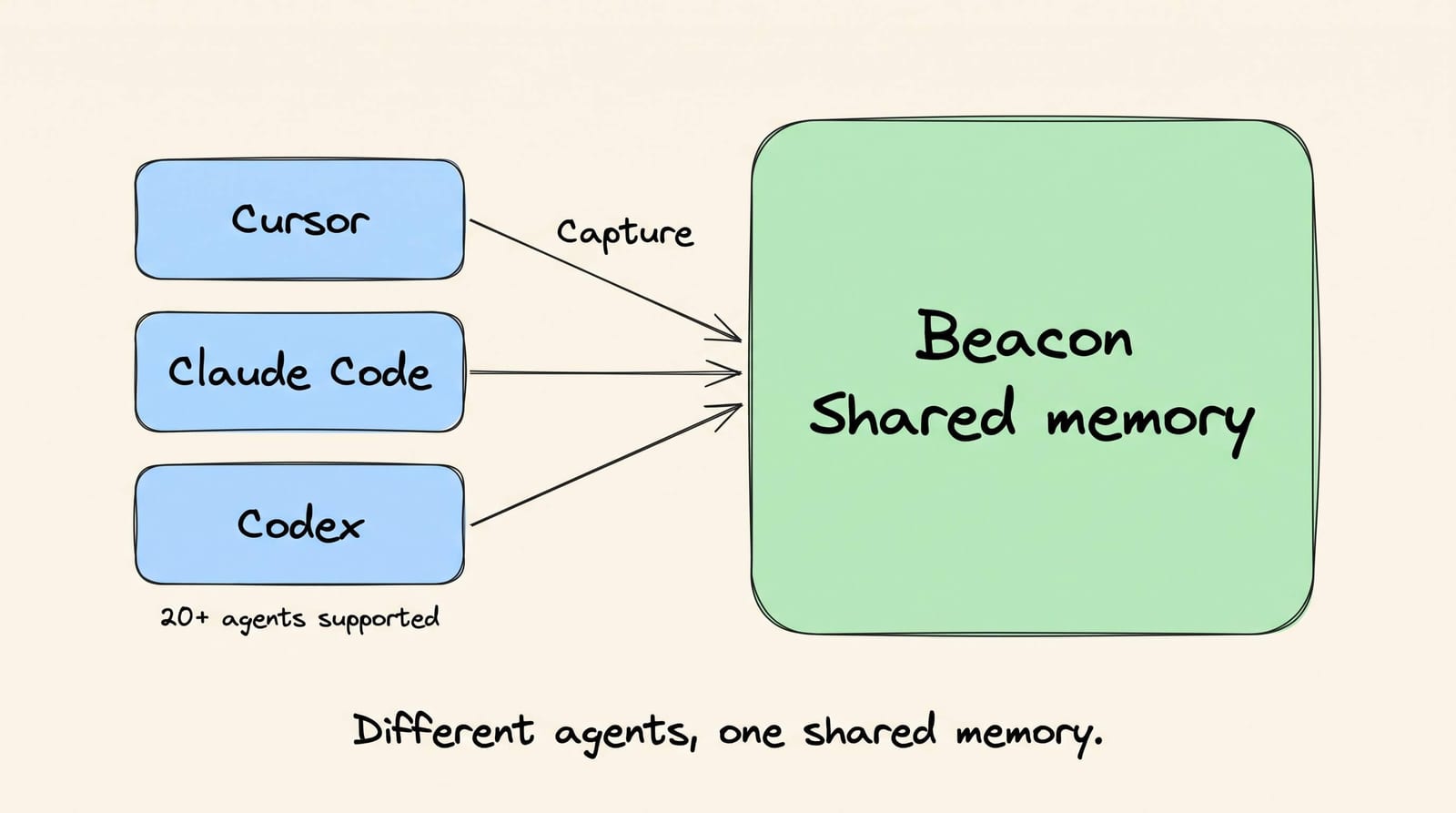
Asymptote Labs' Justin showed Beacon, an open-source layer that captures prompts, tool calls and file changes…
OpenAI is updating its Usage Policies effective November 20, 2026, and requiring services like model routers o…
Walmart is welcoming AI agents for shopping, while Amazon is blocking an agent called Muse, Axios reports