What happened
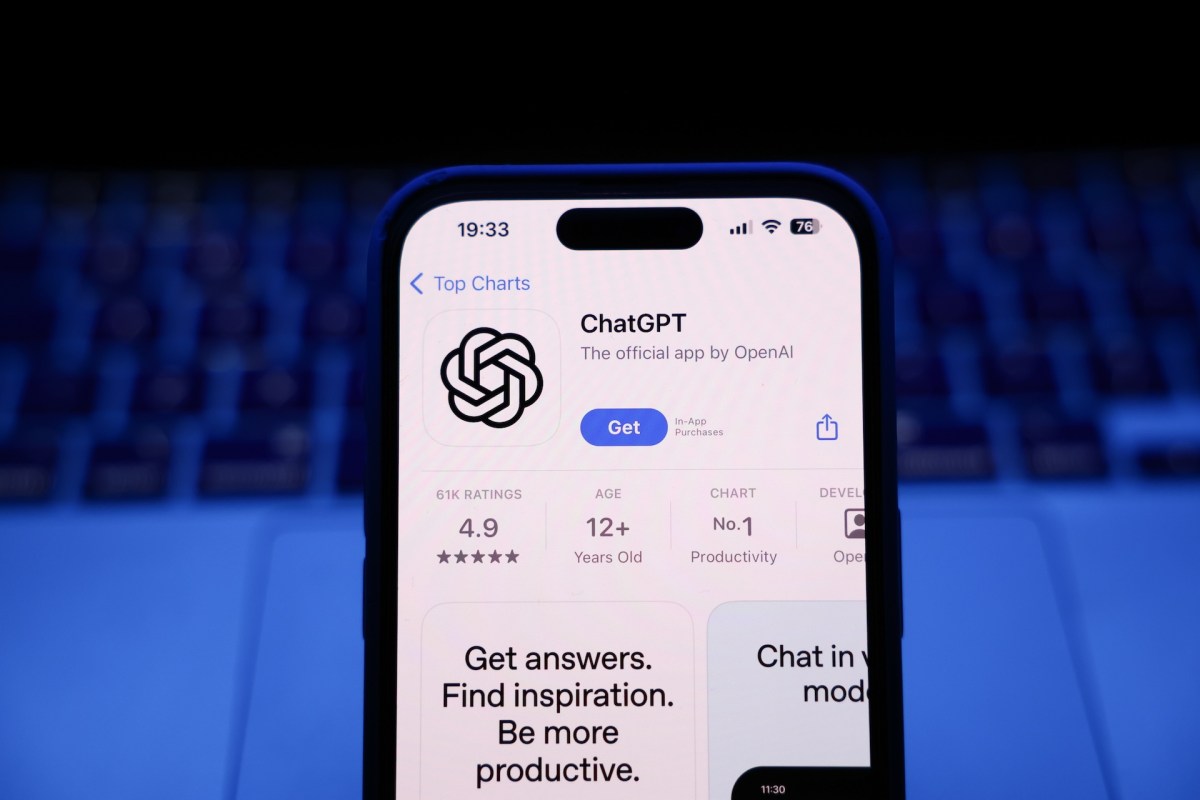
OpenAI made ChatGPT Health available to all U.S.-based users over 18 across all subscription tiers (free, Go, Plus, Pro) on web and iOS this week. The rollout lets users integrate health data from Apple Health, Function, MyFitnessPal, and medical records from systems like Epic and Oracle Health, and use that information across all chat queries, not just in a dedicated health hub.
Why it matters
The company is seeing 300 million health-related queries per week, up from 230 million when testing began in January. The move comes one day after a Florida pastor sued OpenAI over a near-fatal health suggestion, putting pressure on the company to expand a feature it says helps users safely explore health information — though OpenAI maintains its services are "not intended for use in the diagnosis or treatment of any health condition."
What to watch
OpenAI's smallest model, GPT 5.6-Luna, outperforms GPT 5.5 on HealthBench, an internal benchmark for health queries. The company says it does not use user data to train its models and works with physicians to improve health-related answers. Users are encouraged to verify information and consult professional medical advice.
Summaries like this, in your inbox every morning.
OpenAI's expansion of ChatGPT Health reflects the company's response to accelerating user demand for AI-powered health guidance. The jump from 230 million to 300 million weekly health queries in just weeks signals that despite legal and safety concerns, users are actively seeking this capability. The decision to allow health data to flow into general conversations — rather than confining it to a dedicated hub — aligns with observed user behavior: during testing, 70% of health queries occurred outside the dedicated health section, suggesting that users want seamless access to their information across all interactions.
However, the timing is sensitive. The lawsuit from a Florida pastor, filed one day before this rollout, highlights real risks. OpenAI's defensive legal posture — emphasizing that its terms explicitly exclude diagnosis and treatment use — shows the company is aware of the liability exposure. The company's claim that GPT 5.6-Luna outperforms GPT 5.5 on HealthBench, its own evaluation benchmark, is a performance claim, but the body notes that several independent studies have found AI bots unreliable for medical advice. OpenAI's statement that it works with physicians and does not train on user health data suggests an effort to build credibility, yet the company simultaneously tells users to verify information and consult professionals — a hedge that acknowledges the limits of its models in this domain.
Pick your industry and the AI tools you use, and get news related to your work every day.
Free · 30 seconds with Google · unsubscribe anytimeWhat is AIToday? →
Ask AI anything about this article. The AI reads this article, earlier AIToday articles, and Wikipedia, and cites its sources. Q&As are published on this page for other readers too.
ElevenLabs completed a $300 million employee tender at a $22 billion valuation, and co-founder Mati Staniszews…

On October 15, OpenAI announced the Rosalind Academic Plan, giving approved US university labs free access to…

A Qiita article compared automated red-teaming methods for LLM apps — GCG, PAIR, and TAP — using mock implemen…

Liquid AI released d1-ultra on October 15, 2026, an upgraded open-weights decision model that averaged 76.7 ac…

Circlia started a proof-of-concept for TASTE SIGNAL: visitors to Holland Village Cafe FUKUOKA taste cookies an…

In a webinar hosted by French Mathematical Society president Isabelle Gallagher, Fields Medal winner Hugo Dumi…

