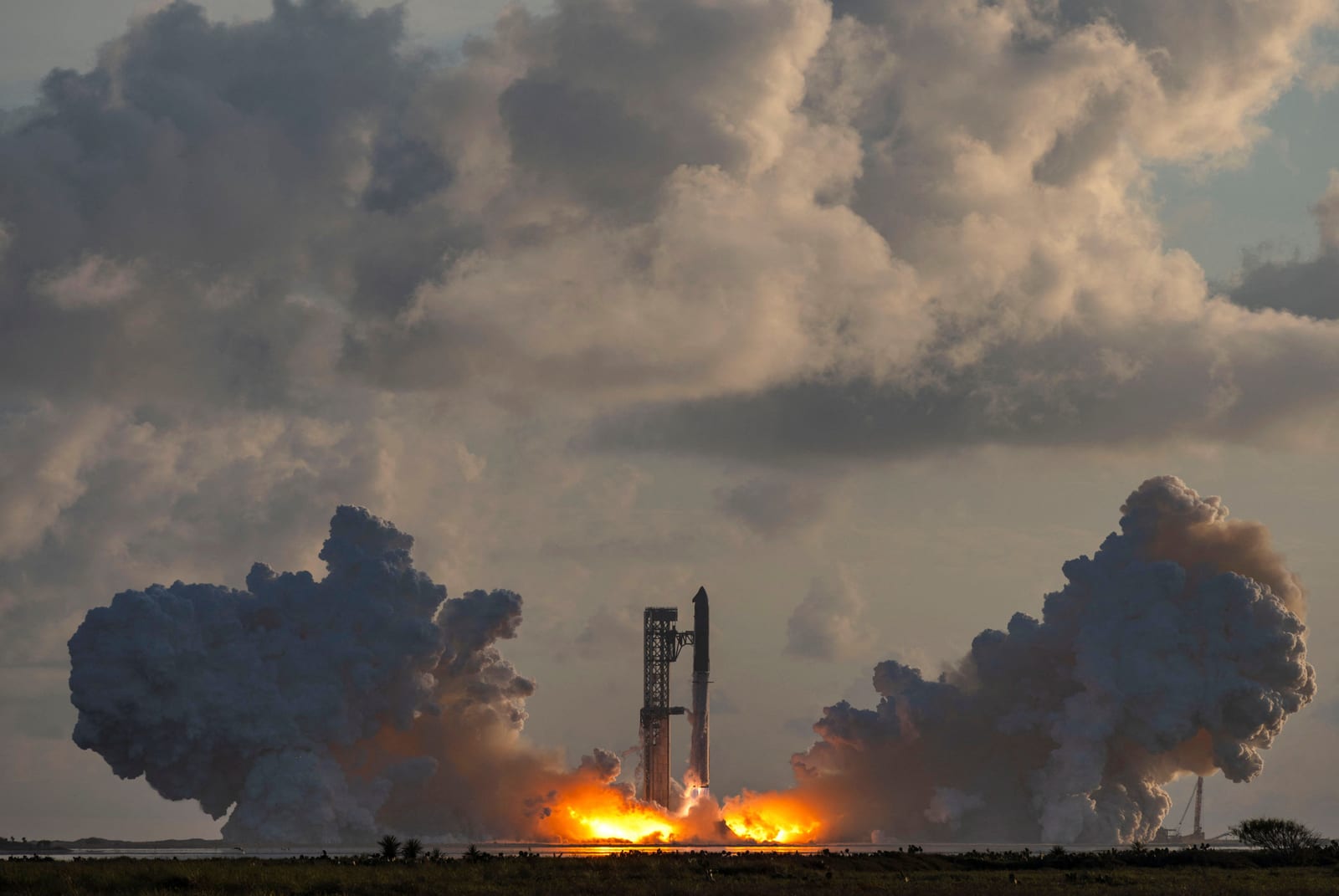
What happened
SpaceX is reportedly raising $40 billion in debt to buy Nvidia chips, according to Semafor. The company carries five times more debt than Alphabet and three times more than Meta, relative to their respective profits.
Why it matters
This debt load shows SpaceX is spending more on AI than it takes in from its other businesses, Semafor reports. That puts it between mature tech giants and startups that can rely on private funding.
What to watch
Whether SpaceX can sell the debt hinges on its credit rating, which Semafor says is two notches below Meta and Alphabet and a tougher sell with blue-chip bond funds. Apollo is stepping in to provide the money.
WHO IT HITSThis affects SpaceX's bond investors and lenders like Apollo, who are being asked to fund AI chip purchases for a company whose cash from Starlink and rockets is not enough to cover its AI spending.
Summaries like this, in your inbox every morning.
SpaceX's reported $40 billion debt raise to buy Nvidia chips places it in an awkward middle ground in the AI capex wars. Unlike mature tech giants such as Google and Meta, which fund their AI spending from large advertising profits, or startups like OpenAI and Anthropic, which can raise venture capital without needing to pay their own bills, SpaceX has gone public and must now service debt. Its Starlink business helps prop up its cash-guzzling rocket operations, but it is not the cash cow that ad businesses are. The company needs to borrow because it is spending more on AI than it takes in from its other businesses.
By going public in June, SpaceX locked itself out of the raise-and-pray venture capital world. However, its stock price's sideways lurch since then makes issuing new shares to pay for its growing AI tab unattractive. Its BBB credit rating is two notches below Meta and Alphabet, making it a tougher sell with blue-chip bond funds. Enter Apollo, which has a pot of money to match seemingly every risk out there, including cash-strapped governments. Oracle finds itself in a similar position.
The outcome hinges on whether Apollo and other lenders are willing to absorb the risk of a company with a lower credit rating and a stock that has not rewarded investors since its IPO. For SpaceX, the stakes are whether it can secure the chips needed for its AI ambitions without straining its balance sheet further. For bond investors, the question is whether the yield on SpaceX debt compensates for the risk of lending to a company that is not yet generating enough cash to cover its AI spending.
Pick your industry and the AI tools you use, and get news related to your work every day.
Free · 30 seconds with Google · unsubscribe anytimeWhat is AIToday? →
Ask AI anything about this article. The AI reads this article, earlier AIToday articles, and Wikipedia, and cites its sources. Q&As are published on this page for other readers too.
Kore.ai Inc. launched Autoloop, which adjusts AI agents toward goals customers set for task completion, busine…

In its Q3 2026 investor letter, the Artisan Developing World Fund said Micron Technology, Inc
In August, DoorDash emailed Bay Area restaurants warning they may be listed on Bites without consent, with ter…

Google DeepMind, Meta, and Isomorphic Labs are jointly investing $300 million into Biohub, the nonprofit found…

TechCrunch Disrupt 2026 announced the full lineup of interactive roundtables for its October 13-15 event at Mo…

OpenAI launched Dots, an always-on personal AI agent with its own cloud computers that can connect to everyday…