What happened
The Takaichi administration approved an ordinance outlining requirements to become a designated secondary capital, aimed at addressing Tokyo's overconcentration of population and resources. Only Hokkaido, Aichi, Osaka and Fukuoka of 47 prefectures meet the conditions.
Why it matters
All four qualifying prefectures are preparing proposals, so the ordinance turns a disaster-backup concept into a concrete selection process that could shift some government functions and people away from Tokyo.
WHO IT HITSThe ordinance lands on the four qualifying prefectures — Hokkaido, Aichi, Osaka and Fukuoka — whose governors and staff must prepare proposals. It also affects central government planners deciding how to decentralize functions from Tokyo.
Summaries like this, every morning.
The ordinance approved by Prime Minister Sanae Takaichi's government defines what it takes to be a designated secondary capital, a role meant to keep core functions running if a large-scale natural disaster hits the Kanto region. Alongside that disaster-readiness purpose, the measure is designed to address an overconcentration of population and resources in Tokyo.
Of the 47 prefectures, only Hokkaido, Aichi, Osaka and Fukuoka meet the necessary conditions, suggesting the field of candidates is narrow. Chief Cabinet Secretary Minoru Kihara told reporters the requirements rest on objective standards drawn from available statistics and figures, and on parliamentary deliberations in which proponents argued a certain population level and economic scale are needed to fulfill a core function of being a decentralized economic zone.
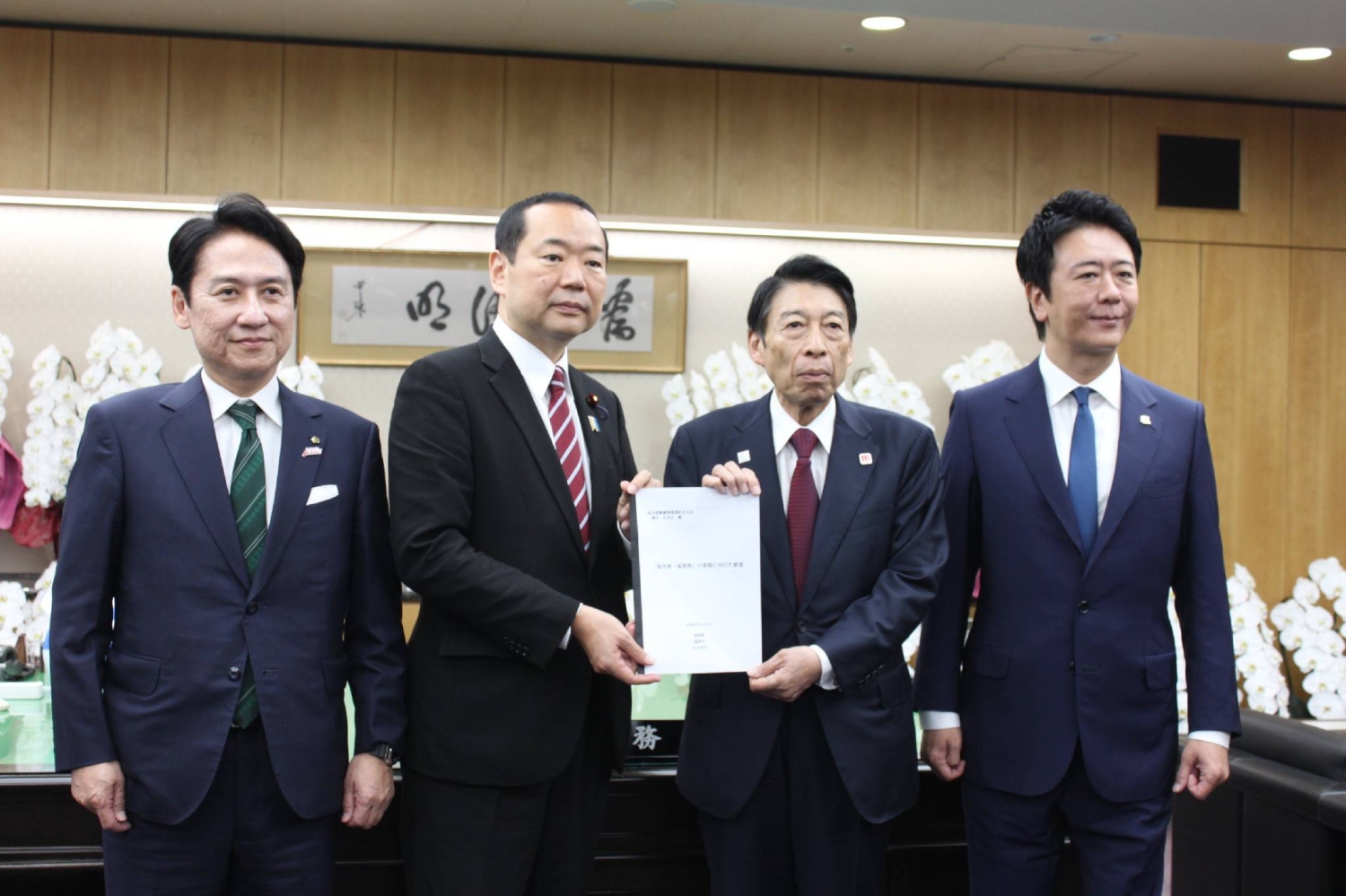
All four qualifying prefectures are making preparations to submit their proposals to the central government. The ordinance thus moves the secondary-capital idea from debate into a selection process, with a short list already identified and the threshold set.
Pick your industry and the AI tools you use, and get news related to your work every day.
Free · 30 seconds with Google · unsubscribe anytimeWhat is AIToday? →
Ask AI anything about this article. The AI reads this article, earlier AIToday articles, and Wikipedia, and cites its sources. Q&As are published on this page for other readers too.

