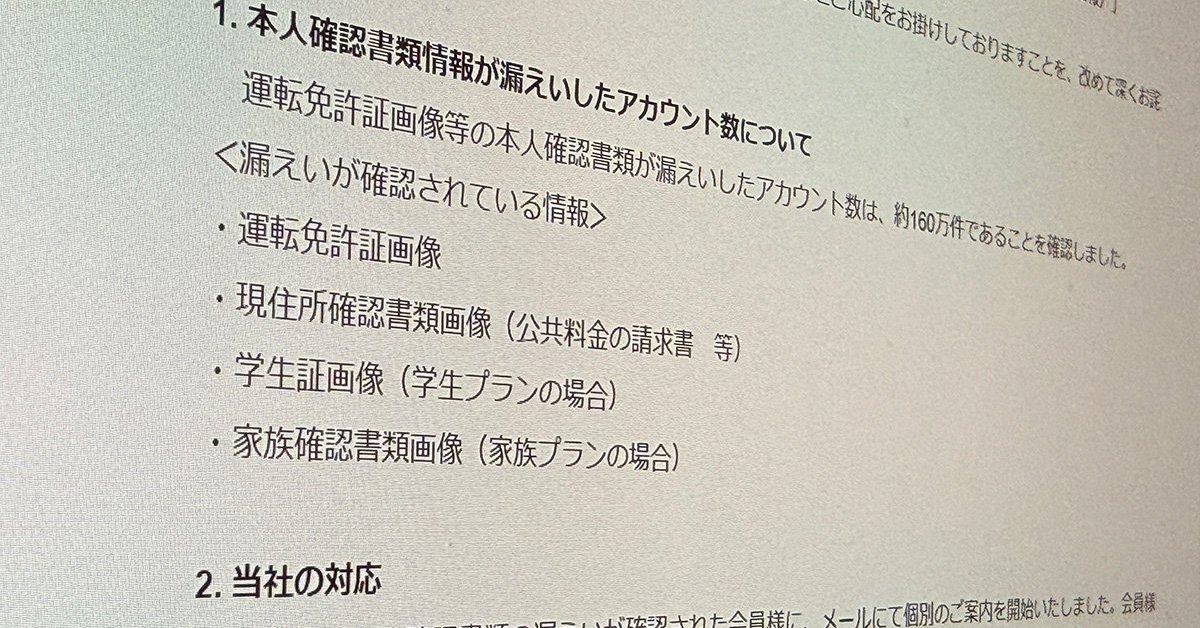
What happened
Hitachi's Kanako Gushi said attackers are almost certainly using AI, cutting exploit time from weeks to hours. IBM said it found no AI traces in recent incidents, yet argued cheap frontier models mean attackers have no reason not to use AI.
Why it matters
AI also speeds up defense, with Hitachi cutting threat-model creation from weeks to hours.
WHO IT HITSJapanese enterprises and their security teams — CISOs, SOC analysts and incident responders — face pressure to inventory assets, patch faster and build cyber business-continuity plans, since peers report more SOC and incident-response cases.
Summaries like this, in your inbox every morning.
The debate over AI's role in cyberattacks is complicated by a data problem that vendors freely acknowledge. Hitachi declined to disclose individual case counts, Accenture said Japan lacks its own statistical dataset, and IBM noted that published incidents cannot be reliably dated to the month they appear. An unnamed vendor added that reports after September exceeded 70, but some breaches dated back to July and August, inflating the apparent count.
On the defensive side, the four vendors converged on a theme that is decidedly unglamorous: understanding what must not stop, minimizing what is exposed, applying patches and preparing for the assumption of intrusion. Hitachi's Gushi called the combination of AI and human expertise the key to next-generation defense, and argued that defenders cannot keep up without AI. The unnamed vendor framed the constraint as managerial rather than technical, warning that if decisions to act or halt systems do not run smoothly, AI defenses go to waste. Accenture's Fujii said executives increasingly ask whether to prioritize hardening or resilience, suggesting those trade-offs are becoming a board-level question.
Pick your industry and the AI tools you use, and get news related to your work every day.
Free · 30 seconds with Google · unsubscribe anytimeWhat is AIToday? →
Ask AI anything about this article. The AI reads this article, earlier AIToday articles, and Wikipedia, and cites its sources. Q&As are published on this page for other readers too.
PwC Australia launched Cyber Managed Services, an AI-enabled cybersecurity service combining Google SecOps tec…
AI researcher Jannes Elstner told MIT Technology Review that even after identifying every part of a model gove…
In a post on X on Friday, OpenAI said Jasmine Wang, Tomek Korbak and Mikita Balesni were dismissed for violati…

The Association for Human Mathematics said OpenAI's release of 722 AI-generated "mathematical results" is not…

US President Donald Trump said that people who use the spelling "AI" (artificial intelligence) rather than "SI…

A LessWrong writer pushed back on calls to 'drop everything and pivot into AI safety,' saying far more talente…