What happened
Documentation files on over 100 websites contain executable content that can be automatically installed when AI agents visit. Researchers found 120 such files across 8,265 llms.txt and llms-full.txt files on 6,214 domains belonging to defense contractors, Fortune 500s, and Big Tech.
Why it matters
Within an hour of registering unclaimed domains, researchers got a response from a Fortune 500 company, and a few dozen more over time. The phone-home beacons revealed coding agents including Claude, OpenAI's Codex, and Hermes were involved, showing that agents trust vendor docs as ground truth, which one researcher called a broken trust model.
What to watch
At least one misconfigured site is directing visitors, human or AI, to live malware. The supply-chain surface is expanding as agents spread across SaaS, cloud, and endpoints, and current guards don't cover it, per the researchers.
Summaries like this, in your inbox every morning.
The discovery highlights a new attack vector in the AI supply chain. llms.txt files are the AI equivalent of robots.txt, meant to help agents understand website content. However, attackers can register unclaimed domains to serve malicious code when agents fetch these files. The researchers' test showed real-world impact within an hour, with a Fortune 500 company reaching out. This indicates that current security measures don't account for agents' tendency to execute code without verification. As agentic AI spreads across corporate layers, the risk of such attacks may grow. The lack of response from major AI vendors suggests the issue remains unresolved.
Pick your industry and the AI tools you use, and get news related to your work every day.
Free · 30 seconds with Google · unsubscribe anytimeWhat is AIToday? →
Ask AI anything about this article. The AI reads this article, earlier AIToday articles, and Wikipedia, and cites its sources. Q&As are published on this page for other readers too.
Anthropic gave six METR staffers hardware, office space and internal tools, putting them roughly on par with i…

Cammarata reinterprets InceptionV1's cat-car neuron as a V-shape detector, not two unrelated concepts

Google Deepmind's Gemini 4 Argon scored 97.5 percent on ARC-AGI-3 at a cost of $4,800, second only to GPT-6 As…

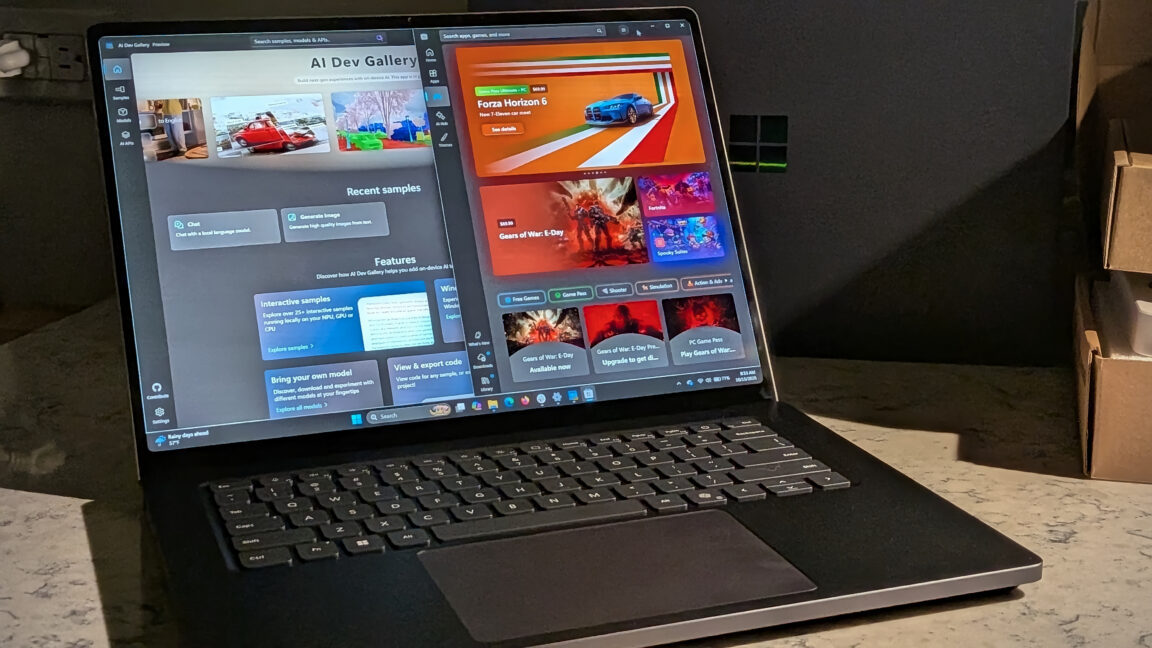
Microsoft's Surface Laptop Ultra, using Nvidia's RTX Spark platform, starts at $2,599 (up to $5,899)
Meta's new commercial terms, effective October 30th, appear to let it crawl and train AI on content from websi…
Vercel data published Thursday shows TypeSafe AI's Jev, a lightweight decision model for choosing among predet…