What happened
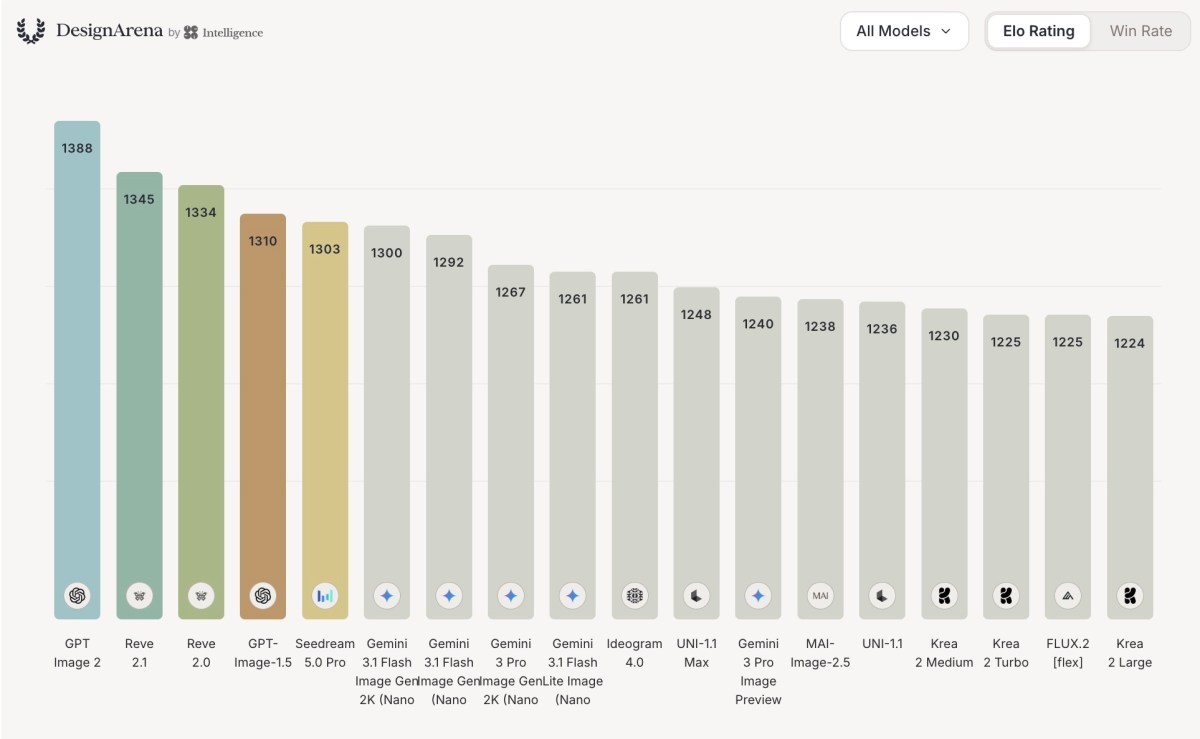
Intelligence, the company behind DesignArena, announced a $7.9 million seed round led by Index Ventures. DesignArena is an AI tool used by 5.3 million people worldwide that collects human-ranked comparisons of AI-generated outputs (websites, images, and other formats) through "A vs. B" choices, then sells that feedback data to frontier AI labs. The platform is currently generating $60 million in ARR.
Why it matters
AI models struggle to improve at design tasks because there is no scalable way to measure whether outputs are actually good—automated benchmarks can be gamed or manipulated. DesignArena solves this by providing frontier labs with real human preference data at scale, which co-founder Grace Li describes as "the missing bottleneck for a lot of these models to make improvements in the design space." The company can also track how design tastes vary by region and over time, offering insights automated systems cannot capture.
What to watch
The crowdsourced human-feedback market is unproven; Yupp, a competitor backed by a16z crypto, raised $33 million but shut down earlier this year despite having over 1.3 million users. However, LM Arena, which uses a similar model for text-based feedback, raised $150 million in a Series A in January, four months after launching its paid product, suggesting demand may be real for some entrants.
Summaries like this, in your inbox every morning.
DesignArena emerged from a simple observation: AI models can generate technically correct outputs—functional games, visual designs, web layouts—but assessing whether those outputs are *good* remains hard. Automated benchmarks, which historically power AI evaluation, operate at scale but are vulnerable to gaming and manipulation, as the Hugging Face breach last week made evident. Intelligence's insight was that frontier AI labs would pay for real human preference data collected at scale, turning casual user feedback into a revenue stream.
The company's traction is notable: 5.3 million users and $60 million in ARR in less than a year since launch. The business model works because users—indifferent to which AI model they're ranking—provide honest signals of what outputs they prefer, and because Intelligence can track how those preferences vary by geography and time. Geographic variation is concrete: Li notes that web dashboards in Asia tend toward more maximalist design styles, an insight that automated benchmarks cannot easily capture.
However, the market for crowdsourced AI feedback is unproven. Yupp, a similar platform, shut down earlier this year despite raising $33 million and reaching over 1.3 million users. But LM Arena, which applies the same principle to text-based AI responses, raised $150 million in a Series A in January—just four months after launching its paid product—suggesting demand is strong for at least some entrants. Intelligence's position as a source of design-space feedback may prove defensible if frontier labs continue to view human-ranked preference data as essential for training their generative models.
Pick your industry and the AI tools you use, and get news related to your work every day.
Free · 30 seconds with Google · unsubscribe anytimeWhat is AIToday? →
Ask AI anything about this article. The AI reads this article, earlier AIToday articles, and Wikipedia, and cites its sources. Q&As are published on this page for other readers too.
Supermicro Computer appointed Mark Long as chief financial officer, bringing an experienced technology finance…

Holtek Semiconductor unveiled its 2026 product roadmap on October 15, focusing on four core areas: smart prote…

TSMC reported about NT$763.1b in Q3 net profit and confirmed that demand for advanced processors is running ah…

Nvidia-backed CoreWeave steadied Thursday after a sharp slump, as investors worried about the debt financing b…

TOPPAN Holdings and Keio University ran a quantum-computer and generative-AI proof-of-concept from February 1…

Weathernews said on October 15 it implemented its own AI weather-forecasting model, AI-Nowcast, in its Weather…


