
What happened
Accenture announced in July 2026 a global partnership with OpenAI to design and implement two types of business transformation services for Japanese and overseas companies. One model uses AI agents to redesign operations; the other applies AI to legacy business systems. The company will begin pilot projects in December 2025 and deploy AI tools including OpenAI's reasoning engine and GPT models tailored to Accenture's service offerings.
Why it matters
Large Japanese companies have long struggled to transform business processes holistically—not just improve productivity through individual AI tools. This partnership aims to help them overcome that barrier by combining OpenAI's frontier AI models with Accenture's decades of experience redesigning business operations, potentially improving customer satisfaction by up to 90% in some cases.
What to watch
Accenture is deploying Forward Deployed Engineers to work alongside enterprise clients and has built a "Accenture Agentic BPR Accelerator" tool that integrates OpenAI's models (including Codex agents). For cybersecurity, the firm is strengthening protections by integrating OpenAI's technologies and plans to embed a model called "GPT-5.5" into its own services.
Summaries like this, in your inbox every morning.
Accenture has identified a persistent challenge facing Japanese corporations: while many have begun using AI for isolated efficiency gains, they struggle to redesign their core business processes at scale. This partnership with OpenAI directly addresses that gap by combining two capabilities—OpenAI's frontier reasoning models and agent capabilities with Accenture's longstanding expertise in business process reengineering (BPR). The company's announcement in July 2026 signals a shift from selling point solutions to selling transformational change.
The partnership's structure reflects this ambition. Rather than simply licensing OpenAI models, Accenture has built proprietary tools—the "Accenture Agentic BPR Accelerator" and enhanced planning systems—that layer OpenAI's reasoning and code-generation capabilities on top of Accenture's process redesign methodology. Forward Deployed Engineers embedded with clients are designed to guide companies through the entire change cycle, from diagnosis through launch and ongoing optimization. For cybersecurity, where Accenture has two decades of experience, the firm is weaving in OpenAI's security models and protocols to protect enterprise deployments.
The stakes are measurable: Accenture suggests that this transformation approach can lift customer satisfaction by up to 90% in implementations where the operational redesign is tailored to customer-specific needs. This positions the partnership not as an incremental productivity play but as a direct answer to the "business transformation challenge" that has long daunted large enterprises in Japan and globally.
Pick your industry and the AI tools you use, and get news related to your work every day.
Free · 30 seconds with Google · unsubscribe anytimeWhat is AIToday? →
Ask AI anything about this article. The AI reads this article, earlier AIToday articles, and Wikipedia, and cites its sources. Q&As are published on this page for other readers too.
Tesla revealed its next-generation Roadster at SpaceX's McGregor, Texas test site on October 15, presented as…

Cisco Systems heads a sample of three AI networking and server hardware stocks, with its Computer Networks seg…

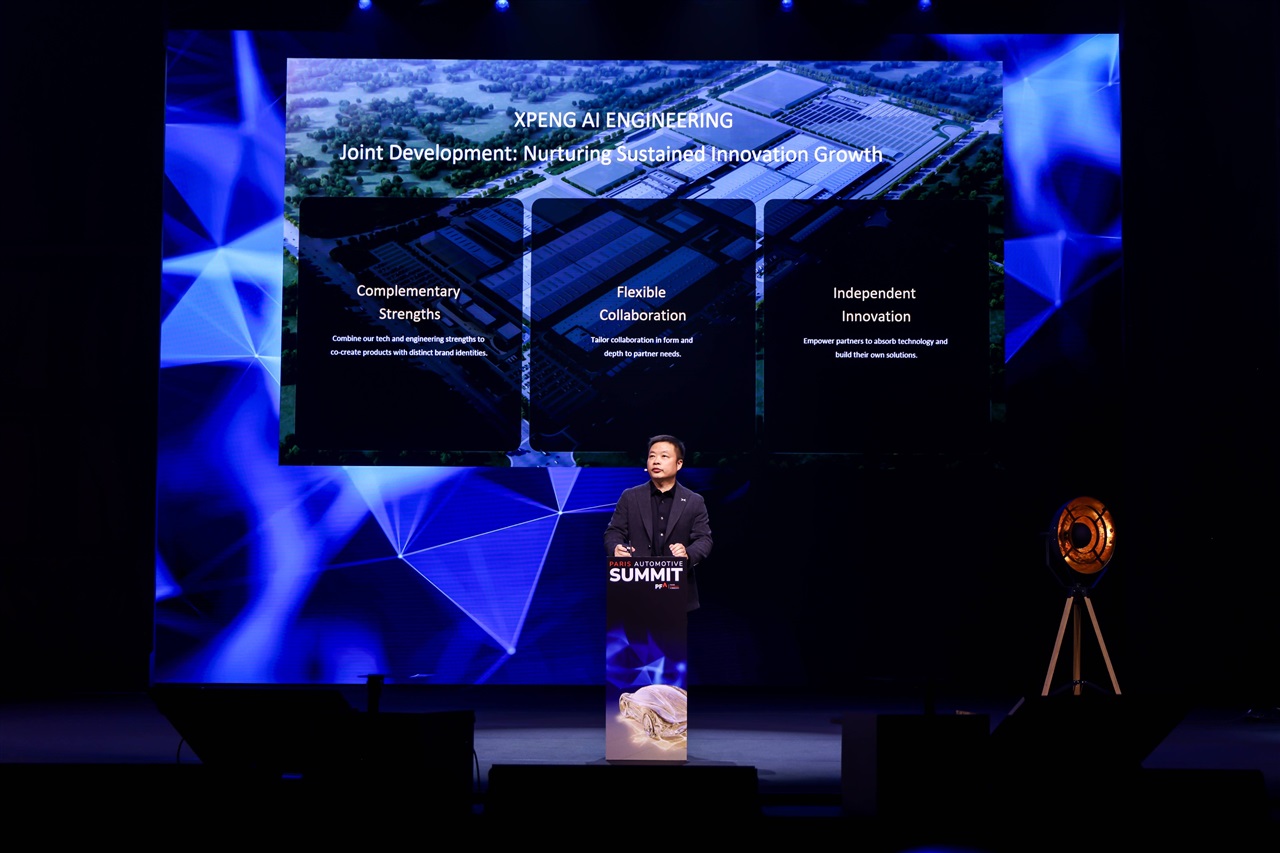
XPeng appeared at the Paris Automotive Summit, presenting not only automotive expertise but a broader technolo…
Itaú's ia.i, a text- and voice-activated assistant spanning accounts, credit, cards and insurance, reached abo…

Forbes reports that Coca-Cola is using AI to reinvent its marketing, and presents the company's approach as a…

A Seeking Alpha analyst published a piece titled "GE Vernova: AI's Next Bottleneck Is Electricity," arguing th…