AIToday

Centrifugal vs. Screw Compressors: Which Fits Your Factory

Robotics & Automation News4h ago
Centrifugal vs. Screw Compressors: Which Fits Your Factory

Key takeaway

Manufacturers choosing between centrifugal and rotary screw compressors should base the decision on airflow volume, demand stability, and operating pressure rather than factory size alone. Centrifugal compressors suit continuous high-volume operations and are efficient near their design point, while rotary screw systems—especially with Variable Speed Drive control—handle fluctuating demand and intermittent production schedules more effectively. The trade-off involves turndown capability: centrifugal units risk surge if airflow drops too far below their stable range, whereas screw compressors maintain a wider operating envelope.

Summaries like this, in your inbox every morning.

Sign up free →

3 Key Points

  • What happened

    The article compares two primary compression technologies—dynamic centrifugal compressors and positive-displacement rotary screw systems—to help manufacturers select the right system. Centrifugal compressors use a high-speed impeller to accelerate air and convert velocity into pressure, while rotary screw compressors draw air between two intermeshing helical rotors to reduce volume and raise pressure.

  • Why it matters

    Choosing the wrong compression technology can saddle a manufacturing facility with avoidable energy costs, limited turndown, and inflexible infrastructure for years. The right choice depends on airflow requirements, operating pressure, demand stability, and air-quality needs—not factory size alone. A facility's demand pattern is critical: centrifugal compressors excel at continuous high-volume base-load operation, while rotary screw systems with Variable Speed Drive control handle fluctuating demand more smoothly and can operate as a primary or trim compressor.

  • What to watch

    Centrifugal compressors must operate within defined aerodynamic limits to avoid surge (unstable pressure and flow oscillations), whereas rotary screw compressors generally offer a wider operating range, particularly with VSD control. Lifecycle costs matter as much as capital cost—centrifugal systems may deliver strong value where demand is stable and high-volume, while rotary screw systems may control operating costs better where airflow varies considerably. Some facilities gain the strongest result by combining both technologies.

In Depth

Manufacturers face a critical choice between two mature compression technologies, and selecting the wrong one can commit the facility to years of inefficiency and operational inflexibility. The article opens by establishing the stakes: wrong technology selection leads to avoidable energy costs, limited turndown (the ability to operate effectively at reduced loads), and a rigid compressor-room configuration that resists future modifications.

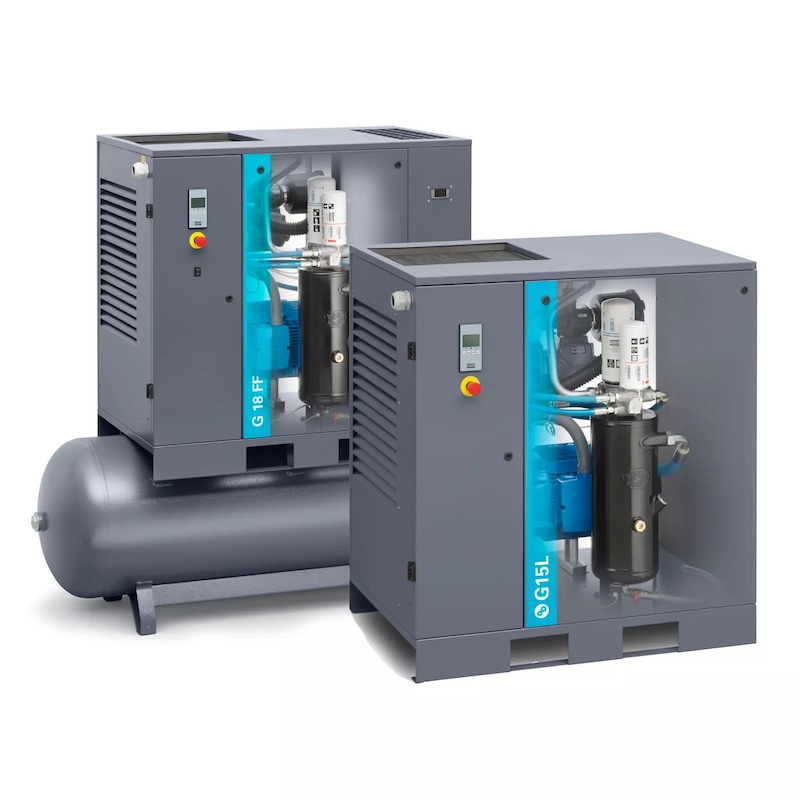
The two technologies operate on fundamentally different mechanical principles. A rotary screw compressor draws air between two intermeshing helical rotors that rotate and gradually reduce the available space, raising pressure before discharge. This positive-displacement mechanism ensures relatively stable air delivery across the compressor's normal operating range. By contrast, a centrifugal compressor uses a high-speed impeller to accelerate incoming air radially, then a diffuser converts part of that velocity into pressure through dynamic compression. Centrifugal machines often employ multiple stages and intercooling to achieve the required discharge pressure. An integrally geared centrifugal compressor uses a central bull gear to drive separate pinion-mounted impellers, allowing different compression stages to run at speeds optimized for their aerodynamic requirements while maintaining a compact layout.

The selection decision ultimately hinges on the plant's demand pattern and operational profile. Centrifugal compressors excel in large facilities with continuous, high-volume demand operating close to the unit's design point, where base-load efficiency is more important than wide turndown capability. Rotary screw compressors are better suited to plants where airflow requirements fluctuate across shifts, production lines, or batch schedules. When equipped with a Variable Speed Drive, a rotary screw compressor adjusts motor speed to match changing demand instead of relying primarily on load and unload cycles, allowing it to follow wide airflow fluctuations, reduce unloaded power consumption, support intermittent production schedules, and serve as either a primary or trim compressor.

A critical technical difference emerges around turndown capability. Centrifugal compressors must operate within defined aerodynamic limits; if airflow falls too far below the stable operating range, the compressor can enter surge, causing unstable pressure and flow oscillations. Rotary screw compressors generally offer a wider operating range, particularly with VSD control, and respond more smoothly to changing demand, although minimum speed and pressure limits still apply. This difference directly affects energy efficiency and operational stability across shifting production conditions.

Maintenance and lifecycle costs represent another layer of the decision. Rotary screw compressors require planned servicing of filters, seals, bearings, and drive systems; oil-injected machines also need lubricant and separator maintenance, while dry oil-free screw compressors have their own service requirements. Major overhaul intervals depend on design, operating hours, environment, and maintenance quality. Centrifugal systems prevent oil from entering the compression chamber, but they are not maintenance-free and may include gears, bearings, seals, lubrication circuits, intercoolers, and sophisticated control systems. The article notes that labyrinth seals and magnetic bearings are separate technologies and should not be assumed as standard features of every centrifugal machine. Capital cost is only one part of the lifecycle analysis; a centrifugal compressor can offer strong lifecycle value where high-volume demand remains stable, while a rotary screw system may control operating costs better where airflow varies considerably.

The article concludes by recommending a comprehensive approach: plants should measure actual demand and assess opportunities for maximizing compressor efficiency across generation, treatment, storage, and distribution. An on-site air audit allows the facility to evaluate its complete demand profile and configure compressors, treatment equipment, controls, and distribution around actual operating requirements. Some facilities gain the strongest result by combining both technologies rather than choosing one exclusively. The final guidance emphasizes that successful selection requires professional evaluation of the plant's specific requirements rather than a one-size-fits-all recommendation.

Context & Analysis

The article frames compressor selection as fundamentally dependent on demand profile rather than facility size. While plant designers commonly treat the choice as a straightforward large-facility decision, the body argues that airflow volume, operating pressure, demand stability, and air-quality requirements are the actual drivers. This reframing has practical implications: a large factory with stable, continuous demand and high airflow requirements is an ideal fit for centrifugal technology, whereas a smaller or medium-sized plant with volatile demand patterns may benefit more from rotary screw flexibility.

The mechanical principles underscore this logic. A centrifugal compressor's reliance on aerodynamic efficiency means it performs best near its design point; once airflow drops significantly, surge becomes a risk. A rotary screw compressor's positive-displacement architecture naturally tolerates a wider range of operating conditions, especially with Variable Speed Drive control that adjusts motor speed rather than cycling between load and unload states. This difference translates directly into energy savings and operational resilience for plants with intermittent or shifting production schedules.

The article also emphasizes that capital cost alone should not dominate the decision. Lifecycle costs—maintenance intervals, component wear patterns, energy consumption across varying loads—often determine long-term value. The body notes that some facilities achieve the strongest outcome by combining both technologies, suggesting that neither is universally optimal and that on-site air audits and detailed demand profiling are necessary preconditions to a sound purchase decision.

FAQ

When should I use a centrifugal compressor versus a rotary screw compressor?
Use a centrifugal compressor for large facilities with continuous, stable, high-volume air demand where the unit operates close to its design point. Choose a rotary screw compressor when airflow changes across shifts, production lines, or batch schedules—especially if equipped with Variable Speed Drive control, which adjusts motor speed to match changing demand and reduces unloaded power consumption.
What is the main difference in how these compressors operate?
A rotary screw compressor uses two intermeshing helical rotors that reduce air volume inside enclosed chambers to raise pressure (positive-displacement). A centrifugal compressor uses a high-speed impeller to accelerate air radially and a diffuser to convert that velocity into pressure (dynamic compression). Centrifugal machines may use multiple stages and intercooling to reach required discharge pressure.
What happens if a centrifugal compressor's airflow falls too low?
The compressor can enter surge, causing unstable pressure and flow oscillations. Centrifugal compressors must operate within defined aerodynamic limits. Rotary screw compressors, by contrast, generally offer a wider operating range and can respond more smoothly to changing demand, although minimum speed and pressure limits still apply.

Get AI news like this every morning

AI-summarized, only the topics you pick — one digest a day via Email, Slack, or Discord.

Free · takes 30 seconds · unsubscribe anytime

Discussion

No discussion yet for this article

Stay ahead with AI news

Get curated AI news from 200+ sources delivered daily to your inbox. Free to use.

Get Started Free

Free · takes 30 seconds · unsubscribe anytime

