What happened
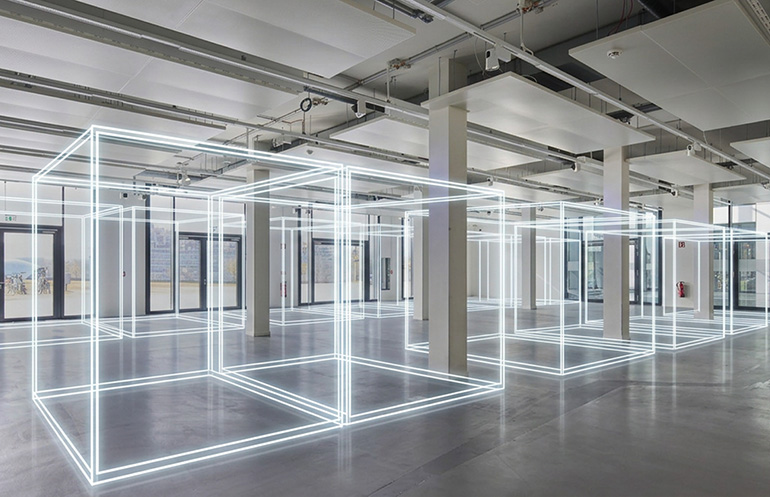
NEURA Robotics GmbH partnered with RWTH Aachen University to establish the NEURA Gym RWTH Aachen, a physical training facility for robots. The facility, about 3,000 sq. m, will combine real-world training and high-fidelity simulation to generate datasets for the company's Neuravese cloud development platform. NEURA is building 10 facilities across Europe, the U.S., and China, with half expected operational by end of 2026.
Why it matters
Robot developers face a critical scarcity of real-world training data—unlike language models that train on trillions of data points, robots have access to a fraction of that volume, and simulations alone cannot reproduce the friction, variability, and unpredictability of real-world environments. The gym model lets partners validate robots for specific use cases before full industrial deployment, reducing adoption risk and accelerating time to market.
What to watch
A second German facility, TUM RoboGym in Munich (more than 2,300 sq. m), will test fleets of cognitive and humanoid robots in partnership with the Technical University of Munich and its Munich Institute of Robotics and Machine Intelligence. The Series C financing of up to $1.4 billion is backing the global network. Manufacturing, automotive, healthcare, and industrial automation sectors have expressed interest.
Ask the AI about this article →
Summaries like this, in your inbox every morning.
NEURA Robotics is addressing a fundamental challenge in robot development: the data scarcity problem. While large language models (AI systems that understand and generate text) train on trillions of data points, robots have historically had access to a fraction of that volume. Simulations, which are often cheaper and faster than real-world training, cannot capture the friction, variability, and unpredictability that robots will encounter in actual deployment environments. By establishing dedicated physical training facilities—"gyms"—NEURA is creating hybrid infrastructure that combines hands-on real-world interaction with computational simulation, producing high-quality multimodal datasets that can be scaled across the company's Neuravese platform.
The partnership with RWTH Aachen University signals Germany's strategic commitment to maintaining leadership in physical AI and robotics. Prof. Rüdiger emphasized that RWTH's decades of strength in mechanical engineering, electrical engineering, and computer science, combined with NEURA's industry expertise, creates a unique ecosystem for training the next generation of roboticists. The inclusion of a second major facility at Munich (operated jointly with the Technical University of Munich and its Munich Institute of Robotics and Machine Intelligence) underscores the concentration of robotics excellence in Germany and reflects both academic and commercial confidence in the model. The Series C financing of up to $1.4 billion provides the capital to build out a global network of these facilities, suggesting significant investor belief in the long-term demand for on-site robot validation before full-scale industrial rollout.
For example, today's edition would include:
AI-summarized, only the topics you pick — one digest a day via Email, Slack, or Discord.
Free · 30 seconds with Google · unsubscribe anytimeWhat is AIToday? →
Ask AI anything about this article. Q&As are published on this page for other readers too.
IREN fell almost 5% in premarket trade Monday even as CEO Daniel Roberts said AI processing demand still far o…

The UAE is considering moving parts of two of its largest infrastructure projects underground to guard against…

Nvidia's Jensen Huang published "Land, Power, Shell: The Next Strategic Resource" on August 17, naming ready-t…
Anthropic told investors it will post a second straight profitable quarter and plans a Nasdaq listing at a pos…

Universal Robots launched Gen 7 at IMTS, adding three arms UR10g-1750, UR17g-1300, UR18g-950 and a redesigned…
The Linux Foundation's Agentic AI Foundation said the open-source Envoy AI Gateway has joined it and been rena…