What happened
Thermo Fisher Scientific completed an $8.875 billion(約1.4兆円) cash acquisition of Clario Holdings, a clinical trial endpoint data provider, with potential additional payments of $125 million(約200億円) in January 2027 and up to $400 million(約640億円) in earn-outs tied to 2026–2027 performance. The deal was initially agreed upon in October 2025.
Why it matters
Clario's platform has supported approximately 70% of FDA and EMA novel drug approvals over the past decade. The acquisition immediately adds $0.45 to adjusted EPS and is expected to deliver approximately $175 million(約280億円) in adjusted operating income from synergies by year five, creating a full-stack infrastructure that integrates clinical trial data with Thermo Fisher's existing CRO business (PPD). However, Thermo Fisher faces a "Switzerland Problem"—competitors like IQVIA, ICON, and Fortrea have historically used Clario's platform, and may hesitate to share sensitive trial data with a now-rival-owned subsidiary.
What to watch
Thermo Fisher must balance integrating Clario enough to achieve $175 million(約280億円) in revenue synergies by year five while maintaining sufficient operational independence and perceived neutrality to retain external clients. The company's partnership with NVIDIA on AI-driven analytics will amplify Clario's clinical trial data for accelerated drug discovery; AI algorithms analyzing data from millions of patients could identify correlations and optimize trial designs.
Summaries like this, in your inbox every morning.
Thermo Fisher's $8.875 billion(約1.4兆円) acquisition of Clario represents a deliberate shift toward vertical integration in the clinical trial and biopharma services market. By combining Clario's eClinical endpoint data platform with its own PPD (Clinical Research Organization) business, Thermo Fisher is constructing a comprehensive, integrated offering that spans from drug discovery instrumentation through data analytics and trial execution. This move reflects a broader industry trend toward end-to-end solutions that reduce friction and accelerate time-to-market for biopharmaceutical clients.
The financial case is compelling: Clario generates an estimated $1.25 billion(約2000億円) in annual revenue with low-30s EBITDA margins, and the acquisition is immediately accretive at $0.45 per share. By year five, Thermo Fisher expects to capture $175 million(約280億円) in synergies, primarily through revenue opportunities that arise from combining clinical data with its existing service offerings. This blend of high growth and strong margins makes the deal financially disciplined—a notable factor given Thermo Fisher's current P/E ratio of 27.37 and market cap of $181.60 billion(約29兆円).
However, the acquisition introduces a well-documented competitive risk: Clario has historically served CRO competitors of Thermo Fisher, including IQVIA, ICON, and Fortrea. The "Switzerland Problem" arises because these external customers may be unwilling to share sensitive trial data with a subsidiary of a rival. History offers mixed precedent—PAREXEL's integration of Perceptive Informatics led to stagnation and sponsor defection, while Dassault Systèmes' Medidata acquisition faced growth challenges in life sciences. Thermo Fisher's success will depend on striking a delicate balance: integrating Clario enough to achieve synergies while ring-fencing operations and maintaining credible neutrality. The company's partnership with NVIDIA on AI and advanced analytics further amplifies the potential value of Clario's vast clinical trial dataset, enabling predictive modeling and trial optimization that could accelerate drug discovery.
Pick your industry and the AI tools you use, and get news related to your work every day.
Free · 30 seconds with Google · unsubscribe anytimeWhat is AIToday? →
Ask AI anything about this article. The AI reads this article, earlier AIToday articles, and Wikipedia, and cites its sources. Q&As are published on this page for other readers too.
Chunghwa Telecom president Rong-shy Lin said the shift from conversational AI to autonomous AI agents is resha…
CoreWeave fell 5% in premarket trading Friday and was on track to finish the week down 15%, after rebounding f…
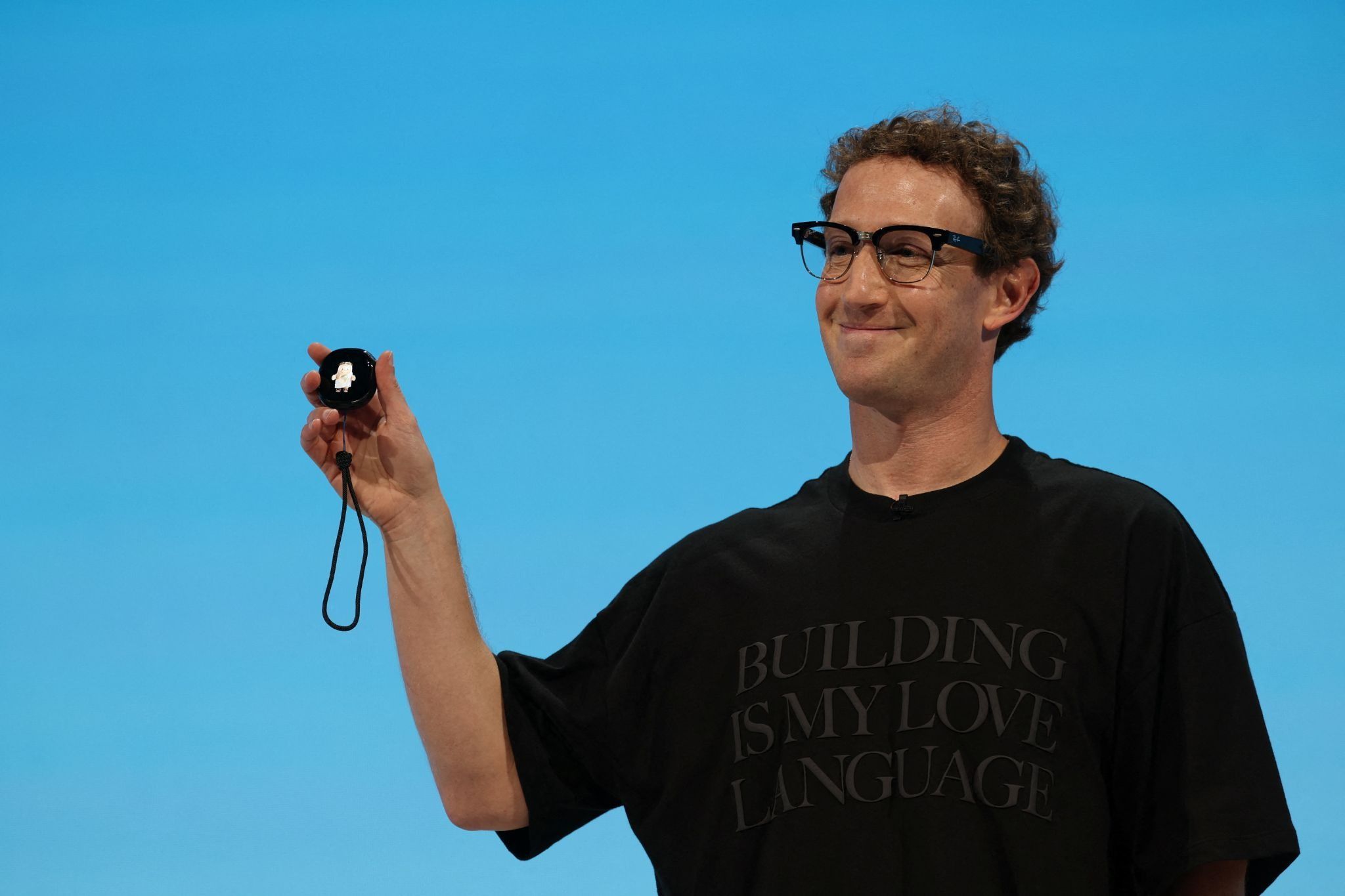
Apple and Meta said they would jointly release a new open-weight AI model designed to run on high-end Macs, ai…
Investors put $38.5 billion into Asian startups in Q3, per Crunchbase data

A longtime Anthropic investor told Fortune he expects shares priced around $1.8 trillion, below the company's…

In Q2, billionaires or their funds sold six 'Magnificent Seven' AI stocks