
What happened
Mistral AI CEO Arthur Mensch unveiled Mistral Large 4 (ML4) at AI Everything Abu Dhabi, a 1.05 trillion-parameter model priced at $0.68 per million tokens for input and $2.09 for output, with weights scheduled for public release on October 27, 2026.
Why it matters
This pricing is significantly lower than what the market currently sees from major AI providers, which means businesses may be able to access frontier AI capabilities at a fraction of the cost. It signals that Mistral is willing to compete aggressively on price to win customers.
What to watch
Mistral's claims of strong performance on benchmarks like DeepSWE and the Coding Agent Index come with a caveat — these figures are vendor-reported and have not been independently verified. Enterprise buyers should watch for third-party validation before relying on these numbers for high-stakes applications.
WHO IT HITSEnterprise technology teams evaluating AI vendors will now have a lower-cost option to consider, potentially reducing their AI spending. However, they must weigh the lower price against the lack of independent benchmark verification, which could be a concern for precision-critical tasks.
Summaries like this, in your inbox every morning.
Mistral AI has positioned itself as a champion of European sovereign AI, backed by contracts with the French military and Luxembourg Armed Forces, and a €3B Series D funding round led by Samsung. However, the development of Mistral Large 4 relied on 4,000 NVIDIA Grace Blackwell GPUs in European data centers, highlighting a dependence on American hardware that complicates its sovereignty narrative. This paradox is not unique to Mistral; it reflects the broader supply chain reality facing all frontier AI developers.
The model's aggressive pricing at $0.68 per million tokens for input and $2.09 for output places it well below the $2/$10 floor set by OpenAI's GPT-6.1 Sol and Google's Gemini 4 Argon. This move could pressure other AI providers to reconsider their own pricing strategies, particularly as open-weights models like ML4 drive the market toward a new baseline. Mistral's ability to maintain a run rate exceeding $400M while targeting $1B in revenue suggests it is gaining traction, but the sustainability of such pricing remains a question.
The stakes for Mistral hinge on whether its reported benchmark performance holds up under independent scrutiny. The gap between vendor-reported figures and real-world utility is a known friction point in the industry, and enterprise buyers in high-stakes sectors will likely demand third-party validation before committing. If Mistral can close that verification gap, it may solidify its position as a credible low-cost alternative; if not, the pricing advantage alone may not be enough to win over risk-averse customers.
Pick your industry and the AI tools you use, and get news related to your work every day.
Free · 30 seconds with Google · unsubscribe anytimeWhat is AIToday? →
Ask AI anything about this article. The AI reads this article, earlier AIToday articles, and Wikipedia, and cites its sources. Q&As are published on this page for other readers too.
NetApp's Jen Prenner said legacy data can be made AI-usable without re-architecting it, and NetApp announced p…

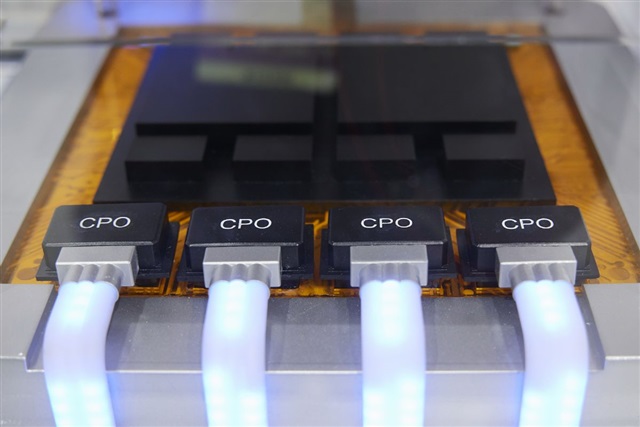
Taiwan's National Science and Technology Council (NSTC) launched two research programs targeting silicon photo…
SpaceX launched a prototype satellite for Alphabet's Project Suncatcher carrying four Tensor Processing Units…

Vercel COO Jeanne DeWitt Grosser said the company's inbound sales agent evolved from a 1,000-line prompt to 14…

Mistral released a public preview of Mistral Large 4, a trillion-parameter model with 49 billion active parame…

South Korea plans 4.7 trillion won ($3.49 billion) in equity investments for a homegrown frontier AI model, pa…