What happened
WindBorne Systems, which deploys weather balloons and feeds data into an AI forecasting model, raised $37 million in Series B funding co-led by Khosla Ventures and Galvanize, valuing the company at $250 million after the round. The startup currently operates 20 launch sites worldwide with about 600 balloons in the air collecting data in hard-to-reach areas.
Why it matters
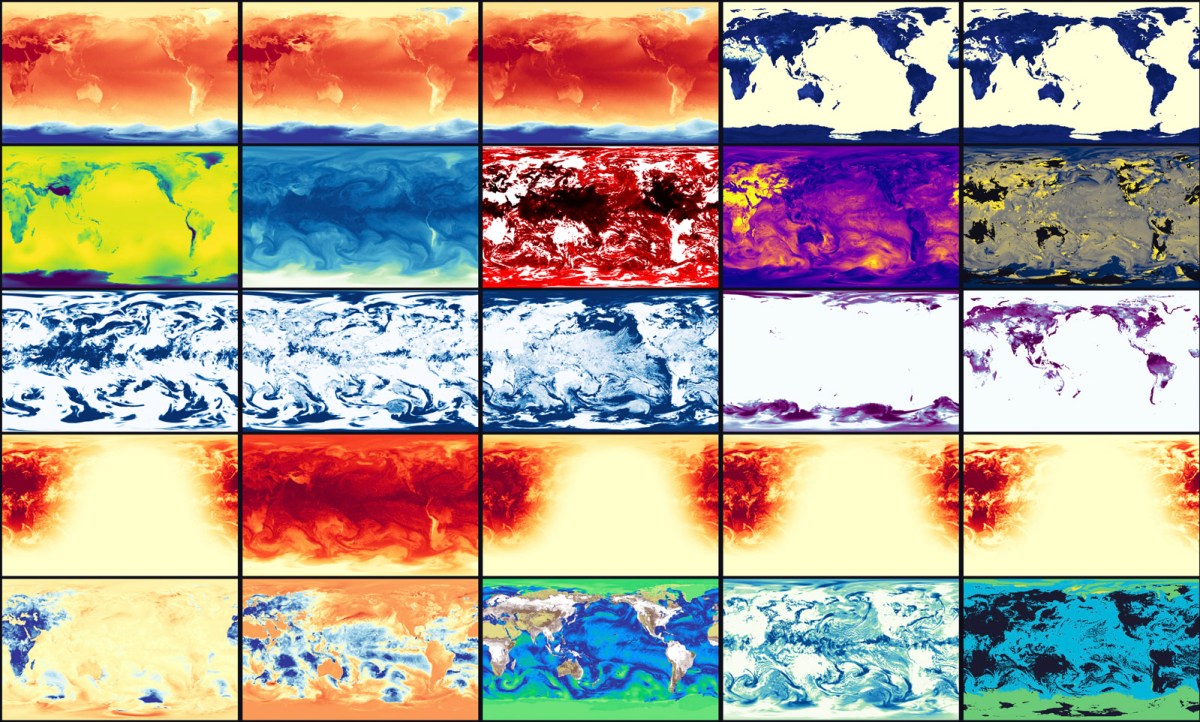
AI weather models can now run on laptops instead of supercomputers, making private forecasting feasible for the first time—but the real bottleneck is converting those forecasts into business value. WindBorne's proprietary balloon data gives it an edge over satellites, and the company has already proven demand: the U.S. National Weather Service purchases its data, and the U.S. Air Force and Navy fund research partnerships. The challenge ahead is scaling into the private sector, where extracting business value from weather data has historically been expensive and difficult.
What to watch
WindBorne is building out its sales team to target investment funds that use weather forecasting to predict commodity prices and other business outcomes. The company also plans to replace its balloon network's satellite communications with a mesh radio network and will invest in compute infrastructure. Private weather firms have long struggled to move beyond government agencies and media repackaging; AI tools and better forecasts may now make it viable to embed weather insights directly into business decision-making.
Summaries like this, in your inbox every morning.
WindBorne's funding round reflects a fundamental shift in how weather forecasting can be commercialized. For decades, the physics of weather simulation required expensive supercomputers, effectively locking the capability behind government agencies and a handful of large enterprises. The advent of deep learning techniques used in large language models has democratized atmospheric simulation, allowing it to run on standard hardware—but that technological breakthrough alone does not guarantee a business. The real moat WindBorne has built is proprietary data: its network of 600 balloons collecting measurements in places satellites cannot easily reach, from typhoon eyes to remote ocean regions. This data feeds into a model that also ingests public government datasets, creating a feedback loop where better forecasts attract more customers, more customers justify more balloons, and more balloons collect more data.
The company's existing revenue from government contracts—particularly the U.S. National Weather Service and military research partnerships—demonstrates that the demand signal is genuine, not speculative. However, the history of earth observation startups shows that government procurement, while valuable, is not a path to venture scale. The hard part ahead is the private sector: investment firms, commodity traders, and logistics companies have long wanted better weather data, but past attempts to commercialize specialized sensing networks foundered because integrating that data into business workflows was prohibitively expensive and required deep domain expertise. Saloni Multani's point is telling: AI does not just improve forecasts; it also makes it cheaper and easier to connect those forecasts to the decisions that matter. Whether WindBorne can actually capture that value—and whether the private market is as large as the venture investors betting on it—remains to be tested.
Pick your industry and the AI tools you use, and get news related to your work every day.
Free · 30 seconds with Google · unsubscribe anytimeWhat is AIToday? →
Ask AI anything about this article. The AI reads this article, earlier AIToday articles, and Wikipedia, and cites its sources. Q&As are published on this page for other readers too.
Tesla revealed its next-generation Roadster at SpaceX's McGregor, Texas test site on October 15, presented as…

Cisco Systems heads a sample of three AI networking and server hardware stocks, with its Computer Networks seg…
XPeng appeared at the Paris Automotive Summit, presenting not only automotive expertise but a broader technolo…
Itaú's ia.i, a text- and voice-activated assistant spanning accounts, credit, cards and insurance, reached abo…
A Seeking Alpha analyst published a piece titled "GE Vernova: AI's Next Bottleneck Is Electricity," arguing th…
Microsoft and Nvidia are promoting RTX Spark, a new class of Windows PCs for local AI, with a top configuratio…