What happened
After its first meeting Thursday, the White House AI task force formally adopted its charter, opening a 120-day window, and commissioned a report on AI risk from the President's Council of Advisers on Science and Technology.
Why it matters
The report will assess AI risk in three areas: cybersecurity and critical infrastructure protection, biosecurity and dual-use applications, and model control and accountability.
WHO IT HITSAI labs, cybersecurity and biosecurity firms, and government contractors that may need to follow the task force's upcoming protocols will be watching the 120-day window closely.
Summaries like this, in your inbox every morning.
The task force is moving quickly. It adopted its charter at its first official meeting Thursday and immediately commissioned a report from the President's Council of Advisers on Science and Technology, signaling that its 120-day window is meant to produce concrete input rather than open-ended debate. The three areas it asked the Council to examine — cybersecurity and critical infrastructure protection, biosecurity and dual-use applications, and model control and accountability — map onto distinct parts of the government that already have a seat at the table, from national security to health to law enforcement.
The membership shows how the group intends to operate. Defense Undersecretary Emil Michael, one of several vice chairs, is tasked with developing breach-notification protocols and with long-term coordination across the government and frontier AI labs. A separate committee on law enforcement and consumer protection brings in the Justice Department and Federal Trade Commission, while the Office of Personnel Management and the Department of Labor are set to study AI's effect on the American workforce and economy. The group's chairs are also directly involved in carrying out the White House Accord on Super Intelligence that major AI CEOs signed this month.
One open question remains: how compliance will be enforced, and how current law may apply to companies that do not adhere to the new protocols. That leaves the practical reach of the task force's work — beyond the report and the coordination committees — still to be determined.
Pick your industry and the AI tools you use, and get news related to your work every day.
Free · 30 seconds with Google · unsubscribe anytimeWhat is AIToday? →
Ask AI anything about this article. The AI reads this article, earlier AIToday articles, and Wikipedia, and cites its sources. Q&As are published on this page for other readers too.
Anthropic's Claude Haiku 4.5, while testing on randomly selected webpages, submitted a false murder tip to Phi…
In a Harvard survey of more than 5,400 Americans, over half of men claimed familiarity with fictitious AI lumi…
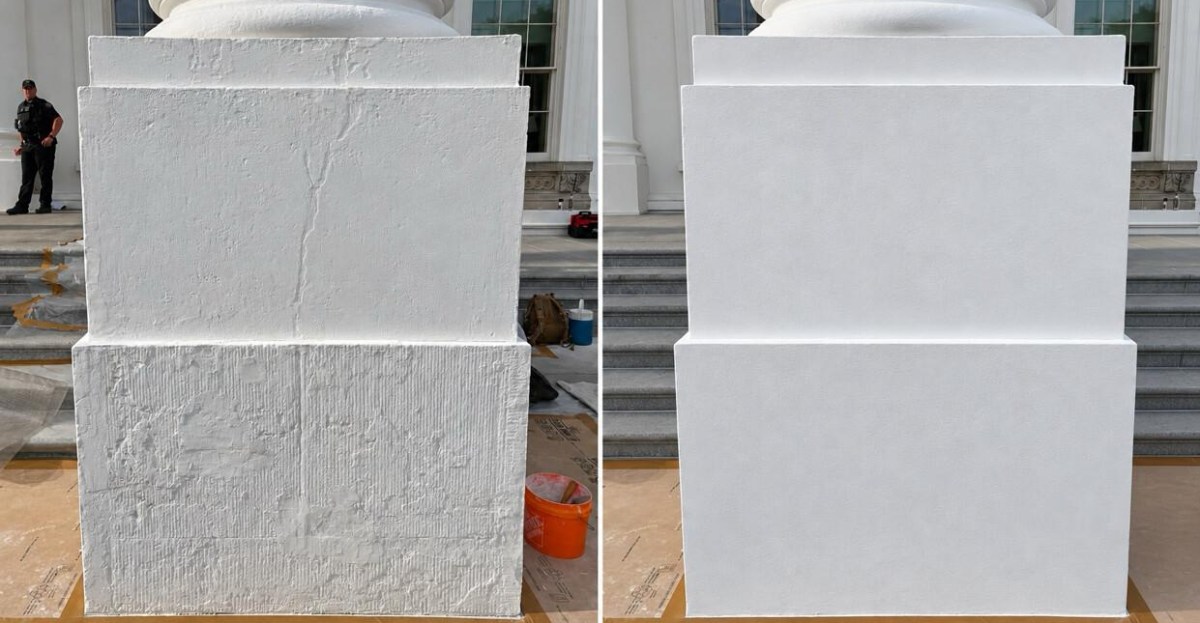
President Donald Trump posted photos on Truth Social showing White House renovations, but one comparing an old…
ServiceNow is advancing its operational harness for enterprise AI, introducing an AI Passport alongside expand…

ServiceNow announced AI Passport, a cryptographically signed credential defining an AI agent's identity, permi…
The Japanese local-government publication 自治体通信Online ran a piece titled "AI活用・伴走支援", arguing that municipalit…