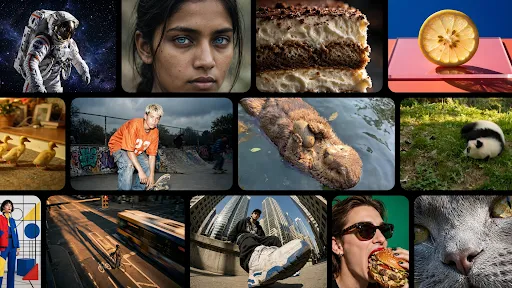
Meta released Muse Image, an AI image generator that ranks No. 2 globally for text-to-image generation and supports agentic features like web search, code execution, and self-refinement. The model is available now in Meta AI, Instagram Stories (US), and WhatsApp (select countries), with integration into Facebook coming soon. Meta also previewed Muse Video (No. 3 for text-to-video) and added Content Seal, an invisible watermark that persists through common image edits to help verify AI generation.
Summaries like this, in your inbox every morning.
Sign up free →What happened
Meta Superintelligence Labs released Muse Image, an AI image generation model available today in Meta AI app, meta.ai, Instagram Stories in the US, and WhatsApp in limited countries, with Facebook availability coming soon. The model ranks No. 2 on Arena for text-to-image, single-image editing, and multi-image editing as measured by human preference Elo rankings as of July 5, 2026. Meta also previewed Muse Video, ranking No. 3 for text-to-video.
Why it matters
Muse Image operates as an agent—it searches the web for factual references, writes and executes code for precision, and refines its own work iteratively—enabling accuracy on knowledge-intensive and factually complex prompts that traditional image generators struggle with. The model's ability to edit with precision, compose from multiple reference images, and integrate with Muse Spark (Meta's reasoning model) positions it to support both consumer creativity and business content generation across Meta's ecosystem.
What to watch
Muse Image includes Content Seal, an invisible watermarking system that persists even when images are cropped, compressed, resized, or screenshotted, helping users verify whether an image is AI-generated. Meta plans to extend Content Seal to video soon and is previewing a detection tool to check for the watermark.
Meta's release of Muse Image represents a shift toward agentic image generation, where the model actively reasons about and refines its outputs rather than directly mapping user prompts to images. The model's reliance on test-time compute scaling—spending inference budget on deliberate reasoning and tool calls rather than simple best-of-N sampling—mirrors advances seen in large language models. The body reports that reasoning and tool use compound when combined, and that spending compute on deliberate reasoning scales considerably better than generating multiple images and picking the best.
The No. 2 ranking on Arena (as of July 5, 2026) across three categories—text-to-image, single-image editing, and multi-image editing—positions Muse Image as a competitive offering in the increasingly crowded generative AI space. By integrating with Muse Spark and enabling joint planning between the two models, Meta is building interconnected AI capabilities that can combine code generation, media creation, and reasoning. The rollout across Meta's consumer and creator platforms—Meta AI, Instagram, WhatsApp, and Facebook—gives the model immediate access to a large installed base, likely supporting both hobbyist creators and small businesses seeking to generate marketing assets.
No comments yet. Be the first to share your thoughts!
Log in to join the discussion


Get curated AI news from 200+ sources delivered daily to your inbox. Free to use.
Get Started FreeFree · takes 30 seconds · unsubscribe anytime
1 minute a day. The AI essentials.
200+ sources · Email / LINE / Slack
