What happened
On a visit to Hamilton County, Tennessee, the author found ChatGPT blocked on school wifi but reached it instantly via phone data; over 13,000 US districts have defaulted to blocking.
Why it matters
The block did not stop the technology — it only pushed AI use out of sight of supervising adults, so the children losing out are in districts where the only policy is no AI.
What to watch
Whether districts shift from blocks to teaching safe, supervised AI use hinges on giving teachers clear policies; only 6% of teachers say their school’s AI policy is clear, and global K-12 edtech funding fell by 82%.
WHO IT HITSThe commentary lands on K-12 superintendents, principals, and classroom teachers who must set AI rules: blocking it shifts student use to unsupervised phone data, while in districts that host AI summits for educators and administrators, students learn to build with frontier technologies. It also matters for employers hiring entry-level workers.
Ask the AI about this article →
Summaries like this, in your inbox every morning.
The commentary frames AI as the latest in a line of technologies schools blocked on arrival — calculators, phones, YouTube — and notes that "block buys time," but argues that pattern has become an end in itself. The author's reporting across US districts over three years found the same result repeatedly: restrictions push AI use out of sight rather than stopping it, as at Hamilton County, Tennessee, a district that takes STEM seriously and had invited him to observe its computer science and maker program. The body pairs that with the story of an English teacher whose essay admission email drew a 100% confession rate, and with the statistic that more than a third of entry-level jobs require AI skills according to Nace's 2026 Job Outlook Survey.
It also sets the schools' difficulty in context. Within two years of ChatGPT's release, roughly 40% of US adults had tried it, versus twelve years for the PC, and global K-12 edtech funding fell by 82%. One superintendent's policy — "if it didn't come from us, it's on you" — is described as understandable risk management that leaves the teacher least resourced to act. The body cites both sides: district-run AI summits for educators and a 14-year-old in Texas who built an AI app screening for heart disease in seconds, set against districts where the only AI in sight is cheating-detection software.
The stakes appear to hinge on whether schools redesign AI for education around critical thinking and human agency, or keep blocking it, leaving students to default to unregulated tools. That choice is likely to shape which students arrive at entry-level hiring literate in AI, but the commentary offers no plan in place to make the shift.
For example, today's edition would include:
AI-summarized, only the topics you pick — one digest a day via Email, Slack, or Discord.
Free · 30 seconds with Google · unsubscribe anytimeWhat is AIToday? →
Ask AI anything about this article. Q&As are published on this page for other readers too.
Anthropic CEO Dario Amodei published a 3,800-word essay, "We Must Pace the Frontier," urging policymakers to a…
Russian publisher Eksmo-AST trained an AI agent to flag books and passages risking violation of Russia's post-…

Polling for Alex Bores' new group Who Decides found half of 1,502 registered voters say AI is moving too fast…
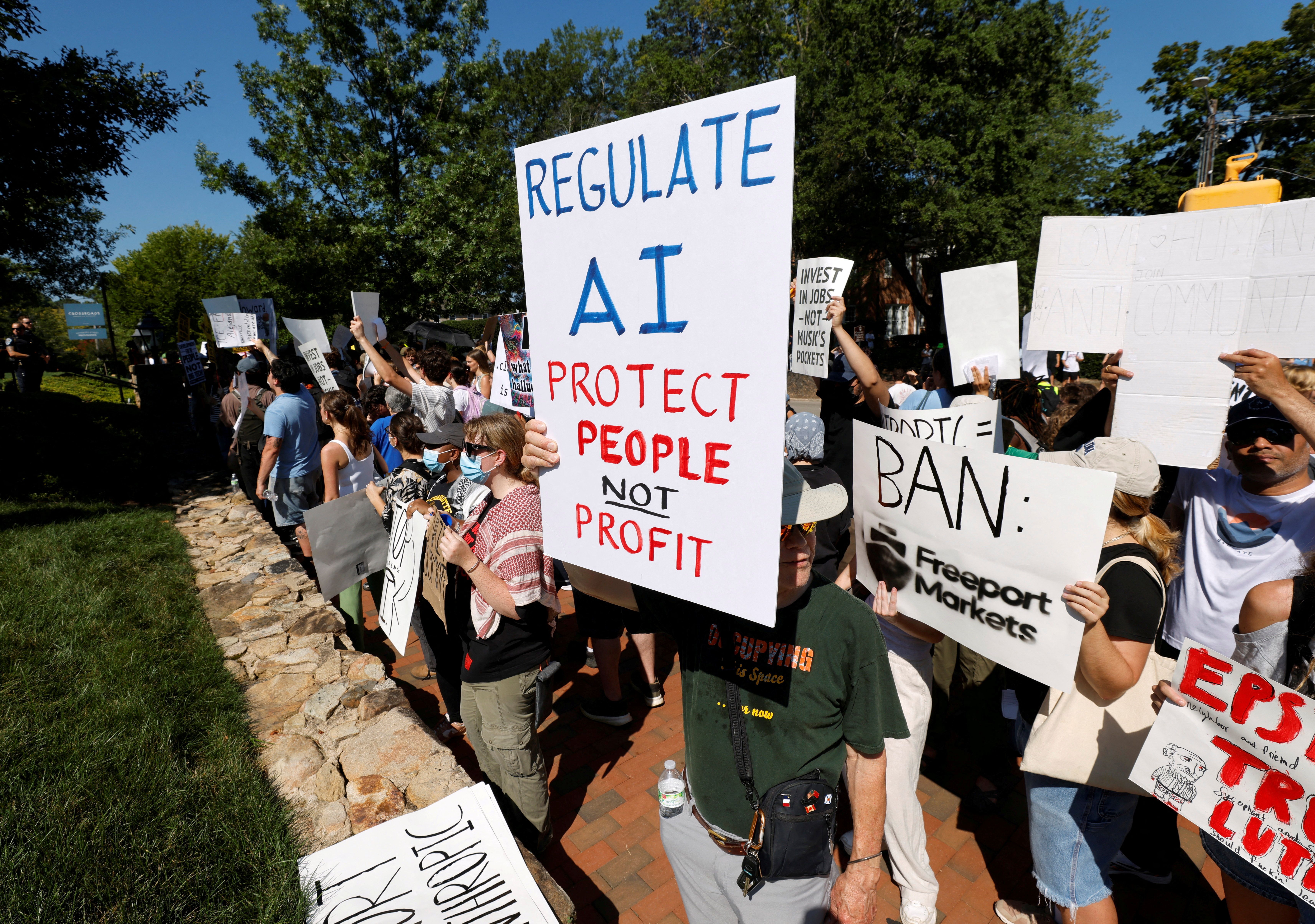
At the Yale CEO Caucus, 93% of attendees disagreed with Trump's Truth Social post calling AI warnings a hoax…

Anthropic CEO Dario Amodei urged the US and China to cooperate on slowing AI in his Saturday blog post "We Mus…

Meta announced on Sept. 15 the global rollout of Meta One, a subscription combining premium features across it…