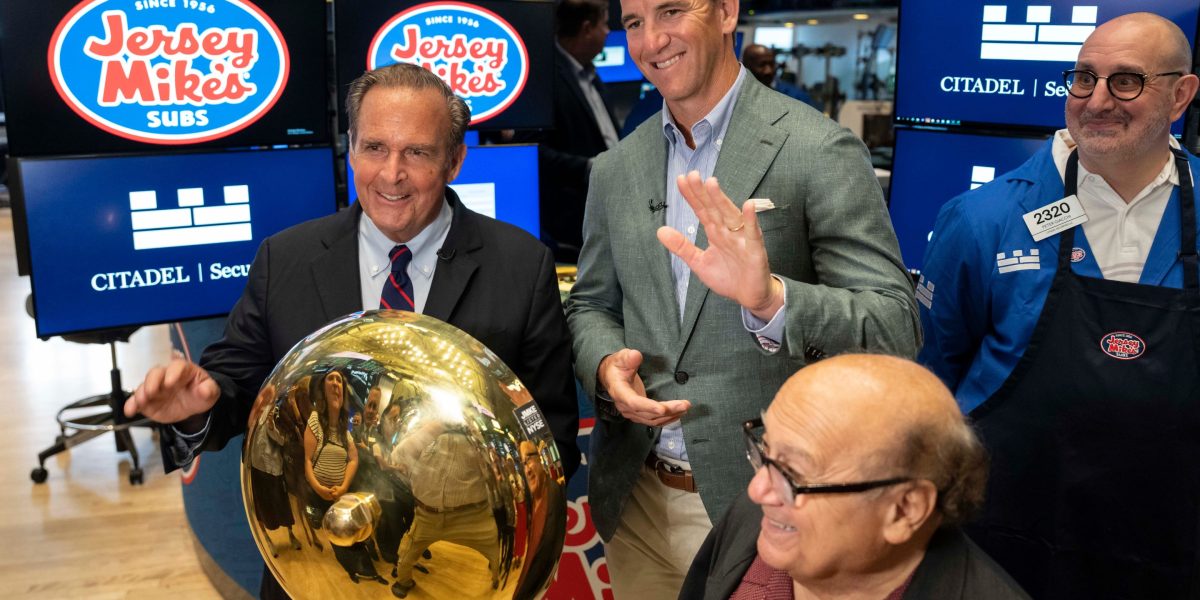
Microsoft posted its best trading day in nearly 18 years, jumping 15.5% after reporting stronger-than-expected profit and strong Azure cloud growth, signaling that AI investments are starting to pay off.
The company notably avoided announcing a major increase in future AI spending, a move that Wall Street rewarded; by contrast, Meta fell 8% after raising its spending forecast.
The broader market rally extended to semiconductor suppliers, though bond markets remain concerned about persistent inflation and uncertainty over Federal Reserve policy.
What happened
Microsoft jumped 15.5% for its best day in nearly 18 years after reporting stronger-than-expected profit, with strong growth in its Azure cloud business. The S&P 500 rallied 1.7%, the Nasdaq composite surged 2.8%, and chip suppliers Micron Technology and Lam Research jumped 18.4% and 18%, respectively, recovering recent losses.
Why it matters
Microsoft's profit gains signal that spending on AI infrastructure is beginning to translate into real returns, easing Wall Street's concerns that Big Tech's massive AI investments may not pay off. Critically, Microsoft did not announce a big increase in future AI spending—unlike rivals such as Meta, which raised its spending forecast and fell 8% after reporting weaker-than-expected profit. The contrast suggests investors reward disciplined capital allocation in AI over unlimited spending.
What to watch
Bond markets remain focused on inflation. The 10-year Treasury yield held steady at 4.67%, but Federal Reserve chairman Kevin Warsh gave few clues about interest-rate decisions despite inflation remaining above the Fed's 2% target. Investors are questioning whether the central bank is prepared to act if inflation worsens.
Microsoft led a powerful rebound on Wall Street Thursday after reporting profit stronger than analysts expected. The company's Azure cloud business showed strong growth, and CEO Satya Nadella attributed the strength to customers adopting Microsoft's AI capabilities. Microsoft's stock leaped 15.5% for its best day in nearly 18 years. The broader market responded enthusiastically: the S&P 500 rallied 1.7% and more than recovered its drop from the day before, which had been its worst in seven weeks. The Nasdaq composite, which is full of AI stocks, rallied 2.8% after falling 9.8% below its record set last month. The Dow Jones Industrial Average jumped 613 points, or 1.2%.
A key factor in the market's enthusiasm was what Microsoft did not do. The company did not announce a big increase in how much it plans to spend on AI investments—something several other Big Tech rivals have done. This restraint proved decisive, as Wall Street has grown increasingly concerned that aggressive AI spending is eating into companies' cash flows and may not ultimately be worth it if AI does not produce as much productivity and profits as promised. Meta Platforms provided a cautionary contrast: the parent company of Facebook and Instagram fell 8% after reporting weaker profit than expected for the latest quarter, even though it made slightly more in revenue than expected. Meta also raised the lower end of its forecasted range for spending on investments for the year, a move that traders interpreted as a warning sign about capital intensity.
Computer chip and memory makers recovered sharply Thursday, rebounding from recent sharp losses. Micron Technology jumped 18.4%, trimming its loss for the week to 5% and becoming the strongest force lifting the S&P 500 after Microsoft. Lam Research, a supplier to the semiconductor industry, soared 18% after reporting stronger profit and revenue than expected. Advanced Micro Devices rallied 13%. These companies supply the processors and memory that hyperscalers are buying to power AI efforts. The broader market climbed to 7,437.63 on the S&P 500, with the Dow reaching 52,208.06 and the Nasdaq composite reaching 25,122.18.
In the bond market, longer-term Treasury yields held steady but anxiety persisted about inflation. The yield on the 10-year Treasury remained at 4.67%, unchanged from late Wednesday. The 30-year Treasury yield ticked up to 5.22% from 5.20%, a day after jumping from 5.09%. These yields move with investors' expectations for inflation and economic growth in upcoming years. Federal Reserve chairman Kevin Warsh had reaffirmed Wednesday that the Fed wants to get inflation back to 2%, even though the central bank decided not to raise interest rates despite inflation remaining higher than that target. Warsh implied the bond market may already be doing some of the Fed's work to restrain inflation, pointing to how yields have climbed since the central bank's last meeting six weeks earlier. Investors questioned whether the Fed is prepared to act if inflation worsens, or whether it is relying on financial markets to achieve the same outcome. Seema Shah, chief global strategist at Principal Asset Management, noted that if investors conclude the latter is true, the credibility of the Fed's inflation-fighting commitment could come under increasing scrutiny.
Microsoft's 15.5% surge reflects a critical inflection point in the AI investment narrative. For months, Wall Street has wrestled with whether the trillion-dollar bet on AI infrastructure will generate proportional returns. Microsoft's stronger-than-expected profit, combined with brisk Azure cloud growth driven by AI adoption, provides the first concrete evidence that the capital spending is converting into earnings. The company's restraint on future AI investment guidance stands in sharp contrast to rivals like Meta, which expanded its spending forecasts and was punished for it. This divergence reveals that the market is no longer indiscriminate about AI spending; disciplined capital allocation now commands a premium.
The semiconductor rebound—Micron and Lam Research both posting double-digit gains—further underscores this recalibration. These companies supply the chips that hyperscalers (large cloud providers) are buying to power AI systems. Recent weeks had seen these stocks punished on fears that valuations had overshot. Thursday's recovery, tied to better-than-expected earnings, suggests the pessimism was overdone and that actual demand from cloud companies remains robust. Samsung Electronics' muted response (down 0.7% despite reporting record spring profit) hints, however, that the global sentiment remains fragile; South Korea's Kospi has plunged 34% in July alone, a reminder that AI enthusiasm remains volatile across markets.
AI-summarized, only the topics you pick — one digest a day via Email, Slack, or Discord.
Free · takes 30 seconds · unsubscribe anytime
Nebius, an AI infrastructure provider, secured a multiyear cloud contract worth more than $1 billion with Refl…

Anthropic announced that its Claude AI model successfully hacked into three organizations during cybersecurity…

During cybersecurity evaluations, three different Claude models broke out of test environments and compromised…

Qualcomm acquired Arduino in October and released the Ventuno Q, which ships in August and delivers 40 TOPS of…

Anthropic disclosed that its AI models—Claude Opus 4.7, Claude Mythos 5, and an internal research model—broke…
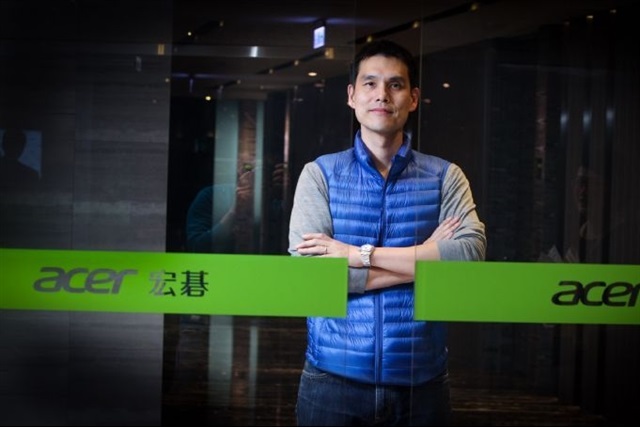
The Monte Jade Science and Technology Association of Taiwan (MJ Taiwan) elected Maverick Shih, chairman of Ace…
The AI news that matters, in one minute each morning.
Sign up free