What happened
NetApp introduced Novus, a storage architecture it says exceeds 100TB/s of aggregate throughput, with a Data Director that manages metadata separately so it can scale independently of stored data.
Why it matters
Separating metadata from stored data is pitched as the pillar for making large GPU clusters and AI agents actually usable, not just fast.
What to watch
The pitch hinges on whether the planned PEAK:AIO acquisition closes and its pNFS-based parallel file system delivers; Linux kernels after 2018 already carry a pNFS client.
WHO IT HITSThis lands on enterprise storage and data platform teams, plus the IT architects who run GPU clusters and must decide whether to extend existing ONTAP setups instead of replacing them.
Summaries like this, in your inbox every morning.
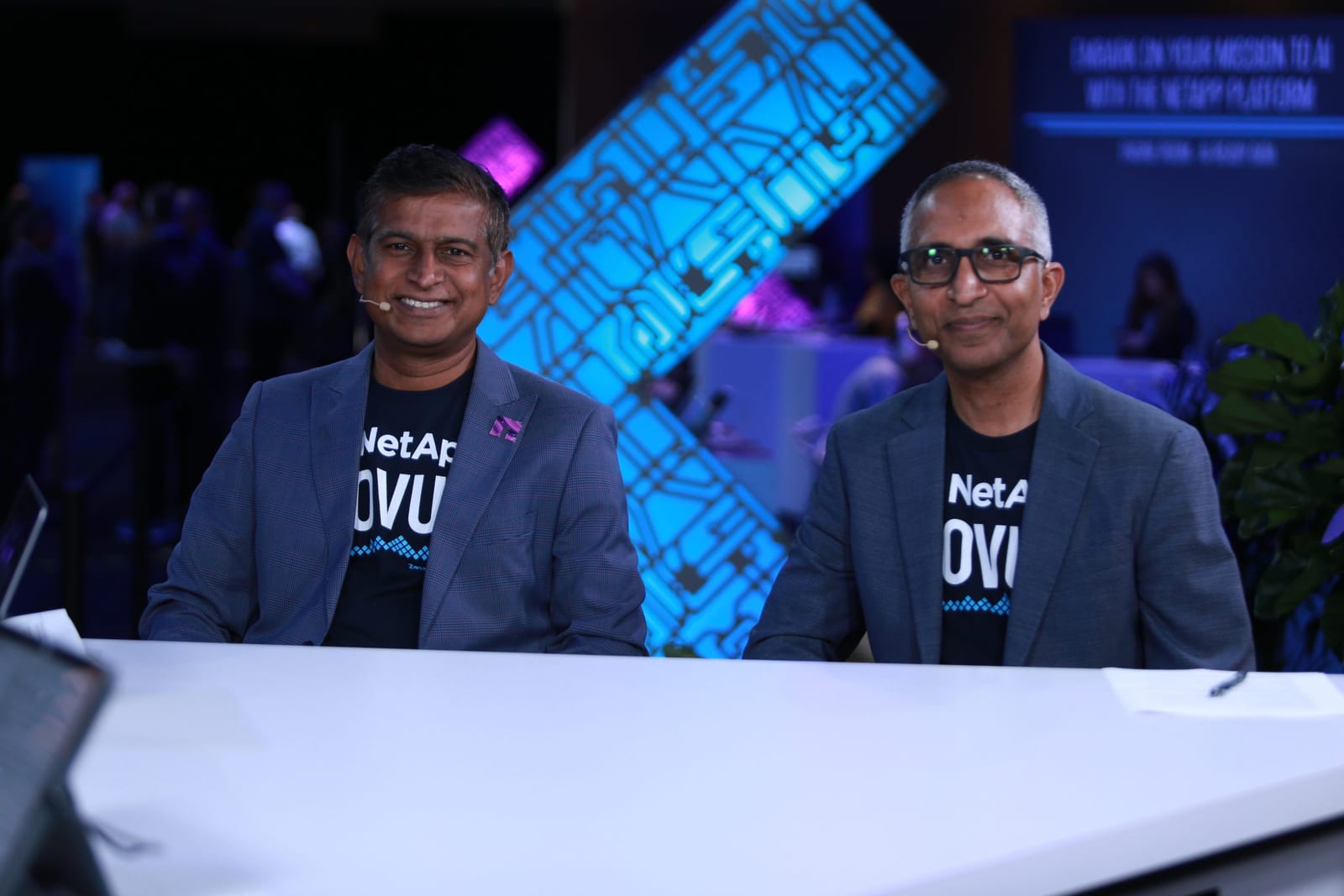
NetApp's push into production AI centers on a bottleneck that speed alone cannot clear. Syam Nair, the company's chief product officer, told theCUBE at NetApp INSIGHT that while lots of investment is happening and data applications and models are ready, most enterprises don't get the returns. That gap is the opening NetApp is targeting with intelligent data infrastructure, framed as unified storage spanning wherever the infrastructure sits.
The Novus architecture is the concrete piece. Its Data Director manages metadata separately from stored data, and Gunna Marripudi, vice president of product management for Novus, called metadata concurrency the pillar for an architecture. The pitch extends beyond throughput: NetApp's AI Data Engine discovers, classifies and vectorizes enterprise data, aiming to cut preparation work that typically takes six to nine months of engineering.
The open-standards angle is where this becomes a practical decision for storage teams. Nair's promise is that customers don't need to rip and replace what they already have, and the planned PEAK:AIO acquisition is expected to bring pNFS-based parallel file system technology — with any Linux kernel released after 2018 already carrying a pNFS client. Whether that lands as advertised appears to hinge on how smoothly these pieces slot into existing ONTAP environments.
Pick your industry and the AI tools you use, and get news related to your work every day.
Free · 30 seconds with Google · unsubscribe anytimeWhat is AIToday? →
Ask AI anything about this article. The AI reads this article, earlier AIToday articles, and Wikipedia, and cites its sources. Q&As are published on this page for other readers too.
Apple reported $109.42B revenue, up 16.4%, and $2.02 EPS versus the $1.89 consensus, while Tesla's $0.33 non-G…
GE Vernova booked $24.20B in second-quarter 2026 orders, up 88% organically, pushing its backlog to a record $…

Goldman Sachs sees AI driving a global 'mine-to-magnet' investment cycle, with MP, CRML, TMC and UAMY stocks i…

A Seeking Alpha analysis argues Marvell Technology (NASDAQ:MRVL) is poised to thrive during the AI buildout
Morgan Stanley said Nvidia and Broadcom are shielded as an AI power crunch hits the chip supply chain, Reuters…

Arista Networks' Q2 revenue growth accelerated to 38% year over year and it now expects 40% growth for 2026; B…