What happened
Z.ai released GLM-5.3-Flash, the first natively multimodal model in the GLM-5 series. It scores 57 points on the Intelligence Index, level with GPT-5.6 Terra and Muse Spark 1.2, and just three points behind the larger GLM-5.3.
Why it matters
The model costs 0.09 dollars per task on the index, versus 0.68 dollars for GLM-5.3 — about 7.5 times cheaper. It also runs on Chinese AI chips, with SemiAnalysis reporting it served 100 trillion tokens a day, testing the CUDA moat.
What to watch
On the API, it costs 0.15 dollars per million input tokens and 0.50 dollars per million output tokens, about ten percent of GLM-5.3's price. On agentic tasks, it matches GLM-5.3 and Grok 4.6 on GDPval-AA v2, trailing only Claude Opus 5.
Summaries like this, in your inbox every morning.
Z.ai's new GLM-5.3-Flash stands out not just for its performance but for its cost structure. The model reaches 57 points on the Intelligence Index, only three behind the larger GLM-5.3, while costing 0.09 dollars per task — roughly 7.5 times cheaper. This places it on the Pareto frontier of intelligence and cost, a position that adds to the recent pressure Chinese models have put on Western providers.
The infrastructure angle is equally significant. Z.ai ran the model's pre-launch traffic on Chinese AI chips, serving 100 trillion tokens a day as reported by SemiAnalysis. The company says its hardware efficiency matches common Nvidia GPUs. Because CUDA, Nvidia's programming layer, has been nearly 20 years of tuned integration, switching chips usually requires redoing that work. Z.ai instead built its own serving software on SGLang, breaking processing into independently scaling stages, which tripled throughput on the same hardware.
Pick your industry and the AI tools you use, and get news related to your work every day.
Free · 30 seconds with Google · unsubscribe anytimeWhat is AIToday? →
Ask AI anything about this article. The AI reads this article, earlier AIToday articles, and Wikipedia, and cites its sources. Q&As are published on this page for other readers too.
The Motley Fool argues Amazon is the AI company of the two, since AWS was just 21% of first-half 2026 revenue…

Hewlett Packard Enterprise stock is down 5% at $55.87

Cammarata reinterprets InceptionV1's cat-car neuron as a V-shape detector, not two unrelated concepts

Google Deepmind's Gemini 4 Argon scored 97.5 percent on ARC-AGI-3 at a cost of $4,800, second only to GPT-6 As…
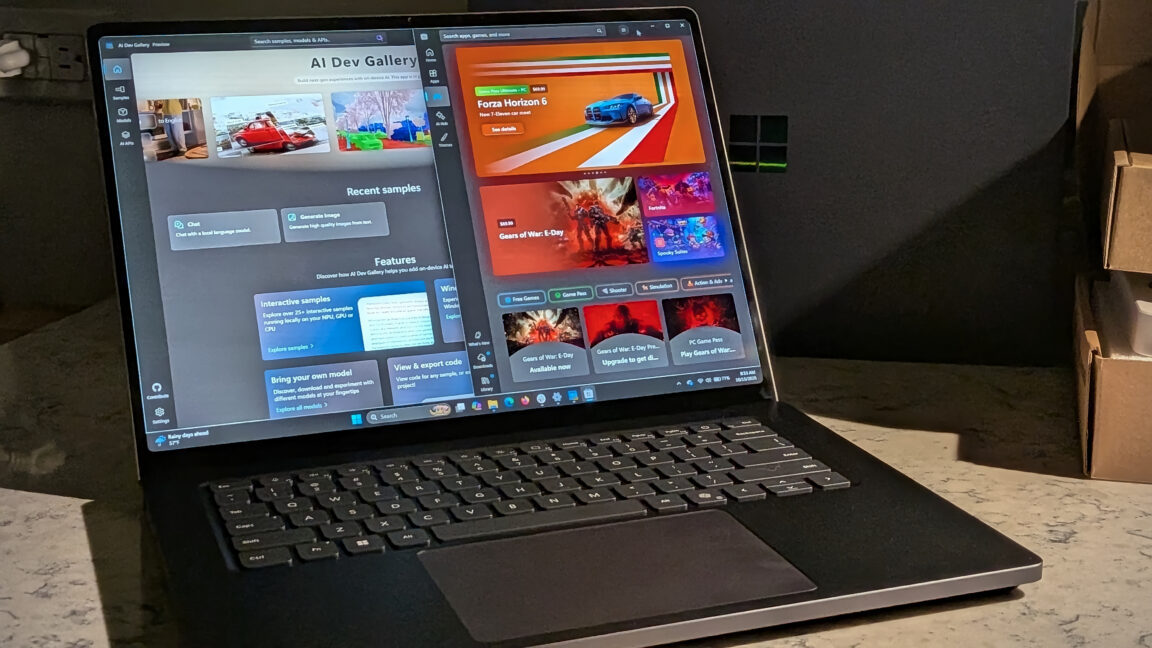
Microsoft's Surface Laptop Ultra, using Nvidia's RTX Spark platform, starts at $2,599 (up to $5,899)
Meta's new commercial terms, effective October 30th, appear to let it crawl and train AI on content from websi…