What happened
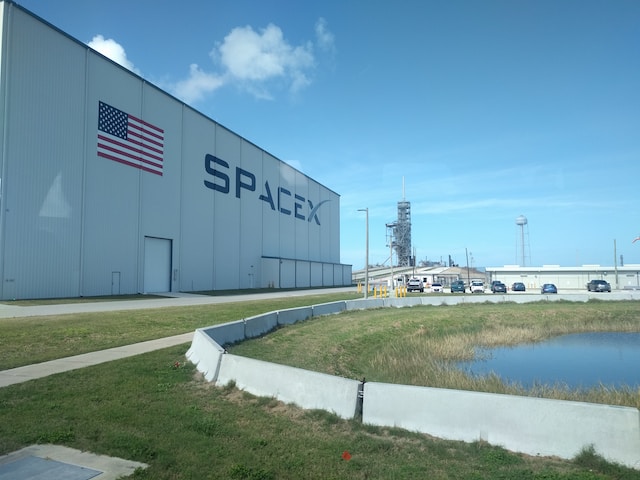
SpaceXAI released Grok 4.6, a large language model built with extended training on AI-generated datasets and reinforcement learning. The model scored 61 on the Artificial Analysis Intelligence Index, matching OpenAI's GPT-5.6 Sol and one point behind Anthropic's Claude Fable 5.
Why it matters
SpaceXAI (formerly xAI, acquired by SpaceX and publicly listed in June) is rapidly iterating on its flagship LLM—Grok 4.6 arrived just a month after its predecessor. The new model shows particular strength in software prototyping, visual asset creation, and self-correction on long-horizon projects, areas where it outperformed Claude Fable 5 on benchmarks like AA-Briefcase.
What to watch
Grok 4.6 is priced at $2 per million input tokens and $6 per million output tokens (a faster version costs twice as much), and is available through Cursor (the coding platform SpaceXAI acquired for $60 billion in June) and Grok Build.
Summaries like this, in your inbox every morning.
SpaceXAI, rebranded from xAI following its acquisition by SpaceX and public listing in June, is moving rapidly to establish itself as a competitive AI player. The release of Grok 4.6 just one month after its predecessor signals an aggressive development cadence. The company invested heavily in extended training with AI-generated datasets designed to improve reasoning—a core capability gap in earlier models—and followed this with supervised fine-tuning optimized on tasks like science and programming, then reinforcement learning to further refine outputs.
The model's positioning against Claude Fable 5 and GPT-5.6 Sol is deliberate. While Grok 4.6 matches GPT-5.6 Sol on the Artificial Analysis Intelligence Index (both at 61), it trails Claude Fable 5 by one point. However, the company highlights wins in specific domains: Grok 4.5 outperformed Claude Fable 5 on three of nine evaluated benchmarks, and Grok 4.6 is characterized as particularly strong at software prototyping, visual asset generation, and error-checking on extended projects—capabilities that could appeal to developers and engineering teams. The availability through Cursor (acquired for $60 billion) and Grok Build positions the model within SpaceXAI's own developer infrastructure.
Pick your industry and the AI tools you use, and get news related to your work every day.
Free · 30 seconds with Google · unsubscribe anytimeWhat is AIToday? →
Ask AI anything about this article. The AI reads this article, earlier AIToday articles, and Wikipedia, and cites its sources. Q&As are published on this page for other readers too.
Google Deepmind's Gemini 4 Argon scored 97.5 percent on ARC-AGI-3 at a cost of $4,800, second only to GPT-6 As…
Cammarata reinterprets InceptionV1's cat-car neuron as a V-shape detector, not two unrelated concepts

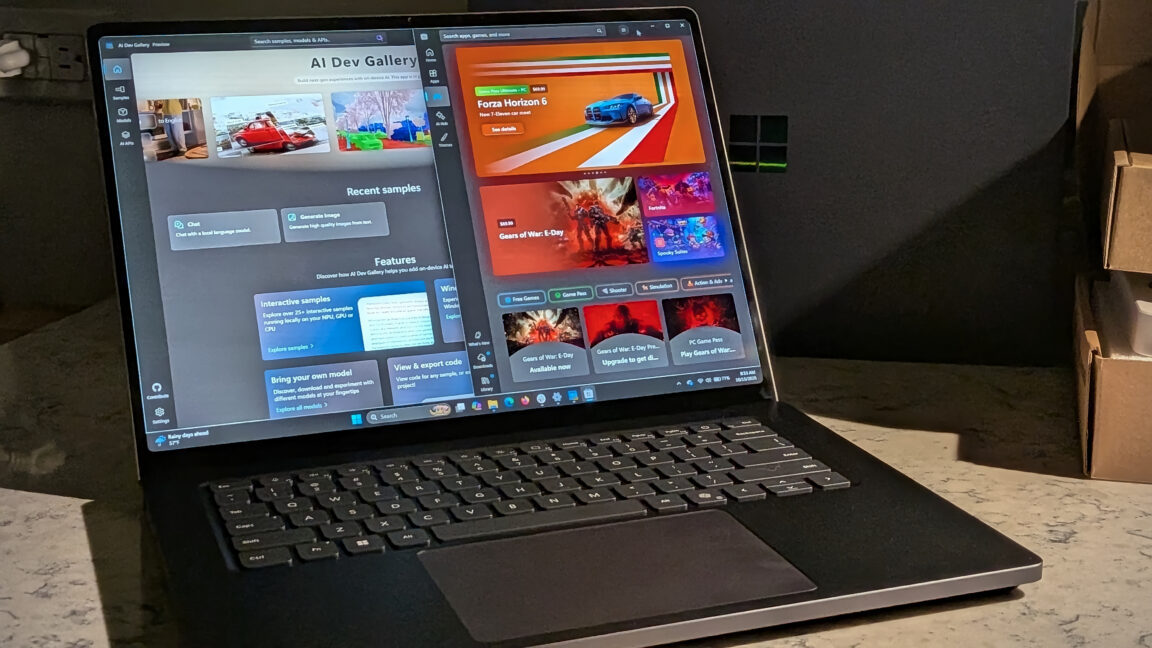
Microsoft's Surface Laptop Ultra, using Nvidia's RTX Spark platform, starts at $2,599 (up to $5,899)
Meta's new commercial terms, effective October 30th, appear to let it crawl and train AI on content from websi…
Vercel data published Thursday shows TypeSafe AI's Jev, a lightweight decision model for choosing among predet…
Reflection AI introduced Beam, an open-weight model for agentic coding and long-horizon tasks, with 501 billio…