What happened
Utah cleared Nolla Health's pilot letting its AI prescribe topical acne creams after a face scan, with no human sign-off once past an initial 100-patient stage.
Why it matters
Physician-approved topical treatments are now the first U.S. prescriptions an AI itself may authorize, not merely draft for a clinician to sign.
What to watch
The pilot advances only if 100 patients clear the first stage without serious problems; oral medications such as isotretinoin are barred, and reviews later drop to at least 10% monthly.
WHO IT HITSDermatology patients seeking acne treatment, pharmacists filling automated prescriptions, and state medical boards weighing similar AI sandbox rules are the first to feel this, with the pilot's limits likely read as a template for other conditions.
Summaries like this, in your inbox every morning.
Utah's approval runs through the state's AI Learning Lab sandbox, a program that gives AI firms relief from state laws to test products under supervision — and the Utah Office of Artificial Intelligence Policy is explicit that participation is not an endorsement, certification or approval of the product. The pilot is being rolled out in three stages rather than one. Two physicians will approve every AI-generated prescription for at least the first 100 patients; only if there are no serious problems does the AI begin issuing prescriptions directly, with physicians reviewing after the fact, across 500 patients; the final stage cuts human review to at least 10% of automated prescriptions each month.
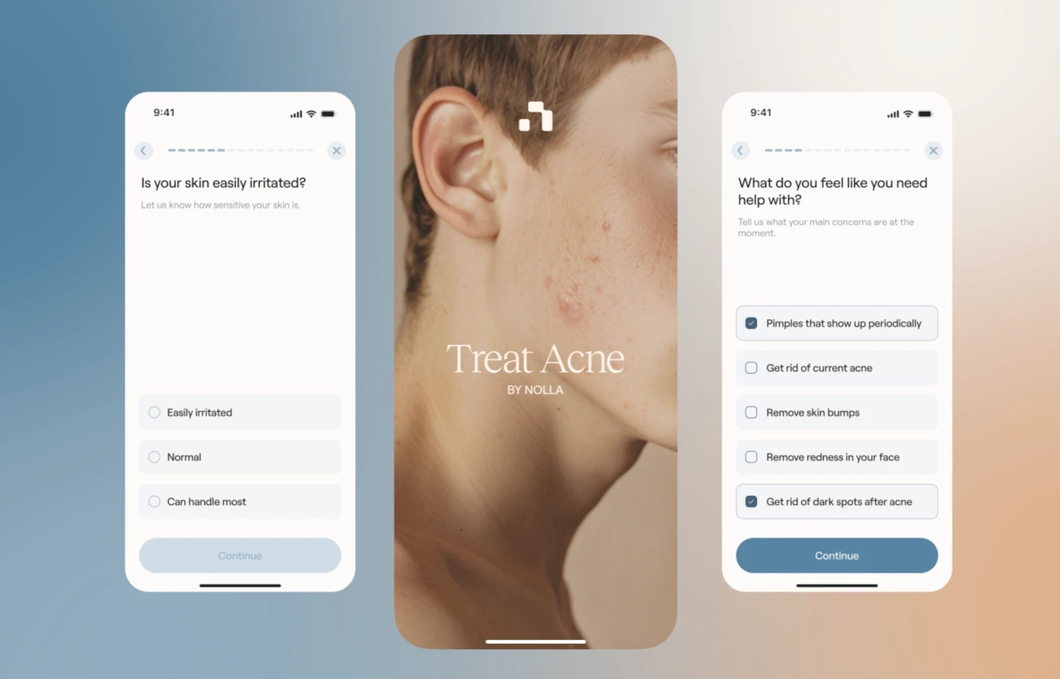
The app itself, Nolla Derm, is available on iOS devices and is aimed strictly at topical acne creams. Patients go through an intake, then describe their condition and upload a facial scan; the AI picks a medicine from a shortlist of physician-approved topical treatments, and anything outside its strict limits goes to a licensed human physician. The app also tracks progress with a daily skin scan and updates treatment plans monthly.
The company frames acne as a proof of concept rather than the destination. Chief Medical Adviser Zaid Fadul said the startup would look at other well-understood, remotely assessable conditions with strong medication safety profiles — naming the flu and uncomplicated urinary tract infections — and he expects that in ten years AI will manage a large part of routine healthcare checks, while not handling serious conditions, life-changing diagnoses, major procedures or high-risk medications. He singled out stimulants, opioids and benzodiazepines as too risky for AI to prescribe because humans might try to manipulate the models doing the assessments, and said sufficient evidence and safeguards for autonomous prescribing of such drugs may take a long time. Whether the model ever reaches those drugs depends on the pilot clearing its staged review thresholds first.
Pick your industry and the AI tools you use, and get news related to your work every day.
Free · 30 seconds with Google · unsubscribe anytimeWhat is AIToday? →
Ask AI anything about this article. The AI reads this article, earlier AIToday articles, and Wikipedia, and cites its sources. Q&As are published on this page for other readers too.
Moonshot AI closed its final private round at about a $50 billion valuation and is aiming for a Hong Kong IPO…
Huawei and Qualcomm struck a multi-year patent agreement spanning 5G and AI, as reported by the South China Mo…

AbbVie and Iambic announced a collaboration on September 21, 2026 to discover small-molecule drugs in immunolo…
Catherine Esperanza Amador sued Pin Trading App and co-founder Andy Nguyen on Oct

Stryker's CEO said AI will become an 'intelligent partner' in healthcare
On Politico's Decoded podcast, OpenAI CEO Sam Altman said the world should "accept some bad things happening"…