What happened
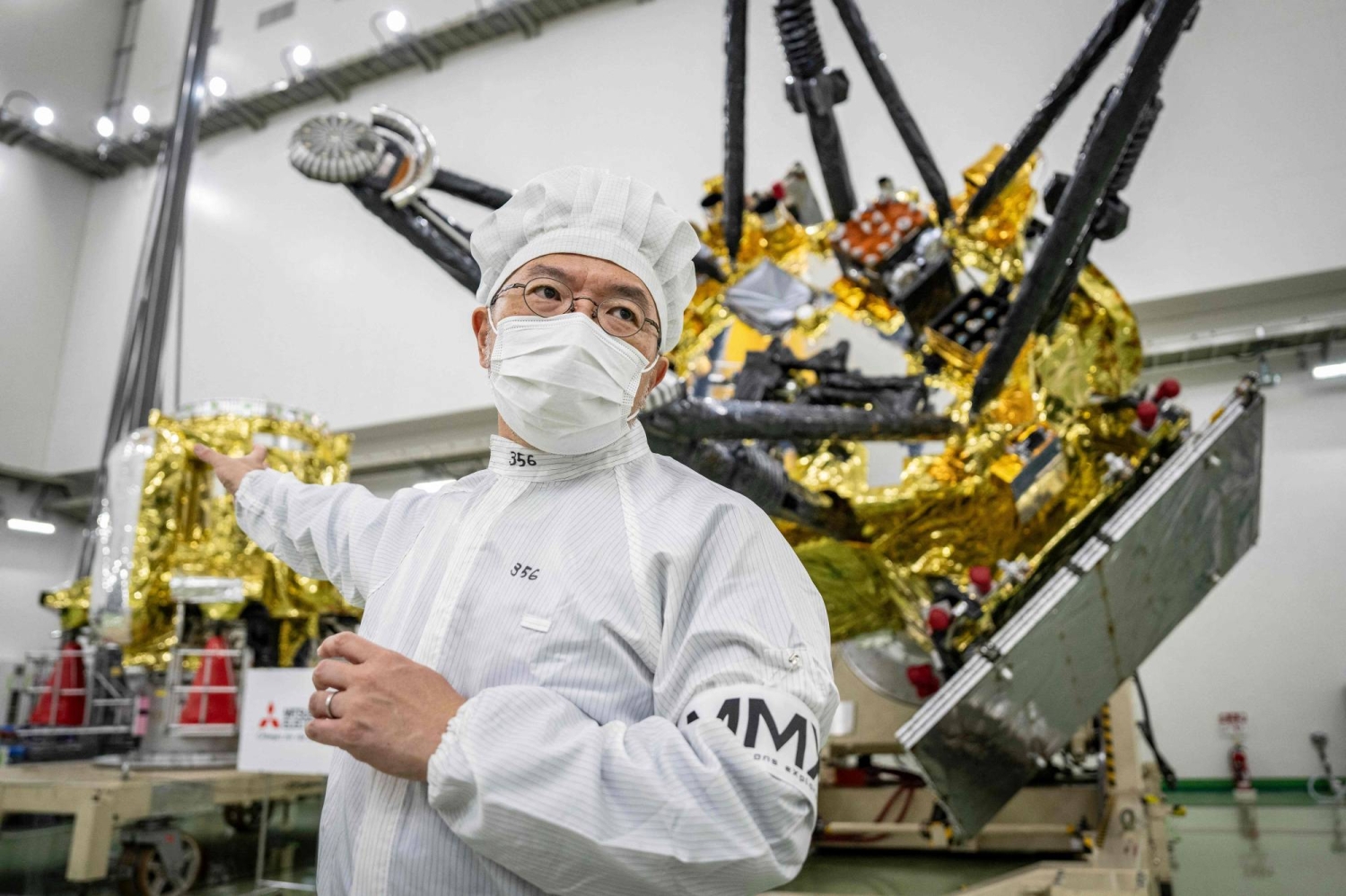
Japan is preparing to launch the unmanned Martian Moons eXploration (MMX) spacecraft from Tanegashima Space Center in the coming months to retrieve samples from Phobos, one of Mars' moons. The spacecraft will orbit Mars for around three years and attempt to land on Phobos.
Why it matters
The samples retrieved could unlock the origins of the solar system and life on Earth. The mission also has the potential to lay groundwork for human visits to Mars.
What to watch
A rival Chinese mission is aiming to return samples first. The MMX spacecraft was revealed to media last Thursday at Tanegashima Space Center in Kagoshima Prefecture.
Summaries like this, in your inbox every morning.
Japan's Martian Moons eXploration (MMX) mission represents a significant step in the nation's deep-space exploration efforts. The unmanned spacecraft, which will launch from Tanegashima Space Center in Kagoshima Prefecture in the coming months, targets Phobos, one of Mars' two moons, in an attempt to retrieve samples that scientists believe may reveal fundamental information about the solar system's origins and the emergence of life on Earth. The three-year orbital mission reflects Japan's long-term commitment to planetary science and positions the country alongside other spacefaring nations pursuing Mars exploration. The existence of a competing Chinese mission to retrieve samples first underscores the international dimension of modern space exploration, with multiple nations racing to achieve key scientific milestones at Mars.
Pick your industry and the AI tools you use, and get news related to your work every day.
Free · 30 seconds with Google · unsubscribe anytimeWhat is AIToday? →
Ask AI anything about this article. The AI reads this article, earlier AIToday articles, and Wikipedia, and cites its sources. Q&As are published on this page for other readers too.

