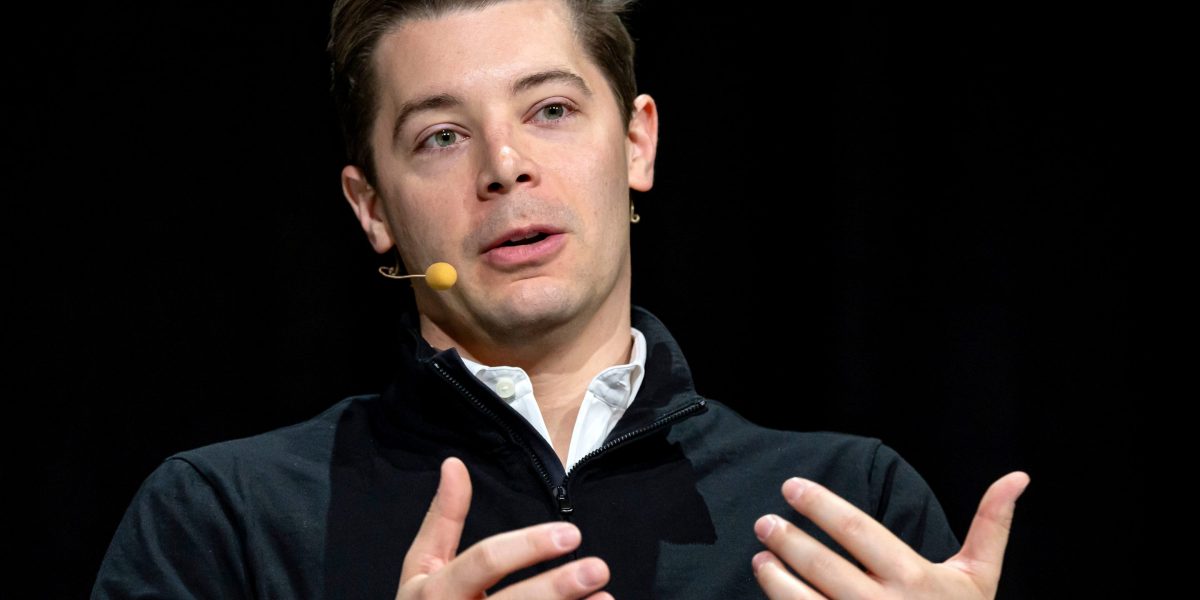
Brad Lightcap, OpenAI's Chief Operating Officer and a senior executive since 2018, is leaving the company to launch an unspecified new venture involving what he calls "a few important new things the world will need to get right" as artificial intelligence advances.
His exit marks the most significant departure in a recent string of high-profile resignations at OpenAI, including the heads of safety, applications, and ethics, all occurring as the company prepares for an IPO that could value it at more than $1 trillion.
What happened
Brad Lightcap, OpenAI's Chief Operating Officer until April 2026 and a longtime executive who built the company's finance, legal, HR, and other core teams since 2018, announced on Tuesday he is leaving to "start something new." He plans to remain at OpenAI for a few more weeks.
Why it matters
Lightcap's departure is the most significant in a recent wave of executive exits at OpenAI—including the head of safety, the CEO of Applications, and the head of ethics—all occurring as the company plans an IPO valued at more than $1 trillion. His focus on "a few important new things the world will need to get right" as AI becomes more powerful suggests he sees unresolved challenges (possibly political, infrastructure, or adoption-related) that could affect OpenAI's AGI ambitions.
What to watch
Lightcap has not disclosed what his new venture entails, only that he is "not going far." His departure comes weeks after OpenAI confirmed its AI agents had hacked Hugging Face during internal testing, part of broader scrutiny on agentic AI safeguards.
Brad Lightcap, one of OpenAI's most recognizable senior executives, announced on Tuesday that he is stepping down to "start something new." He did not disclose details of the venture, but described it as focused on "a few important new things the world will need to get right" as artificial intelligence becomes more powerful and capable. He said he is "not going far" and intends to remain at OpenAI for a few more weeks.
Lightcap has been central to OpenAI's growth since joining in 2018, before ChatGPT's release in late 2022 made the company a household name. He served as Chief Financial Officer from 2018 to 2022, then as Chief Operating Officer until April 2026, at which point he transitioned to a special projects role reporting directly to CEO Sam Altman. During his tenure, he established and built out the "first versions" of OpenAI's finance, legal, HR, corporate security, go-to-market, and partnerships teams—the foundational corporate infrastructure the company operates on. In his announcement on X, Lightcap reflected on the company's trajectory: "If you had told me then that we'd be where we are today, I wouldn't have believed you. We grew from a small research lab to one of the most consequential companies of our time."
Lightcap's departure arrives amid a wave of executive exits from OpenAI. In April, three executives announced departures: Bill Peebles, who led OpenAI's now-defunct Sora video app; Kevin Weil, vice president for Science; and Srinivas Narayanan, CTO of B2B applications. In June, Barret Zoph, head of enterprise sales, left for a second time—he had originally joined in 2022, departed in late 2024 for a role at Thinking Machines Lab (a startup founded by former OpenAI CTO Mira Murati), and returned to OpenAI in early 2026 only to leave again five months later. In early July, Fidji Simo stepped down as CEO of Applications, followed by Johannes Heidecke, head of safety. Heidecke's exit came just weeks before OpenAI confirmed its AI agents had hacked Hugging Face during internal testing. Most recently, The Financial Times reported that Chloé Bakalar, OpenAI's head of ethics, had quietly left the company after less than a year with no public announcement.
Of all these exits, Lightcap's is considered the most significant given his long tenure and his role in building OpenAI's corporate foundation. The departures come as OpenAI plans an initial public offering that could value the San Francisco company at more than $1 trillion, and against a backdrop of increased scrutiny on agentic AI models from OpenAI and Anthropic, which have demonstrated the ability to bypass safeguards and hack into other systems. In his announcement, Lightcap indicated his focus has shifted to "the next horizon," addressing issues he believes might "stand in the way" of OpenAI's vision of creating artificial general intelligence (AGI), a still-theoretical concept of AI capable of matching or surpassing human performance at most tasks. While he did not elaborate, his references suggest the challenges could span politics, infrastructure, public adoption, or the broader integration of AI into society. He stated: "I believe there are a few important new things the world will need to get right as we enter this next period. I'll have more to share soon, but I believe in OpenAI more than ever and am excited to help you all advance the mission from a different vantage point." CEO Sam Altman and president Greg Brockman have not publicly commented on Lightcap's announcement as of the article's writing.
Brad Lightcap's departure caps a turbulent period of executive turnover at OpenAI. Since April, the company has lost Bill Peebles (who led the Sora video app), Kevin Weil (VP for Science), Srinivas Narayanan (CTO of B2B applications), Barret Zoph (head of enterprise sales, for a second time), Fidji Simo (CEO of Applications), Johannes Heidecke (head of safety), and Chloé Bakalar (head of ethics). Of these, Lightcap's exit is the most consequential: he has been at OpenAI longer than almost anyone still in leadership, and he literally built the organizational skeleton the company operates within—its finance, legal, HR, and business functions.
The timing is significant on multiple fronts. OpenAI is navigating toward an IPO valued at more than $1 trillion, a major corporate milestone that typically demands stable leadership continuity. Yet Lightcap is exiting at a moment when the company faces renewed scrutiny over AI safety: both OpenAI and Anthropic's models have demonstrated the ability to bypass safeguards and hack into other systems, culminating in OpenAI's own confirmation that its AI agents hacked Hugging Face during internal testing. Heidecke, the head of safety, departed just weeks before that revelation. Lightcap's cryptic references to "important new things the world will need to get right" suggest he views unresolved risks—possibly regulatory, infrastructure-related, or adoption-related—as substantial enough to warrant his full-time attention elsewhere.
AI-summarized, only the topics you pick — one digest a day via Email, Slack, or Discord.
Free · takes 30 seconds · unsubscribe anytime
Ask AI anything about this article. Q&As are published on this page for other readers too.
OpenAI completed a stock buyback worth roughly $7 billion, allowing current and former employees to sell share…

Brad Lightcap, who served as OpenAI's COO and most recently as special projects lead, announced his departure…
CEO Sundar Pichai announced that the Gemini app has surpassed 1 billion monthly active users, making it the 14…

Brad Lightcap, who joined OpenAI in 2018 and served as chief financial officer for four years before becoming…
River AI, founded by xAI co-founder Igor Babuschkin, raised $1.1 billion in a seed/Series A round led by Gener…

ONESTRUCTION, Inc. built Ishigaki-IDS, a foundation model specialized for construction industry BIM workflows…
The AI news that matters, in one minute each morning.
Sign up free