What happened
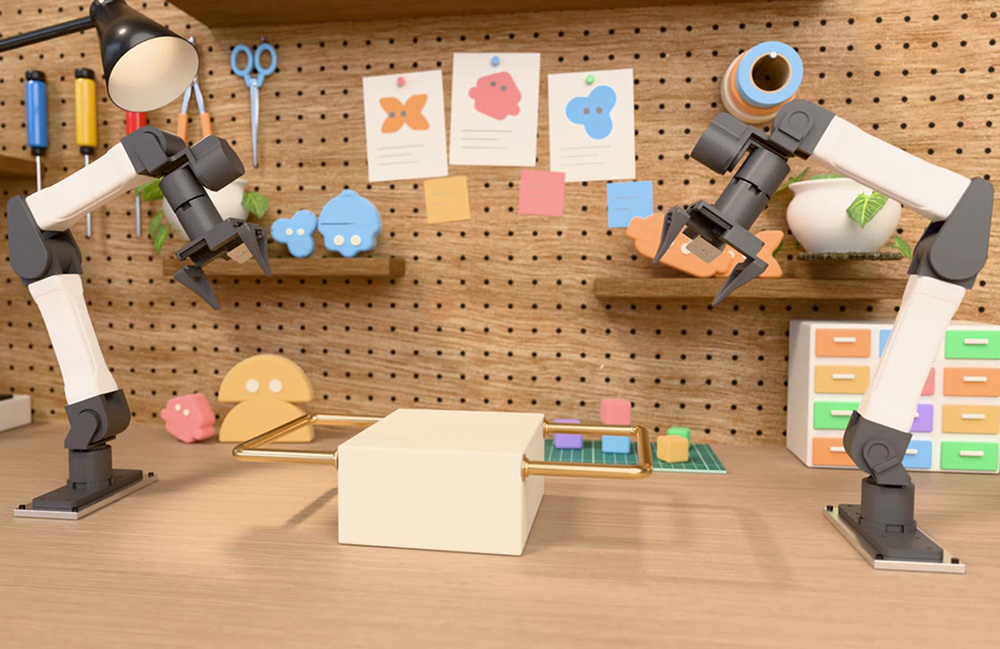
Dream Labs raised $90 million in seed funding led by B Capital and Kindred Ventures and launched Dream API, a publicly available interface that converts camera feeds and plain-English instructions into motor commands for unfamiliar robots.
Why it matters
The API lets developers connect any robot with grippers and have it carry out tasks without task-specific training, potentially cutting the months specialists spend teaching a single robot one task.
WHO IT HITSRobot developers and hardware makers gain a way to add usable intelligence to low-cost arms via an API, while the funding supports compute scaling for Dream Labs.
Summaries like this, in your inbox every morning.
Dream Labs' launch comes as factories worldwide run a record 5 million industrial robots, yet nearly every one is programmed for a single task and most cannot transfer what they have learned to other machines. Low-cost robots now sell for a few thousand dollars but ship with no built-in intelligence, and teaching one robot one task can take specialists months, according to the startup.
The company said its Dream-1 flagship model is trained on video of people performing everyday tasks and can predict what will happen next and determine the robot's resulting action. Because it learns from video rather than from a single machine, its capabilities transfer across hardware, Dream Labs claimed. Dream-1 currently handles tabletop tasks such as picking and placing objects and folding laundry, with support for wheeled mobile robots and dexterous hands to follow.
Dream Labs supports robots today that cost between about $2,000 and $10,000 and works with more than 20 hardware partners, refining the model for each robot beyond the baseline. The company said it plans to use the new funding primarily for compute as it expands the tasks and robots Dream-1 can handle, and scales to support more users.
Pick your industry and the AI tools you use, and get news related to your work every day.
Free · 30 seconds with Google · unsubscribe anytimeWhat is AIToday? →
Ask AI anything about this article. The AI reads this article, earlier AIToday articles, and Wikipedia, and cites its sources. Q&As are published on this page for other readers too.
Egis Group and SiPearl formally signed a strategic CPU partnership at the Egis Group TechDay Taiwan-France cer…

Startups Electric Twin, Artificial Societies, GWI and Toluna are using data from real focus groups and surveys…

DeepSeek raised around $15 billion in one of China's biggest-ever financing rounds, after twice increasing its…
US stock futures and Asian markets fell on fears the AI boom is turning to bust, as an Australian data center…

Meta is creating a new class of nonvoting stock, first reported by Semafor, so Zuckerberg can issue shares for…

In a guest piece, Jacquard's Toby Coulthard says AI agents can now shop from a photo and budget, picking produ…