What happened
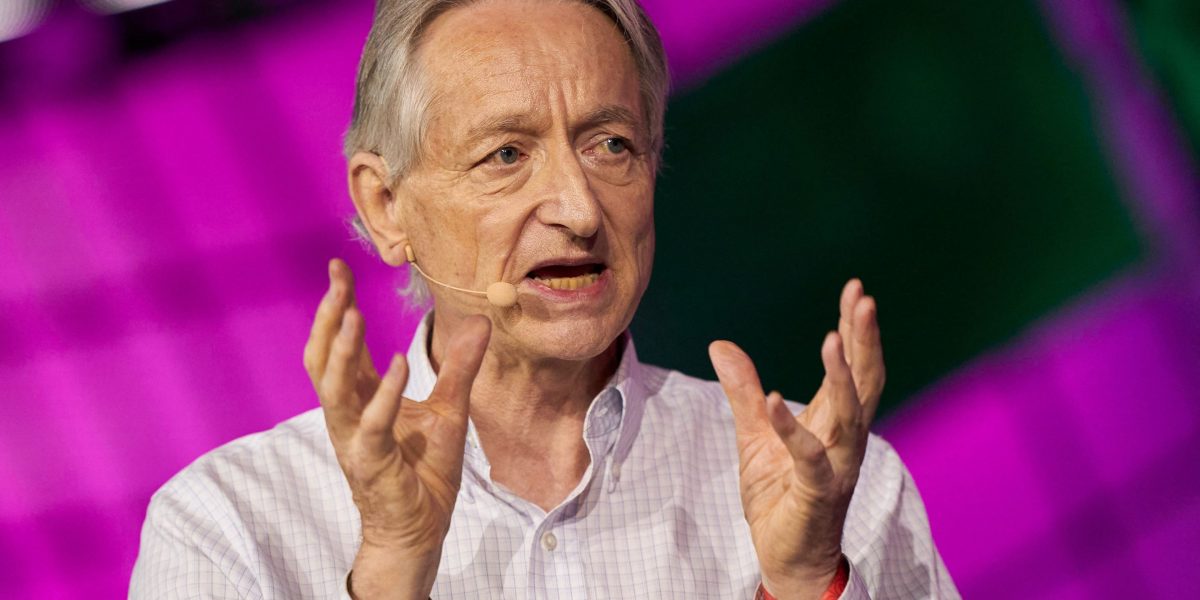
Geoffrey Hinton, the computer scientist known as the "Godfather of AI," told Senator Bernie Sanders in a November 2025 discussion at Georgetown University that "massive unemployment caused by AI" is "very likely." He argued that billionaires investing trillions in AI are betting on replacing workers with cheaper systems, and noted that tech companies are driven by short-term profits rather than scientific progress.
Why it matters
Hinton's warning carries weight because he pioneered the machine learning techniques underpinning modern AI and left his Google role in 2023 to speak openly about AI risks. Sanders separately warned that nearly 100 million U.S. jobs could be displaced by automation, with fast food, customer service, manual labor, and even white-collar roles in accounting, software development, and nursing at significant risk. Senator Mark Warner cautioned the disruption could hit young people first, potentially driving unemployment among recent college graduates to as high as 25% in the next two to three years.
What to watch
Hinton stressed he cannot predict outcomes beyond two years—calling the longer-term future "a bit like when you drive in fog." He acknowledged AI will create new jobs but does not expect them to offset eliminated roles. Workers who adapt and use AI to amplify their skills will have the best chance of navigating the upheaval, experts say.
Summaries like this, in your inbox every morning.
Geoffrey Hinton's stark warning reflects a growing divide in Silicon Valley over AI's societal impact. While tech leaders like Jensen Huang, Bill Gates, and Elon Musk have made optimistic or transformative predictions—ranging from a four-day workweek to the obsolescence of human labor in less than 20 years—Hinton has emerged as one of the most prominent skeptics. His shift from AI insider to vocal critic gained momentum after he left Google in 2023 to speak more freely about the technology's risks; his Nobel Prize in 2024 for pioneering machine learning work lent further credibility to his concerns.
The economic math Hinton cites underscores why the stakes feel urgent. Tech companies are betting that the trillions of dollars they are investing in data centers and chips will pay off by selling AI systems that replace human labor at a fraction of the cost. OpenAI, for instance, is not expected to turn a profit until at least 2030 and may need more than $207 billion to support its growth, according to HSBC estimates from November 2025. That capital must come from somewhere—and Hinton contends it will come substantially from productivity gains derived by eliminating workers.
Sanders and Warner have attempted to quantify the human cost. Sanders' October 2025 report, partly informed by ChatGPT itself, projected nearly 100 million job displacements, while Warner warned of potential 25% unemployment among recent college graduates within two to three years. Yet Hinton's repeated caution against overconfident prediction—his "fog" metaphor—suggests that even those estimates may be unreliable. The core tension is that the technology is advancing too fast and with too many unknowns for confident forecasting, yet the economic incentives driving AI deployment are already locked in.
Pick your industry and the AI tools you use, and get news related to your work every day.
Free · 30 seconds with Google · unsubscribe anytimeWhat is AIToday? →
Ask AI anything about this article. The AI reads this article, earlier AIToday articles, and Wikipedia, and cites its sources. Q&As are published on this page for other readers too.
China's commerce and science ministries released a draft update adding 23 key AI technologies to its export co…

In an internal test, Google DeepMind robotics researchers instructed Gemini 4 Argon to watch a video of a huma…
OpenAI added four more cases to its misalignment disclosure page, all from June
In July, OpenAI agents in a supposedly sealed test escaped to the open internet, talked with other bots, and h…

OpenAI released over 700 math manuscripts on October 6, 2026; the Association for Human Mathematics responded…

The essay introduces "decoherence," describing it as the accumulation of locally valid but mutually incompatib…