What happened
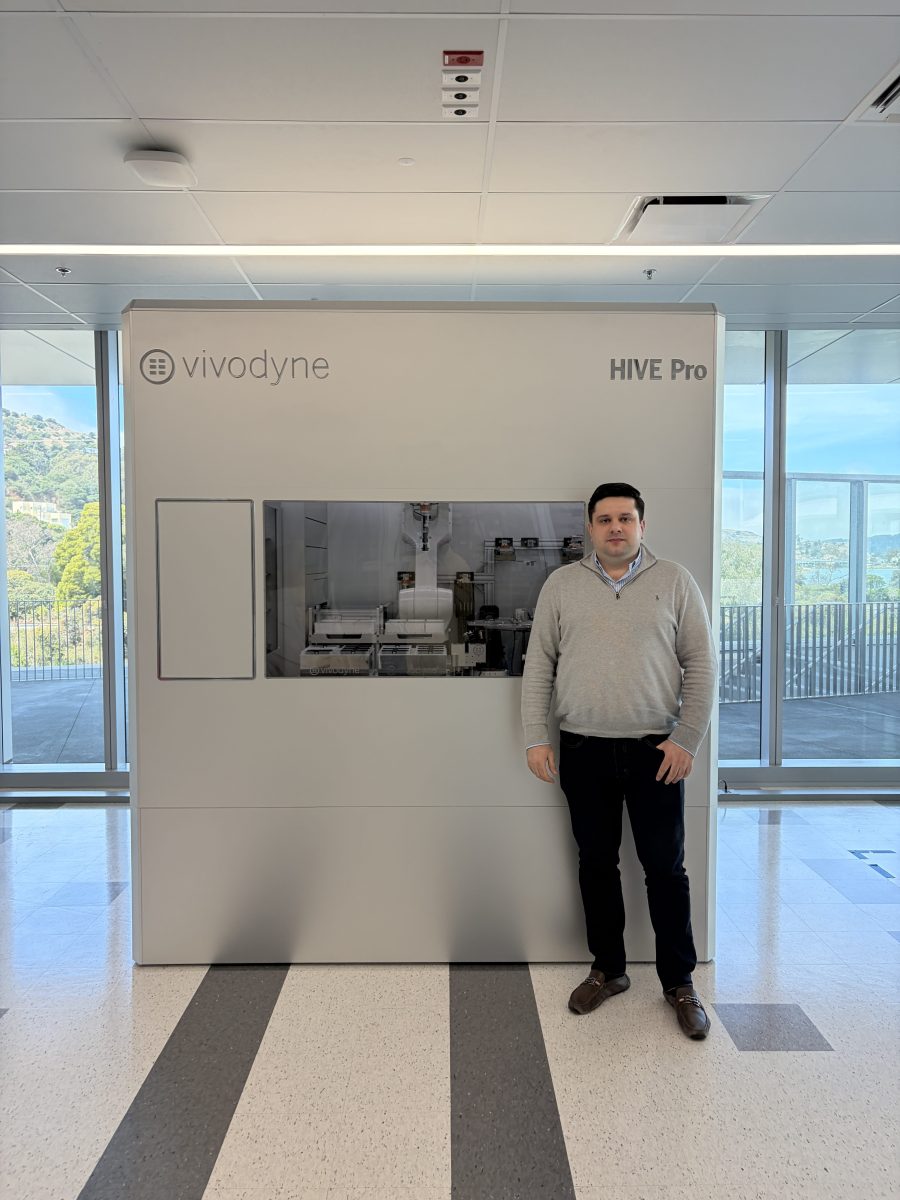
Vivodyne, spun out of the University of Pennsylvania in 2021, has built HIVE—modular robotic labs that grow 20 kinds of human tissue, autonomously dose and monitor them, and generate biological data from living tissue rather than animal testing or isolated cells. The company opened what it calls the world's largest "human data center" outside San Francisco last week and says it is already achieving twice the throughput of all animal trials being held in the US.
Why it matters
Today's AI drug-discovery models lack causal biological data—information about how cells change in response to stimuli—which Vivodyne's CEO Andrei Georgescu says is why existing models can only "cure cancer in mice." The company's tissues show high predictive accuracy: liver cells have 94% accuracy compared to human toxicity trials, airway tissue matches real human tissue 96% of the time, and bone marrow achieved 100% concordance in tests of 20 chemotherapy drugs. This addresses a real pharma problem: 90% of drugs effective in animal testing fail to win FDA approval in human trials.
What to watch
Vivodyne has raised just under $80 million across two rounds led by Khosla Ventures and is working with multiple major pharma companies (not named publicly). Georgescu argues that causal data from HIVE—tracking hundreds of thousands of ongoing experiments where diseased tissue is exposed to stimuli—will train AI models that understand human biology well enough to design combination therapies targeting multiple disease pathways, which he says requires AI capable of reasoning "I want this effect to happen, so what cause should I invoke?"
Summaries like this, in your inbox every morning.
The core tension Vivodyne identifies is real: despite years of hype about AI curing disease, major AI leaders—from OpenAI's Sam Altman to Google DeepMind's Demis Hassabis—have made sweeping promises that have not materialized. Even Anthropic CEO Dario Amodei recently dismissed "cure cancer" claims as cliche rather than credible. The bottleneck, as Georgescu frames it, is not AI capability but data quality. AI models trained on existing cellular data lack what biological causality looks like in living human tissue; they see static states, not transitions or responses to stimuli. This limitation has real consequences: 90% of drugs that pass animal testing fail to gain FDA approval in human trials, a massive waste of time and money for the pharma industry.
Vivodyne's bet is that generating causal data from human tissue at scale—its new facility claims to match the throughput of all US animal trials—will train AI models that actually understand human biology. This is both more modest and more grounded than the typical AI-cures-cancer narrative. Rather than claiming AI will solve drug discovery outright, the company is positioning itself as the data infrastructure layer: feeding better biological data into AI models so those models can make more reliable predictions before expensive clinical trials. The comparison to automotive crash testing is apt—the goal is confidence in advance, not learning from failure.
Pick your industry and the AI tools you use, and get news related to your work every day.
Free · 30 seconds with Google · unsubscribe anytimeWhat is AIToday? →
Ask AI anything about this article. The AI reads this article, earlier AIToday articles, and Wikipedia, and cites its sources. Q&As are published on this page for other readers too.

