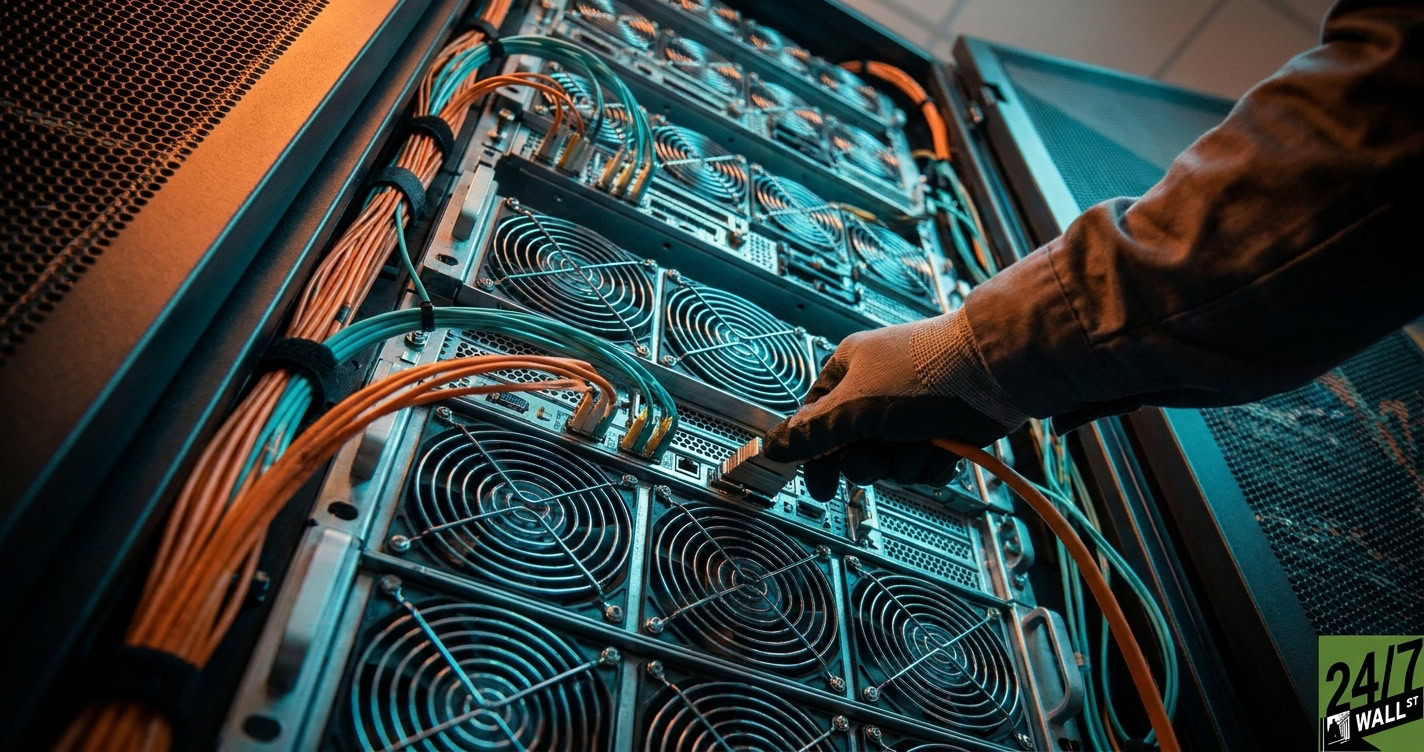
What happened
Morgan Stanley kept its hyperscaler capex forecasts at $1.6 trillion for 2027 and $1.8 trillion for 2028, even as it expects 20% of US data center projects planned for 2028 — 5 gigawatts — to be delayed into 2029.
Why it matters
The bank argues the delays could be healthy, smoothing the supply-demand imbalance and supporting lease rates for existing compute capacity while extending the investment period, though it flags downside risk to its 2028 figure.
Summaries like this, every morning.
Morgan Stanley frames its call as a reaction to the market overreacting to the US midterm election results and what they imply for data center construction. Its report, titled Buy the Drop: AI Investment Opportunities Post the US Midterms, argues the AI investment cycle remains intact even if political opposition pushes some construction into 2029. The bank does not expect projects already under construction to be disrupted, which is why its 2027 forecasts are unchanged.
The geographical details matter here. The concern is largely centered on Texas and Ohio, where newly elected governors could introduce additional requirements for data center construction. Further out, Morgan Stanley sees a potential shift, with hyperscalers moving some projects to more accommodating states such as Tennessee and Louisiana, and it sees the potential for as much as 20 GW of additional data center development across Asia and EMEA.
The bank draws a sharp line between hyperscalers and their suppliers. It is particularly bullish on the largest technology companies, which it says have the balance sheets, existing infrastructure and technical capabilities to overcome power constraints. For suppliers, the outlook is more complicated: if the bottleneck shifts from equipment availability to powered buildings, they could experience reduced pricing power, rising inventories and slowing orders, with Morgan Stanley warning of a traditional downcycle in 2028 even as underlying AI demand remains strong. It also notes Meta's target of a tenfold increase in compute efficiency in 2027 as an example of how advances in model architecture, distillation, training techniques and specialized chips could let AI applications scale without matching increases in computing requirements.
Pick your industry and the AI tools you use, and get news related to your work every day.
Free · 30 seconds with Google · unsubscribe anytimeWhat is AIToday? →
Ask AI anything about this article. The AI reads this article, earlier AIToday articles, and Wikipedia, and cites its sources. Q&As are published on this page for other readers too.
Western Digital's cloud revenue rose 54% year over year to $3.9 billion, 88% of total sales, and its board rai…

Verizon's Data Breach Investigation Report found nearly a third of safety breaches start with vulnerability ex…

JPMorgan added Meta to its Analyst Focus List, replacing Alphabet, and forecast Meta's Family of Apps ad reven…
IBM plans to bring Anthropic's Claude Mythos cyber reasoning into IBM Concert Protect, combining AI code scann…
Cisco Systems enters this week's earnings report with a narrative fair value of $110.56 against a last close o…

Dell was quoted at $329.00 in premarket trading on November 9, 2026, 43.1% below its $578.17 close on October…