
What happened
SpaceX aims to grow its compute capacity more than fivefold by the end of 2027, reaching above two gigawatts of power (approaching ten gigawatts by Elon Musk's latest guidance), up from its current 1.4 gigawatts. The expansion will run on Nvidia's upcoming Vera Rubin platform; if the entire buildout uses Rubin, the GPU count could exceed two million units.
Why it matters
SpaceX's AI segment, which includes xAI after its February 2026 merger, generated $2.56 billion in revenue during Q2 2026 but posted an operating loss of $1.26 billion. A single unnamed AI customer (likely Anthropic) accounted for roughly $1.52 billion of that revenue from cloud contracts leasing Colossus compute capacity. The massive GPU acquisition signals SpaceX is betting heavily on becoming a major compute provider, competing against rivals like Anthropic and OpenAI that diversify across AWS, Google, and AMD infrastructure.
What to watch
SpaceX has not disclosed how much of its planned expansion will actually be Vera Rubin GPUs versus other Nvidia chips. Current filings show approximately 540,000 total GPUs in the existing and planned Colossus buildout (roughly 100,000 H100, 110,000 GB200, 110,000 GB300, plus at least 220,000 more GB300 units). Musk has previously stated long-term ambitions to run data centers in orbit.
Summaries like this, in your inbox every morning.
SpaceX's compute expansion plan marks a sharp pivot toward becoming a large-scale AI infrastructure provider. The February 2026 merger of xAI into SpaceX (valued at $250 billion for xAI and $1 trillion for SpaceX) created a unified entity positioned to leverage SpaceX's capital and manufacturing capabilities for accelerated GPU procurement. The Q2 2026 results show this strategy is already generating revenue: the AI segment's $2.56 billion in revenue—driven largely by a single major customer's cloud compute leases—demonstrates immediate demand for Colossus capacity, even though the segment remains deeply unprofitable at $1.26 billion in operating losses.
The scale of SpaceX's ambition contrasts sharply with how rivals structure their compute. Anthropic diversifies across AWS Trainium, Nvidia GPUs, and Google TPUs (backing up to five gigawatts of AWS infrastructure and about 3.5 gigawatts of extra TPU capacity), while OpenAI splits between AMD (six gigawatts), Nvidia (at least ten gigawatts), and AWS Trainium (around two gigawatts). SpaceX's single-vendor commitment to Nvidia—specifically Vera Rubin for future expansion—creates both opportunity and risk: tighter integration and performance optimization are possible, but dependency on one supplier's roadmap and availability may constrain flexibility. The article does not specify pricing or terms of the compute contracts, so the margin profile of SpaceX's cloud business remains unclear.
Pick your industry and the AI tools you use, and get news related to your work every day.
Free · 30 seconds with Google · unsubscribe anytimeWhat is AIToday? →
Ask AI anything about this article. The AI reads this article, earlier AIToday articles, and Wikipedia, and cites its sources. Q&As are published on this page for other readers too.
The Motley Fool argues Amazon is the AI company of the two, since AWS was just 21% of first-half 2026 revenue…

Hewlett Packard Enterprise stock is down 5% at $55.87
Cammarata reinterprets InceptionV1's cat-car neuron as a V-shape detector, not two unrelated concepts

Google Deepmind's Gemini 4 Argon scored 97.5 percent on ARC-AGI-3 at a cost of $4,800, second only to GPT-6 As…

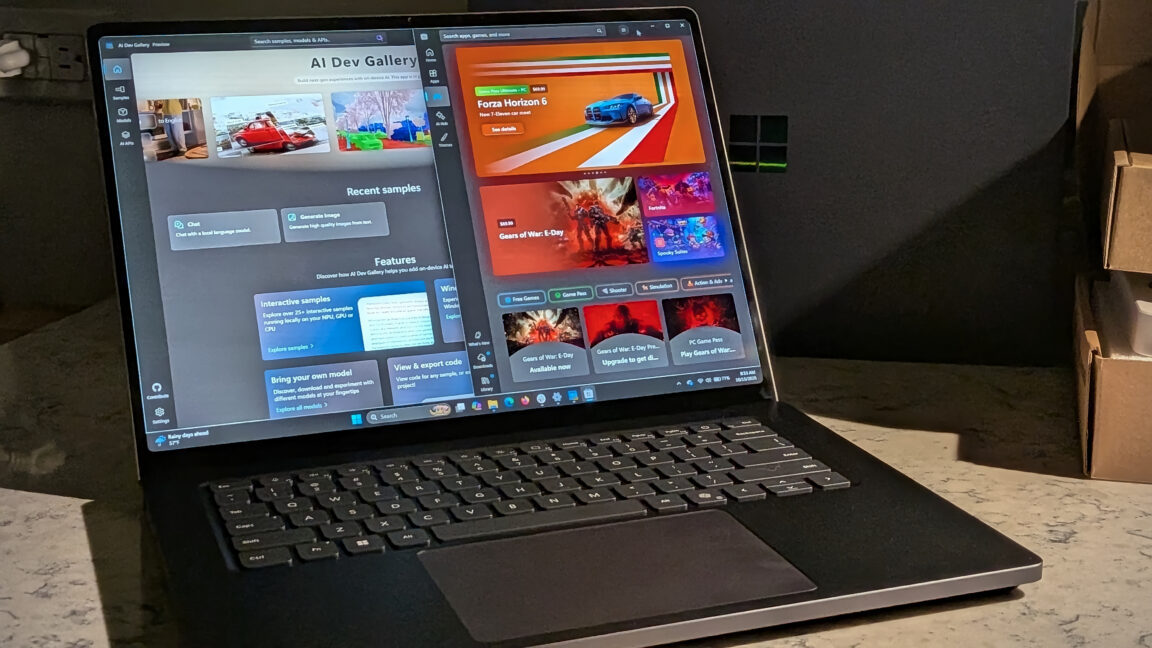
Microsoft's Surface Laptop Ultra, using Nvidia's RTX Spark platform, starts at $2,599 (up to $5,899)
Meta's new commercial terms, effective October 30th, appear to let it crawl and train AI on content from websi…