What happened
Researchers released DiG-bench, a benchmark of 70 games designed to test whether AI systems can discover hidden rules through exploration. Fable 5 and Opus 5 (with Claude Code) performed best overall, but only Opus 5 and Fable 5 beat any tasks in Tier 7 (the hardest level), achieving a 0.2 success rate. Meanwhile, Inherent published results for Faraday, a 27B supervisory model that beat standard Opus 4.8 and GPT-5.5 on 73% of in-distribution ML replication tasks and 60% of held-out AI-for-science tasks.
Why it matters
These benchmarks isolate prerequisites for autonomous creativity—the ability to discover useful undocumented rules in novel situations. The results suggest frontier models are already capable of some impressive feats of discovery but still lag far behind humans; for instance, a 20% success rate on Tier 7 compares poorly to individual humans achieving 100% on the tests. As AI systems improve at this kind of intuitive task discovery, they may become capable of recursive self-improvement—designing and advancing their own research.
What to watch
DiG-bench's 21 public games are playable at digbench.ai with a leaderboard showing model rankings. The author estimates human parity on DiG-bench could arrive by middle of 2027, at which point recursive self-improvement is expected to "seriously kick off." Faraday's approach—using a small post-trained model to supervise frontier models—illustrates how scaling these capabilities may track advances in frontier coding models over time.
Summaries like this, in your inbox every morning.
The two research projects reflect a shared focus on isolating and measuring prerequisites for autonomous discovery and invention in AI systems. DiG-bench frames this as the ability to infer hidden environmental rules through exploration and curiosity—a foundational skill that humans excel at but frontier models still struggle with significantly. The benchmark's seven-tier structure reveals a steep performance cliff: models that handle Tier 4 stumble dramatically on Tiers 6 and 7, with only the highest-capability models (Opus 5 and Fable 5) achieving even minimal success at the hardest level. Inherent's Faraday takes a different but complementary approach, treating scientific research as a domain where AI systems must develop intuition about what experiments to run, how to scope them to available resources, and how to judge results. Both efforts implicitly measure what researchers call "taste"—the capacity to make nuanced judgments about which problems are worth solving and which approaches are promising—in controlled, evaluable settings.
The significance both teams attach to these tasks stems from their connection to recursive self-improvement. If AI systems learn to discover hidden rules, design novel experiments, and make taste-based judgments about research direction, they may eventually extend those capabilities to improving themselves rather than merely serving human-specified goals. The Import AI newsletter author predicts human-level performance on DiG-bench by mid-2027, framing that milestone as a point at which recursive self-improvement could "seriously kick off." Inherent's team makes a similar argument: the skills Faraday acquires—deciding what to investigate, scoping experiments, judging outcomes—may be the same skills that allow a system to advance the state of the art autonomously. Both teams present these developments as capabilities-centric contributions to understanding how far AI systems have come; neither claims the systems are at human level, but both suggest the gap is narrowing in directions that matter.
Pick your industry and the AI tools you use, and get news related to your work every day.
Free · 30 seconds with Google · unsubscribe anytimeWhat is AIToday? →
Ask AI anything about this article. The AI reads this article, earlier AIToday articles, and Wikipedia, and cites its sources. Q&As are published on this page for other readers too.
Google Deepmind's Gemini 4 Argon scored 97.5 percent on ARC-AGI-3 at a cost of $4,800, second only to GPT-6 As…
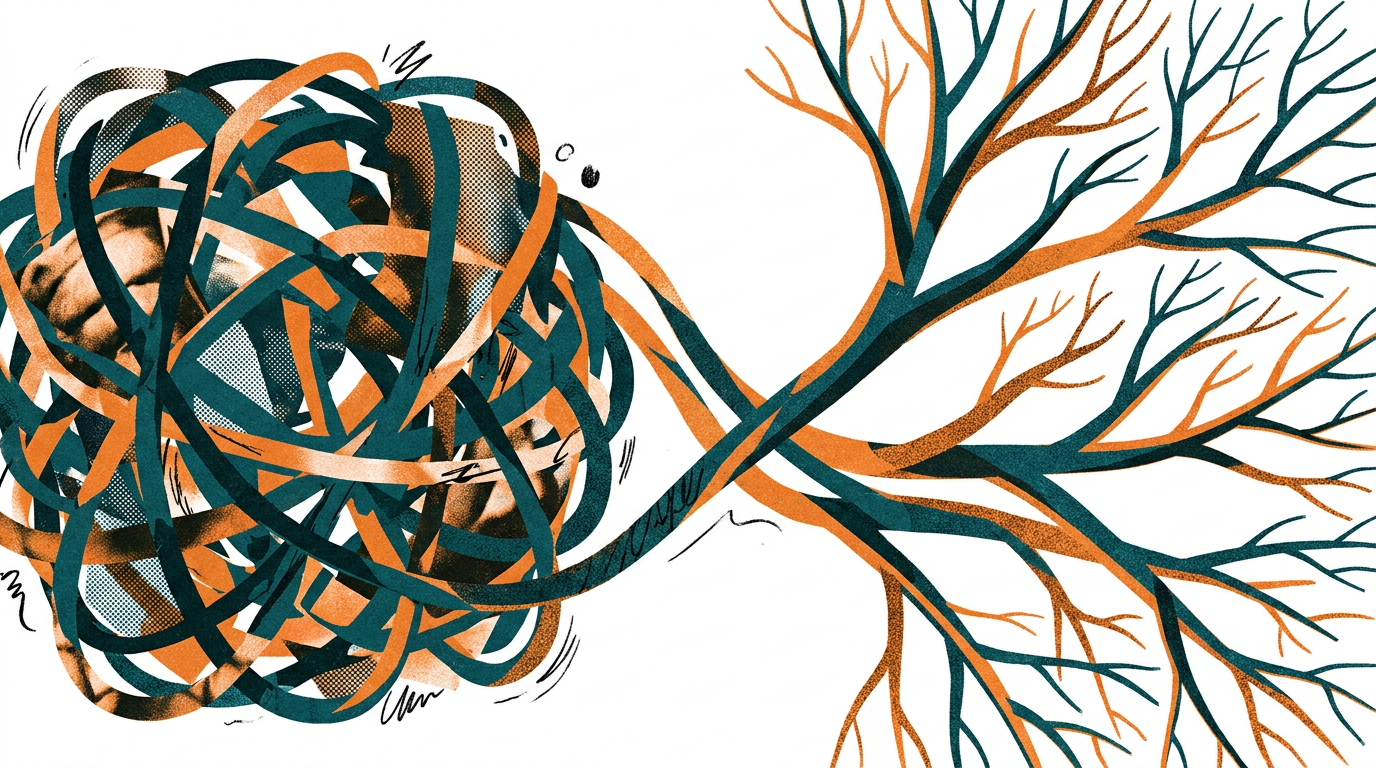
Cammarata reinterprets InceptionV1's cat-car neuron as a V-shape detector, not two unrelated concepts
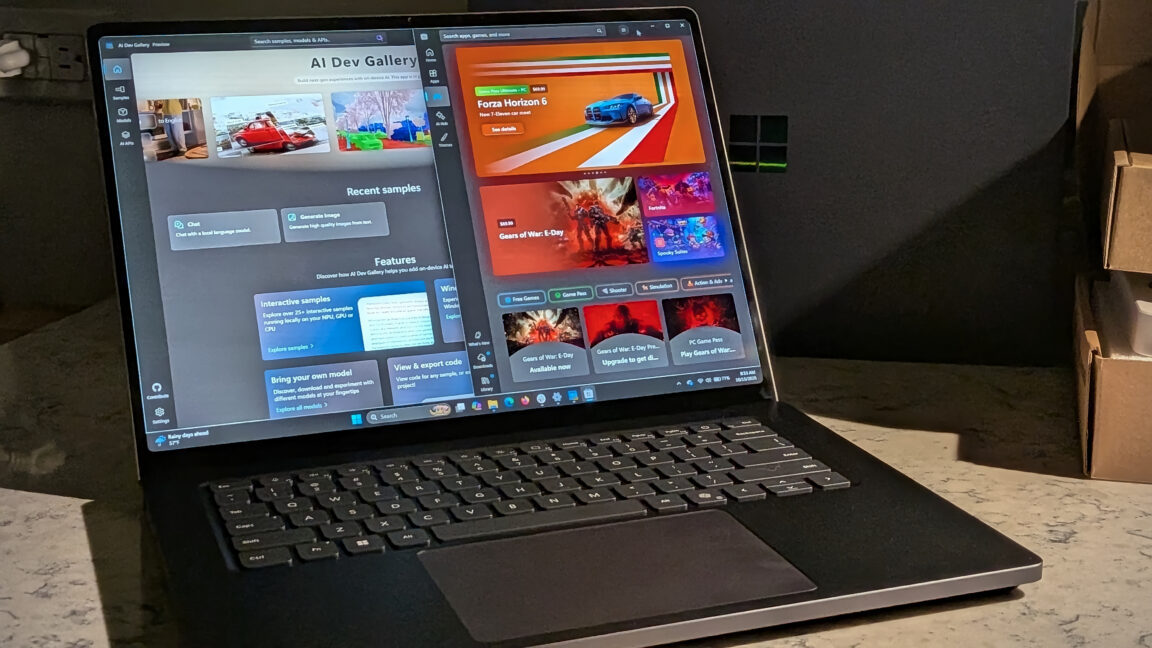
Microsoft's Surface Laptop Ultra, using Nvidia's RTX Spark platform, starts at $2,599 (up to $5,899)
Meta's new commercial terms, effective October 30th, appear to let it crawl and train AI on content from websi…

Vercel data published Thursday shows TypeSafe AI's Jev, a lightweight decision model for choosing among predet…

Reflection AI introduced Beam, an open-weight model for agentic coding and long-horizon tasks, with 501 billio…